
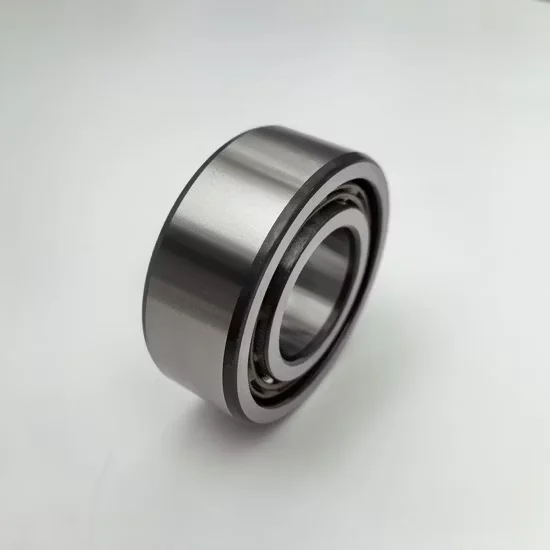

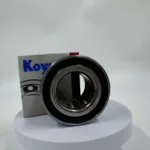
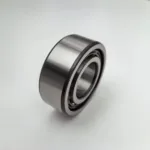
F-578216 Angular Contact Ball Bearing 30.163×64.262x26mm Auto Differential Skl-H95A [WARN] draft identifier mismatch
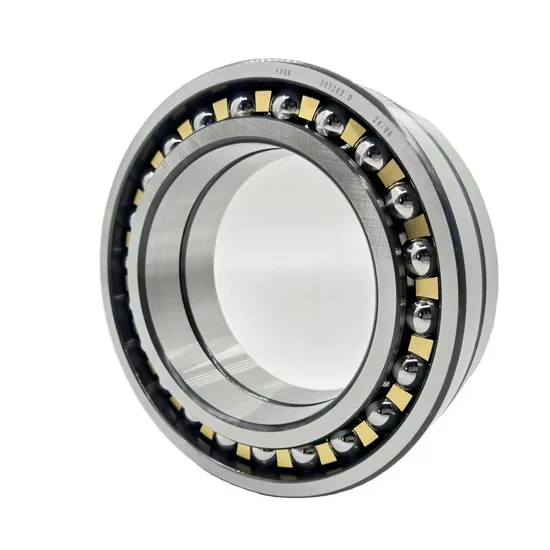
<p><strong>F-578216 Angular Contact Ball Bearing 30.163×64.262×26 mm</strong> — Manufactured from premium Gcr15 bearing steel, this open-type component ensures optimal heat dissipation and supports custom lubrication integration for auto differentials and high-speed industrial machinery applications.</p> <ul> <li>Every delivered unit includes comprehensive original factory batch traceability records to verify authentic material sourcing and strict dimensional quality compliance.</li> </ul>
Specifications
|
Model / Part Number
|
F-578216 Angular Contact Ball Bearing 30.163×64.262x26mm Auto Differential Skl-H95A [WARN] draft identifier mismatch |
|---|---|
|
Bore Diameter (d)
|
Contact us for details |
|
Outer Diameter (D)
|
Contact us for details |
|
Width (B)
|
Contact us for details |
|
Dynamic Load Rating (Cr)
|
Contact us for details |
|
Static Load Rating (C0r)
|
Contact us for details |
|
Limiting Speed (grease)
|
Contact us for details |
|
Weight
|
Contact us for details |
* Full dimensional data and load ratings available upon inquiry. Our engineers will confirm specifications for your application.
Request a Quote or Technical Consultation
Product Description
Unified Sourcing Hub — Consolidate F-578216 angular contact ball bearings with other drivetrain components in a single mixed-brand shipment without juggling multiple vendors.
Technical Specifications
| Parameter | Value |
|---|---|
| Designation | F-578216 |
| Bearing Type | Angular Contact Ball Bearing |
| Bore Diameter (d) | 30.163 mm |
| Outside Diameter (D) | 64.262 mm |
| Width (B) | 26 mm |
| Cage Material | Nylon (Polyamide) |
| Seal or Shield Type | Open |
| Clearance Class | C0, C1, C2, C3, C4, C5 |
| Contact Angle | 15° (C), 25° (AC), 30° (a), 40° (B) |
| Material | Gcr15 Bearing Steel (stainless variants available) |
| Arrangement | Single Row / Double Row |
Application Suitability
| Industry | Typical Applications |
|---|---|
| Automotive | Auto differential gearsets and pinion shafts |
| Industrial Machinery | High-speed machine tool spindles |
| Fluid Handling | Centrifugal pumps and rotary compressors |
Overlooking Internal Geometry in Your F-578216 Angular Contact Ball Bearing
Matching basic dimensions is never enough to prevent catastrophic drivetrain failure.
During my years handling differential after-sales in Latin America, I watched mechanics swap out auto differential bearings looking only at the outer diameter and bore. They completely ignored the internal clearance and cage variations required for high-speed pinion shafts. The result was predictable: the replacement seized and snapped under load, causing massive downtime and destroying the surrounding gear teeth. Sourcing the correct F-578216 angular contact ball bearing demands strict verification of these hidden internal parameters to avoid repeating that exact failure mode and protect the entire drivetrain investment [NEED_CITE: rolling bearing failure mode classification per ISO 15243].
Matching Drivetrain Demands with Precision Components
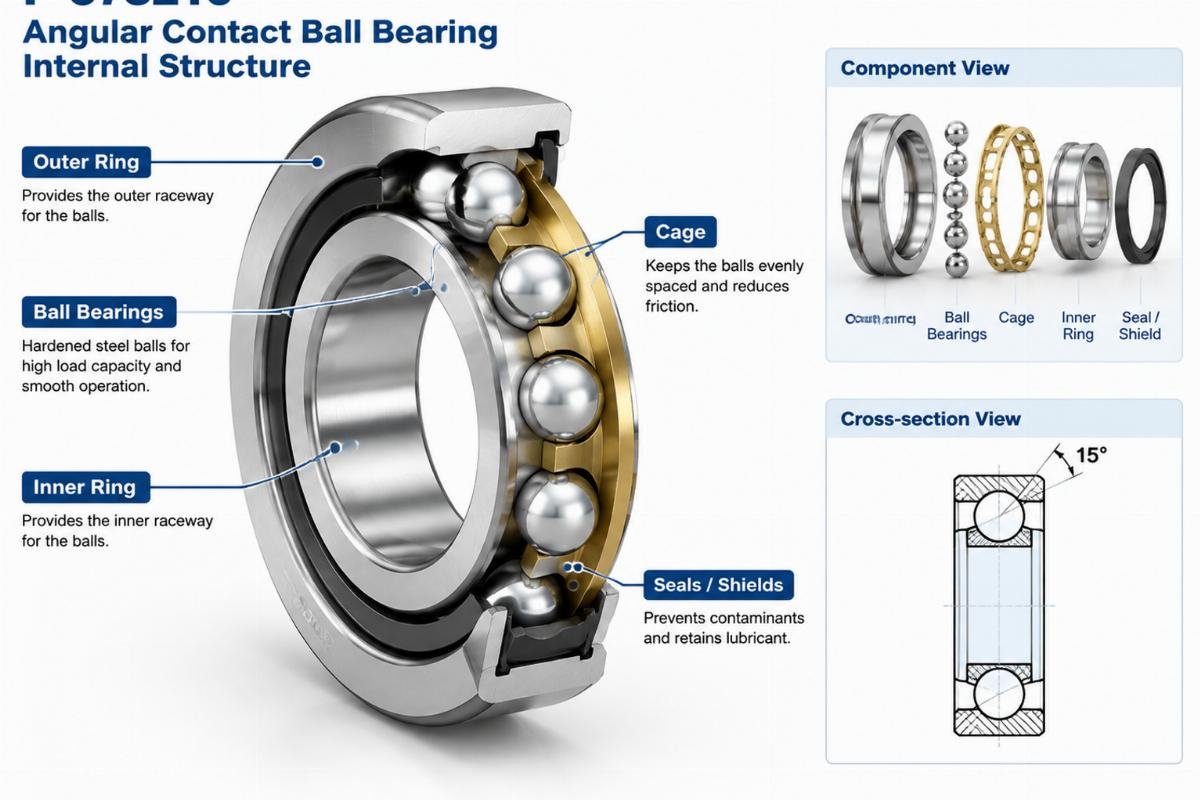
When rebuilding an auto differential, the pinion and side gears impose intense combined loads that standard deep-groove alternatives simply cannot withstand. This F-578216 angular contact ball bearing is specifically engineered to handle those simultaneous radial and axial forces while maintaining rotational stability under extreme torque. Our technical team routinely cross-references this part with equivalent models like the Skl-H95A to ensure your mixed-brand project orders maintain exact fitment. This meticulous verification guarantees consistent load distribution across the entire axle assembly, preventing uneven wear patterns that often plague hastily sourced replacement components.
Navigating Differential Operating Extremes
Differential housings generate significant heat, which directly impacts the internal clearance of an open-type bearing during prolonged use. If the initial clearance is too tight, thermal expansion will eliminate the operational gap, leading to severe friction, excessive heat generation, and eventual cage failure. Proper lubrication is equally critical; since this design lacks integrated seals, it relies entirely on the differential’s oil bath or external grease circulation to flush out metallic wear particles. Selecting the appropriate contact angle and vibration grade ensures the rolling elements maintain optimal traction without skidding during rapid torque reversals, extending the overall service interval [NEED_CITE: thermal expansion effects on bearing internal clearance].
Decoding the Core Engineering Parameters
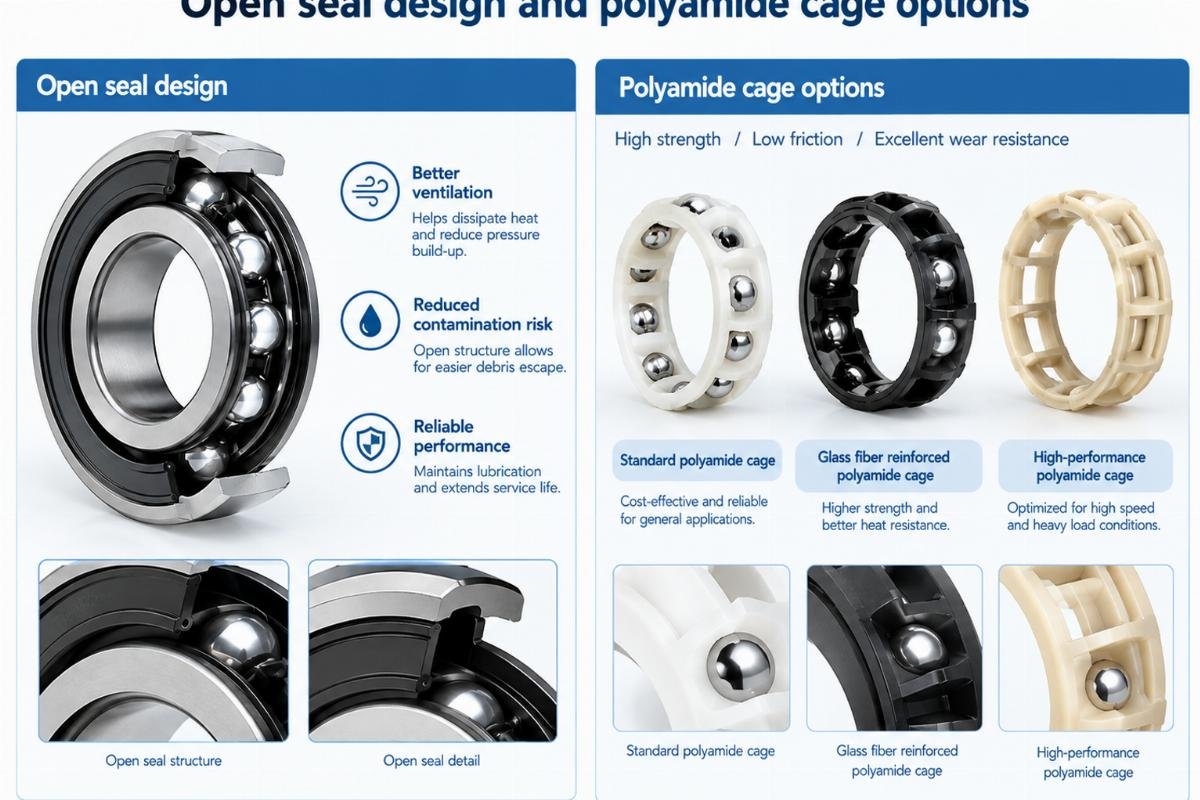
The polyamide cage significantly reduces friction compared to stamped steel, allowing the rolling elements to maintain stability at elevated rotational speeds without generating excess heat. Because the bearing features an open seal design, it facilitates superior heat dissipation and allows the differential fluid to flow directly through the raceway for continuous cooling. The availability of multiple clearance classes, ranging from C0 to C5, lets engineers compensate for the specific interference fits and thermal growth expected in heavy-duty axle housings. Furthermore, the selectable contact angles—spanning 15°, 25°, 30°, and 40°—provide the exact axial load capacity needed to counteract the hypoid gear thrust generated during vehicle acceleration and deceleration, ensuring smooth power transfer.
The Hidden Cost of Incorrect Substitution
Installing a generic replacement with the wrong contact angle or inadequate clearance class routinely leads to premature raceway spalling and catastrophic cage fragmentation. According to failure analysis frameworks like ISO 15243, these specific degradation patterns are almost always traced back to improper application matching rather than inherent material defects. Such unplanned downtime not only voids equipment warranties but also forces fleet operators into costly secondary repairs when shattered bearing components contaminate the entire differential gear oil, ultimately destroying the hypoid gear set [NEED_CITE: premature failure mechanisms in automotive drivetrains per ISO 281].
Why Procurement Engineers Trust Our Supply Chain
We maintain massive spot inventory covering thousands of standard and special part numbers, ensuring your urgent differential rebuilds are never delayed by typical multi-week lead times. Our cross-brand equivalent model consultation guarantees that when you request an Skl-H95A cross-reference, the physical dimensions and load ratings are rigorously verified before dispatch. Every F-578216 angular contact ball bearing we ship includes complete traceability documentation, eliminating the risk of receiving counterfeit or substandard components that compromise vehicle safety. We also support flexible order quantities, accommodating everything from single-unit emergency spare-part requests to full container consolidation shipments for large-scale MRO projects. Finally, our global shipping consolidation service ensures your mixed-size bearing packages arrive safely at facilities across over eighty countries without logistical delays.
Documentation & Authenticity
- Certificate of Conformity verifying Gcr15 steel composition for differential load requirements.
- Original batch traceability records linking your F-578216 order to the specific production run.
- Dimensional inspection reports confirming the exact 30.163×64.262x26mm tolerances before dispatch.
- Material test certificates validating the structural integrity of the polyamide cage material.
Storage, Handling & Mounting
- Keep the open-type bearing in its original VCI packaging until installation to prevent raceway corrosion.
- Use induction heaters for the inner ring to preserve the selected C3 or C4 internal clearance during mounting.
- Avoid using carbon steel tools near the polyamide cage to prevent microscopic debris contamination.
- Ensure the differential housing is flushed completely before introducing oil to protect the unsealed raceways.
- Verify the specific contact angle marking matches the OEM hypoid gear thrust direction prior to pressing.
Initiating Your Technical Review
To guarantee optimal differential performance, please share your specific radial and axial load calculations along with the expected operating temperature range. Providing the original OEM equipment number allows our engineering team to perform a precise cross-reference check against the Skl-H95A and verify the correct clearance class for your exact housing. Once we review your installation space constraints and lubrication method, we will recommend the exact contact angle and vibration grade required for your application, ensuring the replacement integrates flawlessly into your existing drivetrain architecture.
Frequently Asked Questions
Q: How do we verify the cross-reference fitment between this part and the Skl-H95A?
A: Our engineering team cross-checks the exact physical dimensions, contact angle, and dynamic load ratings against the Skl-H95A specifications. We also verify the internal geometry to ensure the replacement maintains the correct load distribution within your specific auto differential assembly, preventing premature gear wear and ensuring reliable power transfer.
Q: Which clearance class is appropriate for high-temperature differential environments?
A: Differential housings experience significant thermal expansion during continuous operation. We typically recommend a C3 or C4 clearance class for these applications to ensure the internal gap remains positive once the bearing reaches its operating temperature. Our team will calculate the exact thermal growth based on your specific housing material and cooling setup.
Q: What are the lubrication requirements for this open-type design?
A: Since this bearing lacks integrated seals, it relies entirely on the surrounding differential oil bath or external grease circulation. You must ensure the lubricant viscosity is sufficient to maintain a protective film at your maximum operating speed, and the system must include adequate filtration to prevent metallic wear particles from entering the unsealed raceway.
Q: How does the polyamide cage perform under heavy axial thrust?
A: The nylon polyamide cage offers excellent sliding properties and noticeably lower friction than stamped steel alternatives, which is crucial for high-speed pinion shaft applications. It effectively guides the rolling elements under heavy axial thrust while dampening operational noise, provided the differential fluid remains free of aggressive chemical contaminants that could degrade the polymer.
Engineering Project Support
Need a complete bearing package for your project?
Send us your bill of materials and we will return a full technical selection, consolidated supply plan and delivery schedule.