District Heating Pump Bearings: Wholesale Supplier & Bulk for Sale
Selecting District Heating Pump Bearings requires balancing high-temperature internal clearance with rigorous customs documentation for mixed-brand procurement. Learn why C3 or C4 clearance prevents thermal binding and how aligning HS codes avoids shipment delays. Source genuine SKF, FAG, and NSK units through consolidated global supply.
 Written by
author
- Published on
- 6 min read
- Updated
District Heating Pump Bearings: Wholesale Supplier & Bulk for Sale
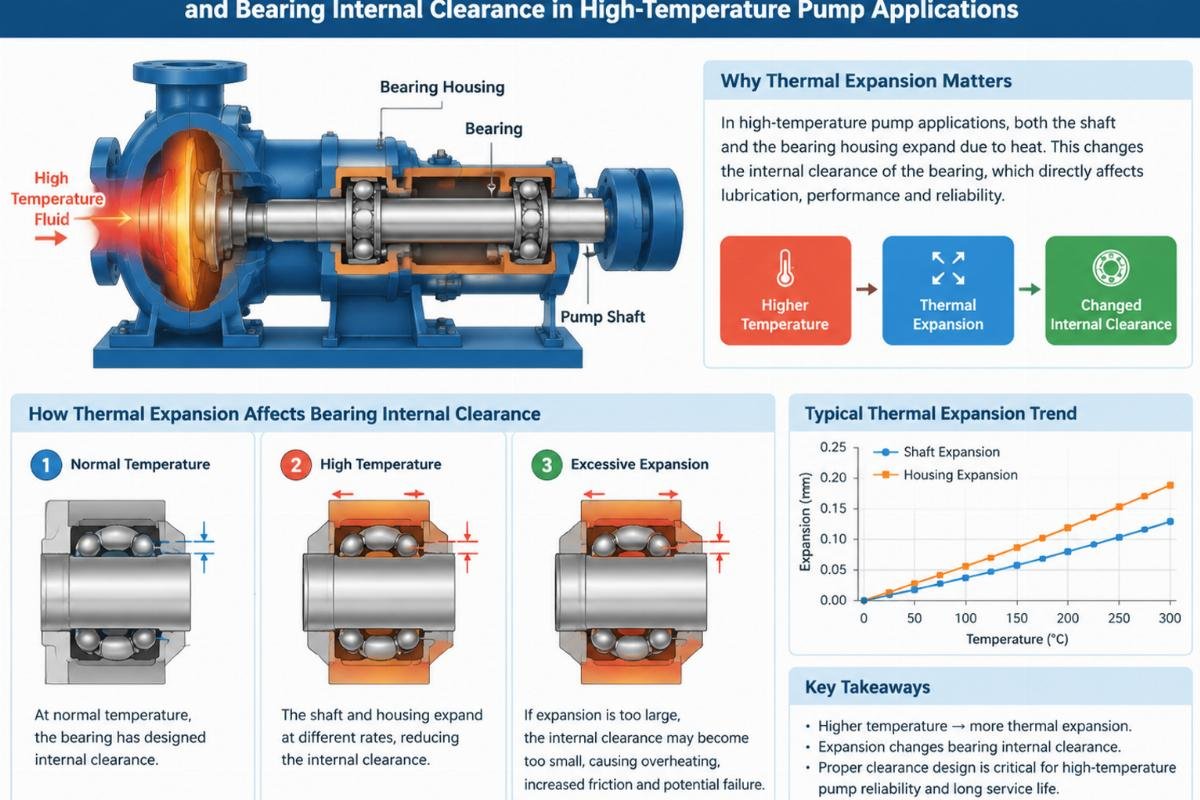
Tighter clearance is not better for heating pumps.
Selecting the right district heating pump bearings requires balancing high-temperature internal clearance specifications with rigorous customs documentation for mixed-brand procurement. The most common cause of project delay is not mechanical failure, but document mismatches in mixed containers.
I still remember the humidity in Mombasa during the rainy season. A sugar plant’s central heating pump station had been offline for weeks. The culprit was not a defective component, but a discrepancy between the HS codes on the customs declaration and the actual mixed models of spherical roller bearings inside the container. The shipment, containing both SKF and FAG units, was held at the transit port because the paperwork did not align with the physical inventory. This experience shifted my focus from purely technical selection to the critical importance of documentation accuracy in global sourcing. [NEED_CITE: impact of customs documentation errors on industrial supply chains]
Understanding the technical requirements is only half the battle. The other half is ensuring that your procurement strategy supports seamless logistics and compliance.
What Bearing Types Suit Heating Pumps?
Spherical roller bearings dominate this application due to their ability to handle heavy loads and misalignment.
District heating systems operate under demanding conditions. Pumps often face significant radial and axial loads, coupled with shaft deflections caused by thermal expansion and installation inaccuracies. Spherical roller bearings are designed to accommodate these challenges. Their self-aligning capability allows them to compensate for static misalignment and dynamic shaft deflections, which are common in large-scale pumping systems.
When evaluating options, consider the load capacity and operational environment. Deep-groove ball bearings may suffice for smaller, lighter-duty pumps, but they lack the robustness required for main circulation pumps in district heating networks. Cylindrical roller bearings offer high radial load capacity but cannot tolerate misalignment, making them risky for applications where foundation settling or thermal growth is expected.
| Bearing Type | Load Capacity | Misalignment Tolerance | Typical Application in Heating Systems |
|---|---|---|---|
| Spherical Roller | High | Excellent | Main circulation pumps, heavy-duty feed pumps |
| Cylindrical Roller | Very High (Radial) | None | Precision-aligned gearboxes, stable foundations |
| Deep-Groove Ball | Moderate | Low | Auxiliary pumps, small circulating units |
| Angular Contact | High (Combined) | Low | High-speed pumps with precise axial positioning |
A European utility provider once replaced cylindrical roller bearings with spherical roller units in their primary network pumps. The change reduced vibration levels significantly, extending the maintenance interval. [NEED_CITE: case studies on bearing type selection for industrial pumps]
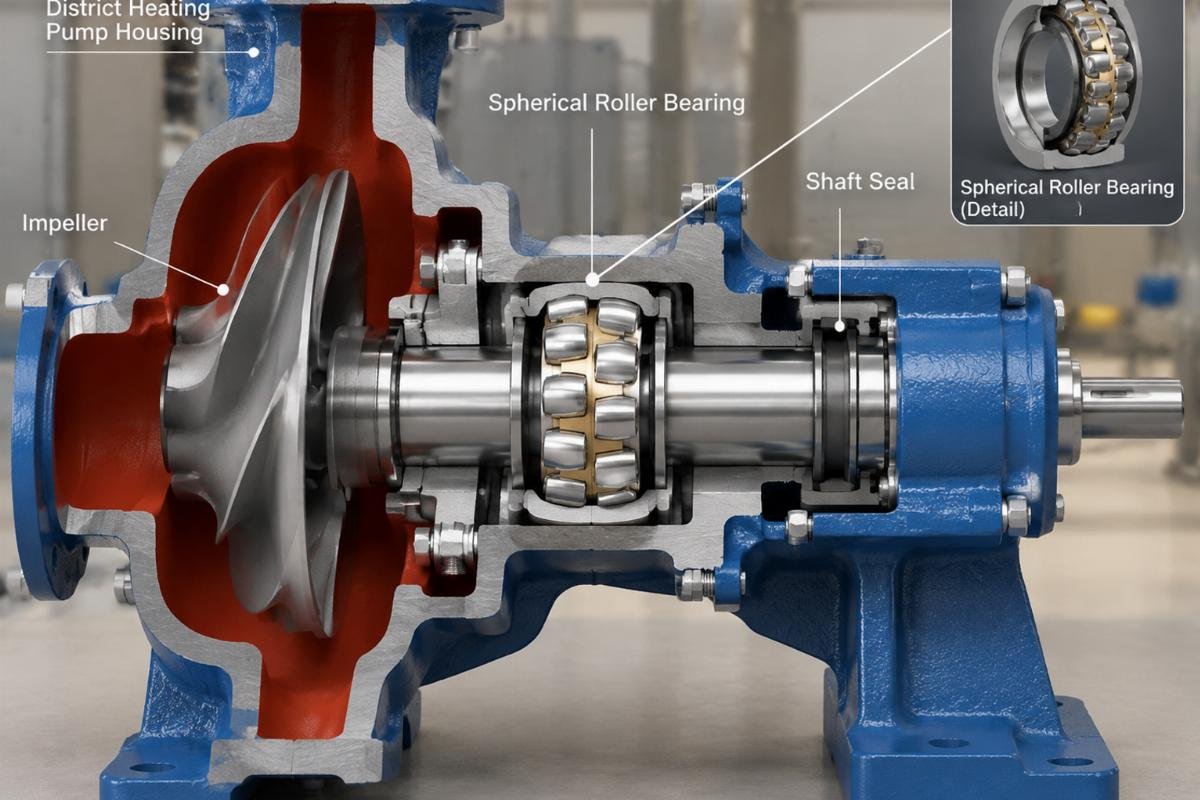
The choice of bearing type sets the foundation for reliability. However, even the best bearing type will fail if the internal clearance is incorrect for the operating temperature.
How to Choose Internal Clearance?
High temperatures require larger C3 or C4 clearance to prevent binding.
In district heating systems, water temperatures can reach high levels, causing significant thermal expansion of the pump shaft and housing. If a standard clearance bearing is used, the inner ring expands more than the outer ring, reducing the internal clearance. If the clearance becomes negative, the bearing will bind, leading to rapid temperature rise, lubrication breakdown, and eventual seizure.
Selecting the correct clearance group is critical. Standard clearance (CN) is rarely suitable for high-temperature pump applications. Instead, C3 or C4 clearance groups are typically recommended. C3 clearance provides a moderate increase, suitable for many industrial pumps, while C4 offers a larger increase for extreme temperature differentials or when the outer ring is tightly fitted in a solid housing.
The decision depends on several factors:
- Operating temperature range of the medium.
- Fit tolerances of the shaft and housing.
- Speed of rotation.
- Material of the shaft and housing (steel vs. cast iron).
[NEED_CITE: ISO standards for bearing internal clearance and thermal expansion calculations]
A common mistake is assuming that tighter clearance improves precision. In high-temperature environments, this assumption is dangerous. A maintenance team in a Middle East steel plant learned this the hard way when a batch of CN clearance bearings failed within months due to thermal locking. Switching to C3 clearance resolved the issue, stabilizing the operation.

Proper clearance selection ensures mechanical integrity. But even with the right parts, your shipment can stall if the paperwork is not in order.
Why Do Mixed Procurements Fail at Customs?
Align packing lists and HS codes to prevent seizures.
Sourcing bearings from multiple brands like SKF, FAG, NSK, and NTN in a single shipment is cost-effective and convenient. However, it introduces complexity in customs clearance. Each brand and type of bearing may have slightly different classifications or require specific documentation. If the HS codes on the commercial invoice do not match the actual items in the mixed container, customs authorities may detain the shipment for inspection.
This risk is heightened in regions with strict import regulations. A mismatch can lead to delays, storage fees, and even penalties. In my early days, I saw a shipment held up because the packing list listed “ball bearings” generically, while the container held a mix of spherical roller and tapered roller bearings, each requiring distinct classification details.
To avoid this:
- Ensure the commercial invoice lists each item with its correct part number and description.
- Verify the HS code for each bearing type before shipment.
- Provide a detailed packing list that matches the physical arrangement of goods in the container.
- Include certificates of origin and authenticity for branded items.
[NEED_CITE: common customs clearance issues for mixed industrial component shipments]
A distributor in Southeast Asia avoided a potential month-long delay by pre-classifying their mixed bearing order with a local customs broker. The attention to detail in the documentation allowed for smooth release upon arrival.

Clearance is not just about taxes; it is about keeping your supply chain moving. Once you have navigated the documentation, the next step is finding a reliable source for these mixed batches.
How to Source Globally?
Use one-stop suppliers for genuine, consolidated shipments.
Finding individual suppliers for each brand is inefficient. It leads to multiple shipments, higher freight costs, and increased administrative burden. A one-stop supplier who specializes in mixed-brand consolidation can streamline this process. They hold stock of major brands like SKF, FAG, INA, NSK, NTN, TIMKEN, KOYO, NACHI, and IKO, as well as reliable domestic lines.
This approach offers several advantages:
- Consolidation: Combine orders for different brands and sizes into a single shipment.
- Traceability: Ensure all products are genuine with complete documentation.
- Flexibility: Order small quantities for emergency repairs or large volumes for project stock.
- Technical Support: Get assistance with cross-brand equivalent model selection.
For MRO operators and regional distributors, this means faster lead times and reduced downtime. Instead of waiting for separate deliveries from multiple sources, you receive a single, verified container. This is particularly valuable for urgent maintenance requirements where time is critical.
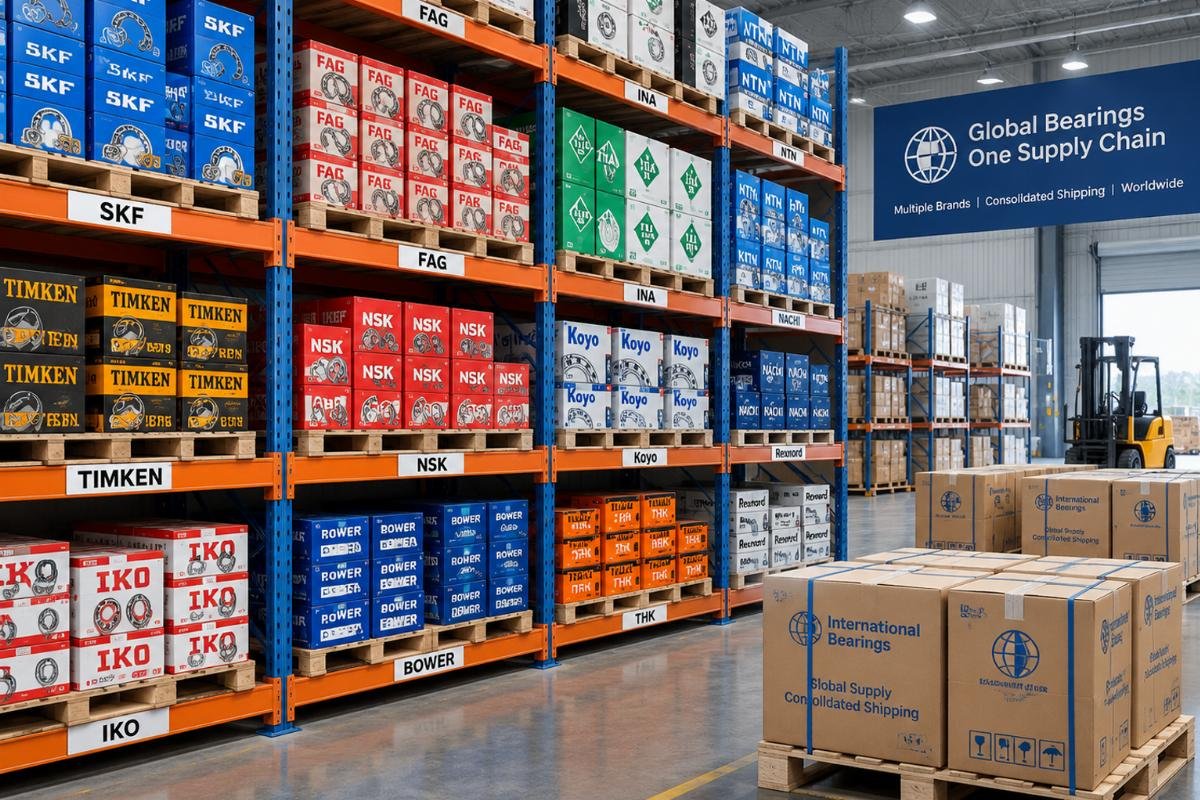
Sourcing from a specialized supplier reduces complexity and risk. It allows you to focus on your core operations while ensuring your supply chain is robust and compliant.
Conclusion
Documentation accuracy is as vital as technical specification.
Selecting district heating pump bearings involves more than just choosing the right type and clearance. It requires a holistic approach that includes rigorous customs documentation and reliable sourcing strategies. By prioritizing both technical correctness and logistical compliance, you can ensure uninterrupted operation and avoid costly delays.
Tags

About the author
author
Editor covering global sourcing, supplier verification, and industrial product knowledge. Content is compiled from manufacturer specifications, industry standards, and hands-on experience with international B2B buyers. Every article is fact-checked before publishing to help procurement professionals make informed decisions.
More articles by author