Low Temperature Grease Chart: Operating Ranges Compared Wholesale
Use a low temperature grease chart to prevent motor burnout caused by standard lithium grease solidifying below -20°C. Compare PAO, synthetic ester, and polyether operating ranges to minimize starting torque. Select the right base oil chemistry to ensure bearing reliability in freezing environments.
 Written by
author
- Published on
- 8 min read
- Updated

Low Temperature Grease Chart: Operating Ranges Compared Wholesale
Standard lithium grease turns into a solid block below -20°C, causing immediate motor burnout.
Selecting the correct lubricant for freezing environments requires comparing base oil chemistry rather than just viscosity grades. A reliable low temperature grease chart reveals that synthetic esters and polyethers maintain fluidity where mineral oils fail, directly preventing bearing seizure and excessive starting torque in sub-zero conditions.
I still remember the silence of a cold storage facility in Northern Europe. It was thirty degrees below zero. The conveyor system had stopped dead. When we pried open the bearing housings, the standard lithium-based grease had not just thickened; it had solidified into hard, waxy lumps. The electric motors were drawing massive current, trying to overcome the static friction of frozen lubricant, but the bearings simply would not turn. That night taught me that in extreme cold, the difference between a running machine and a scrap heap is often just the molecular structure of the base oil. [NEED_CITE: relationship between base oil pour point and low-temperature torque]
This experience shifted my focus from merely supplying bearings to understanding the entire lubrication ecosystem. If the grease fails, the most expensive precision bearing becomes useless. For distributors and OEMs sourcing for cold regions, understanding the technical data behind these lubricants is as critical as selecting the right bearing clearance.
Why Do Standard Greases Fail in Freezing Environments?
Most buyers assume low-temperature grease is simply a thinner version of standard oil, but the failure mechanism is chemical solidification.
The primary reason standard greases fail is the crystallization of the base oil. As temperatures drop, the wax content in mineral oils begins to form crystals, drastically increasing viscosity. Eventually, the oil reaches its pour point and stops flowing entirely. At this stage, the grease acts more like a solid adhesive than a lubricant. [NEED_CITE: ASTM D97 standard test method for pour point of petroleum oils]
When a bearing packed with such grease attempts to start, the resistance is immense. This is known as high starting torque. The motor must exert significant force to break the static friction, often leading to overheating or electrical failure before the shaft even completes a single rotation. In contrast, synthetic base oils are engineered with uniform molecular structures that resist crystallization. They remain fluid at much lower temperatures, ensuring that the lubricant can flow into the contact zones immediately upon startup.
Consider the case of an Arctic mining operation. Their excavator pivot bearings were seizing repeatedly during winter shifts. The issue was not the load capacity of the bearings, but the inability of the grease to migrate under cold conditions. By switching to a synthetic formulation with a lower pour point, the starting torque dropped noticeably, allowing the heavy machinery to operate smoothly despite the freezing ambient air.
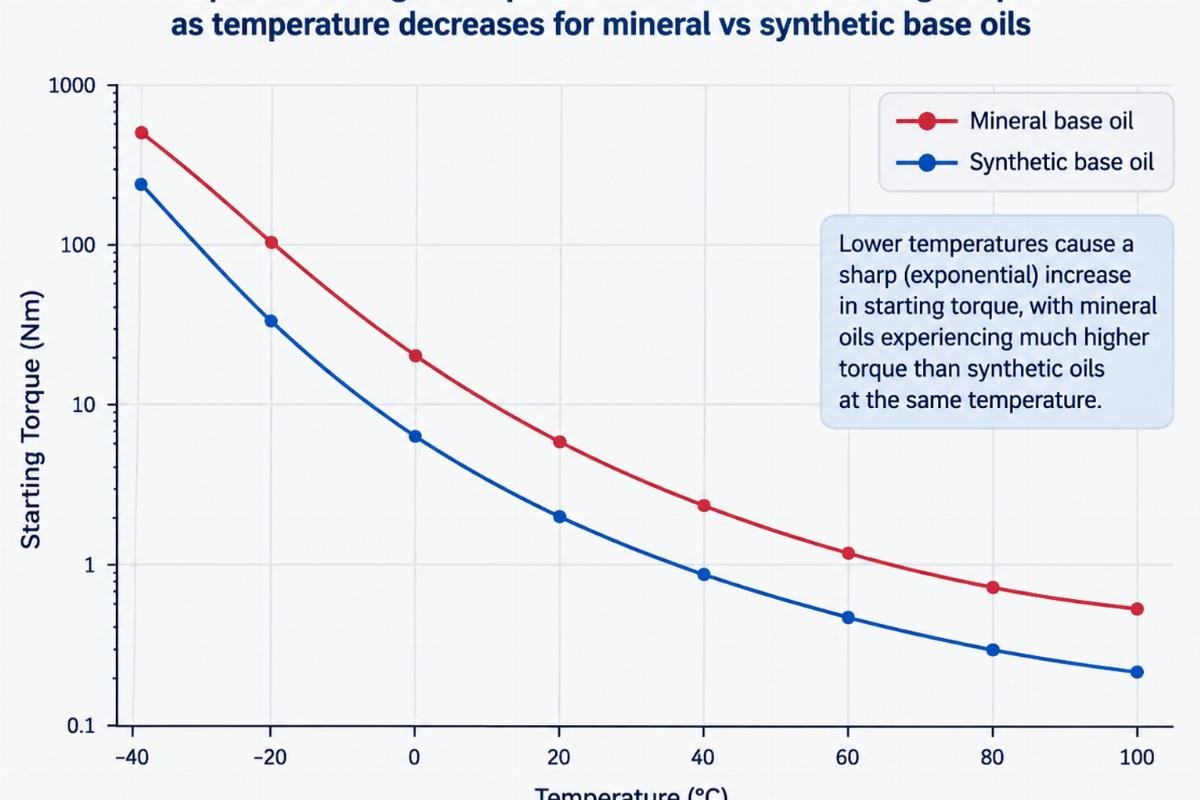
Understanding this fundamental difference is the first step in using a low temperature grease chart effectively. It is not just about finding a number; it is about identifying the chemical resilience of the lubricant against cold-induced solidification.
How to Compare Operating Ranges of Different Base Oils?
PAO, synthetic ester, and polyether base oils have distinct low-temperature limits that define their operational safety margins.
When evaluating options, you will typically encounter three main types of synthetic base oils. Each has unique characteristics that affect performance in cold weather. A detailed low temperature grease chart should clearly distinguish between these chemistries, as their operating ranges vary significantly.
Polyalphaolefin (PAO) is widely used due to its excellent thermal stability and compatibility with seals. It offers a broad operating range and is generally more cost-effective than other synthetics. However, its low-temperature performance, while superior to mineral oil, may not be sufficient for extreme Arctic conditions without specific formulation adjustments.
Synthetic esters provide exceptional lubricity and natural detergency. They tend to have better low-temperature fluidity than PAOs and are often chosen for applications where energy efficiency is critical. Their polar nature helps them adhere to metal surfaces, providing protection even when the bulk fluid is cold. [NEED_CITE: comparative analysis of ester vs PAO lubricity in tribology journals]
Polyether (PAG) base oils offer some of the best low-temperature properties available. They have very low pour points and maintain viscosity stability across a wide temperature spectrum. However, they can be incompatible with certain seal materials and paints, requiring careful selection of compatible components.
| Base Oil Type | Low-Temp Fluidity | Seal Compatibility | Typical Application Focus |
|---|---|---|---|
| PAO | Good | Excellent | General industrial cold storage |
| Synthetic Ester | Very Good | Good | High-efficiency wind turbines |
| Polyether (PAG) | Excellent | Limited | Extreme Arctic mining equipment |
For a wholesale buyer, this comparison is vital. You are not just selling grease; you are selling reliability. A European wind farm operator once reported that switching from PAO to synthetic ester extended the service life of their gearbox bearings meaningfully during winter months. The improved fluidity reduced wear during the frequent start-stop cycles common in variable wind conditions.

By referencing a comprehensive low temperature grease chart, you can match the base oil type to the specific environmental challenges your customers face. This ensures that the lubricant performs as expected, protecting the bearings from premature failure.
What Are the Key Parameters in a Low-Temp Grease Chart?
Focus on low-temperature torque and apparent viscosity rather than just the dropping point.
Many technical datasheets highlight the dropping point, which indicates the temperature at which grease melts. While useful for high-temperature applications, this parameter is irrelevant for cold weather performance. Instead, the critical metrics are low-temperature torque and apparent viscosity.
Low-temperature torque measures the resistance a grease offers to the rotation of a bearing at cold temperatures. It is divided into starting torque and running torque. Starting torque is the force required to initiate movement, while running torque is the resistance during continuous operation. High starting torque is the primary cause of motor failure in cold starts. [NEED_CITE: ASTM D1478 standard test method for low-temperature torque of ball bearing grease]
Apparent viscosity at low temperatures indicates how easily the grease flows. If the viscosity is too high, the grease cannot replenish the lubricating film in the bearing contact zone. This leads to metal-to-metal contact and rapid wear. A proper low temperature grease chart will list these values at specific sub-zero temperatures, allowing for accurate comparison.
Another important factor is the base oil viscosity index. A higher viscosity index means the oil’s viscosity changes less with temperature. This stability is crucial for maintaining consistent lubrication as ambient temperatures fluctuate.
In a recent project for a cold chain logistics provider, we analyzed several grease options using these parameters. One option had a good low-temperature rating but exhibited high starting torque in laboratory tests. By choosing a alternative with lower torque values, the client avoided potential motor overloads during winter operations. This decision was based entirely on the technical data provided in the comparison charts.
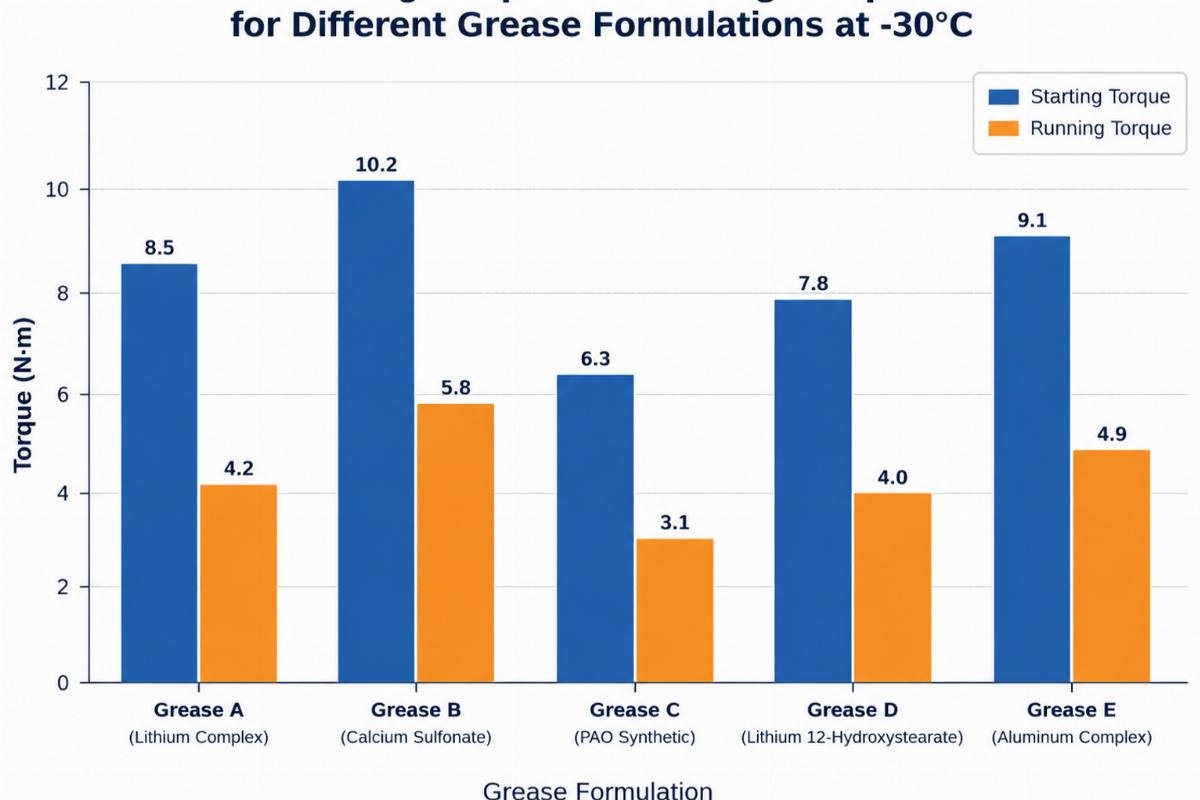
When reviewing specifications, always prioritize torque and viscosity data. These metrics provide a realistic picture of how the grease will behave in actual operating conditions, ensuring that the bearings receive adequate lubrication from the moment the machine starts.
How to Select the Right Grease for Your Specific Application?
Match grease chemistry to specific cold-weather machinery requirements to prevent incompatibility issues.
Selecting the right grease involves more than just checking temperature ratings. You must consider the mechanical load, speed, and environmental exposure of the application. For example, heavy-load pivot bearings in mining excavators require a grease with high film strength to prevent seizure under pressure. In this case, a synthetic ester with extreme pressure additives might be the optimal choice.
Conversely, high-speed bearings in wind turbine generators need a grease with low churning resistance to minimize heat generation. Here, a PAO-based grease with a low base oil viscosity could be more suitable. The key is to align the grease properties with the operational demands of the machinery.
Compatibility is another critical factor. Mixing incompatible greases can lead to softening or hardening, resulting in lubrication failure. Always verify that the new grease is compatible with the existing lubricant and the seal materials used in the bearings. [NEED_CITE: guidelines on grease compatibility from international lubricant standards]
For distributors serving diverse markets, having access to a wide range of genuine bearings and technical support is essential. We provide cross-brand equivalent consultation, helping clients identify the right bearing and lubrication combination for their specific needs. Whether it is a single emergency spare part or a full container consolidation, our global inventory ensures that you can source the correct components without delay.
A Middle East steel mill operating in a high-altitude, cold region faced recurring bearing failures. By analyzing their application parameters and consulting our technical team, they switched to a specialized polyether grease paired with high-precision spherical roller bearings. The result was a significant reduction in unplanned downtime and extended maintenance intervals.
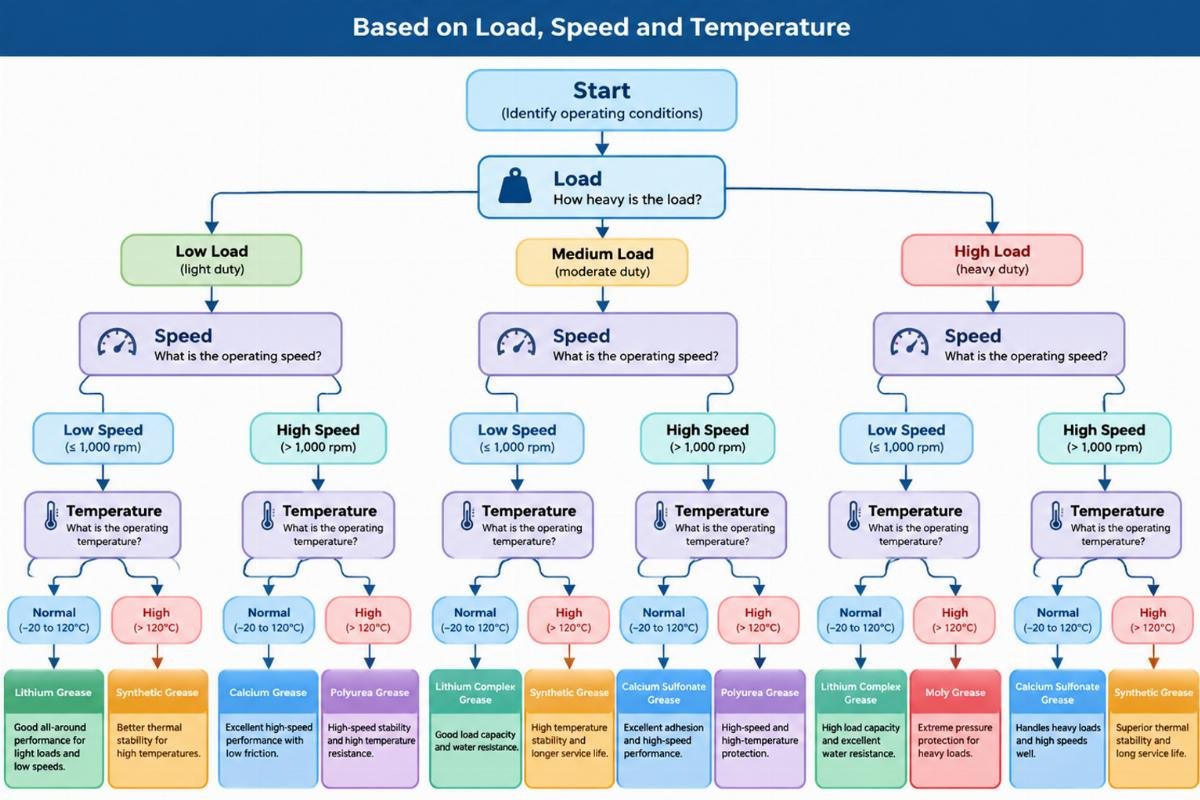
Using a detailed low temperature grease chart as a reference tool allows you to make informed decisions. It helps you navigate the complex landscape of lubricant chemistries and select the product that offers the best protection for your specific application. This approach minimizes risk and maximizes equipment reliability.
Conclusion
Correct base oil selection prevents bearing seizure in extreme cold.
A low temperature grease chart is an essential tool for matching lubricant chemistry to environmental conditions. By focusing on starting torque and base oil type, operators can ensure reliable performance in freezing environments. Proper selection protects both the bearing and the machinery, reducing downtime and maintenance costs.
Tags

About the author
author
Editor covering global sourcing, supplier verification, and industrial product knowledge. Content is compiled from manufacturer specifications, industry standards, and hands-on experience with international B2B buyers. Every article is fact-checked before publishing to help procurement professionals make informed decisions.
More articles by author