Ski Lift & Cable Car Bearings: Genuine SKF/FAG Wholesale Supplier
Prevent catastrophic ski lift downtime by selecting genuine Ski Lift and Cable Car Bearings with correct C3/C4 clearance for extreme cold. Avoid refurbished parts lacking original heat treatment that cause seizure at minus twenty degrees Celsius. Ensure full traceability and proper low-temperature grease compatibility for reliable winter operations.
 Written by
author
- Published on
- 7 min read
- Updated

Ski Lift & Cable Car Bearings: Genuine SKF/FAG Wholesale Supplier
Standard bearings freeze in extreme cold not because of the metal, but due to improper internal clearance and grease solidification.
Selecting the right Ski Lift and Cable Car Bearings requires matching C3 or C4 internal clearance with low-temperature compatible grease, while ensuring full traceability to avoid counterfeit or refurbished parts that lack original heat treatment. Failure to verify these specifications leads to catastrophic seizure during peak winter operations.
I still remember the silence of a major ski resort in Northern China. It was minus twenty degrees Celsius, and the main drive sheave had seized. The maintenance team spent days troubleshooting, only to discover the client had sourced refurbished FAG bearings to cut costs. These parts lacked the original surface integrity and heat treatment, causing premature spalling under dynamic loads. The resort shut down for half a month, losing an entire segment of the snow season. That incident shifted my focus from simple procurement to rigorous verification of Ski Lift and Cable Car Bearings. In this environment, a bearing is not just a component; it is the difference between operational continuity and financial disaster.
The core issue in winter sports infrastructure is not just the cold, but the combination of low temperatures and high cyclic loads. Standard industrial bearings often fail here because their internal clearance is too tight for thermal contraction, and their standard grease turns into a solid block. To prevent this, operators must prioritize genuine components with verified documentation. As a supplier dealing with global MRO clients, I see too many failures traced back to unverified sources. This guide breaks down how to select, identify, and source the correct Ski Lift and Cable Car Bearings to ensure reliability when it matters most.
Why Do Ski Lift Bearings Fail in Extreme Cold?
Most failures attributed to “cold weather” are actually caused by incorrect internal clearance selection and incompatible lubrication.
When temperatures drop significantly, steel contracts. If a bearing is manufactured with standard C2 or normal clearance, this contraction can eliminate the internal play entirely, leading to pre-loading and excessive heat generation even before the load is applied. Combined with grease that has a high base oil viscosity or poor low-temperature flow characteristics, the result is rapid wear and eventual seizure. [NEED_CITE: relationship between internal clearance and thermal contraction in rolling bearings]
In cable car applications, the loads are dynamic and often shock-heavy. A gondola starting up after being stationary in freezing conditions places immense stress on the wheel assemblies. If the grease has frozen, the rolling elements skid rather than roll, causing flat spots and brinelling. This is why generic “all-purpose” bearings are insufficient for this sector.
I once consulted for a maintenance team in Europe that kept replacing carriage wheel bearings every season. They were using unbranded alternatives that seemed cost-effective. However, within months, the bearings showed signs of smearing and overheating. The root cause was not the brand alone, but the lack of specific low-temperature grease compatibility and the use of standard clearance instead of the required C3 or C4 class. Switching to genuine SKF units with appropriate cold-weather lubrication extended their maintenance intervals noticeably.

To avoid such issues, engineers must specify bearings with expanded internal clearance. For Ski Lift and Cable Car Bearings, this typically means selecting C3 or C4 clearance codes, which allow for thermal expansion and contraction without inducing harmful preload. Furthermore, the grease must be rated for the lowest expected ambient temperature, ensuring it remains fluid enough to lubricate the raceways during startup. Ignoring these two factors guarantees premature failure, regardless of the bearing brand.
How to Identify Genuine vs. Refurbished Bearings?
Refurbished premium brands often lack the original heat treatment and surface finish, making them vulnerable to premature spalling under heavy loads.
The market is flooded with refurbished bearings repackaged as new. These parts may look clean and carry the original brand markings, but their internal metallurgy has been compromised. During refurbishment, the original hardened layer is often ground away or altered, removing the fatigue resistance engineered by manufacturers like SKF or FAG. [NEED_CITE: impact of regrinding on bearing fatigue life and surface integrity]
Identifying genuine products requires more than checking the logo. It demands verifying the supply chain. Authentic bearings come with complete traceability documentation, including batch numbers that can be cross-referenced with the manufacturer’s records. Packaging should be pristine, with high-quality printing and security seals that are difficult to replicate.
A Middle East distributor once shared a case where a batch of what appeared to be new NSK bearings failed within weeks of installation in a heavy-duty conveyor system. Upon inspection, the raceways showed signs of previous use and inconsistent hardness. The supplier had sourced these from a secondary market vendor who specialized in “cleaned and repacked” goods. For critical applications like ski lifts, such risks are unacceptable.
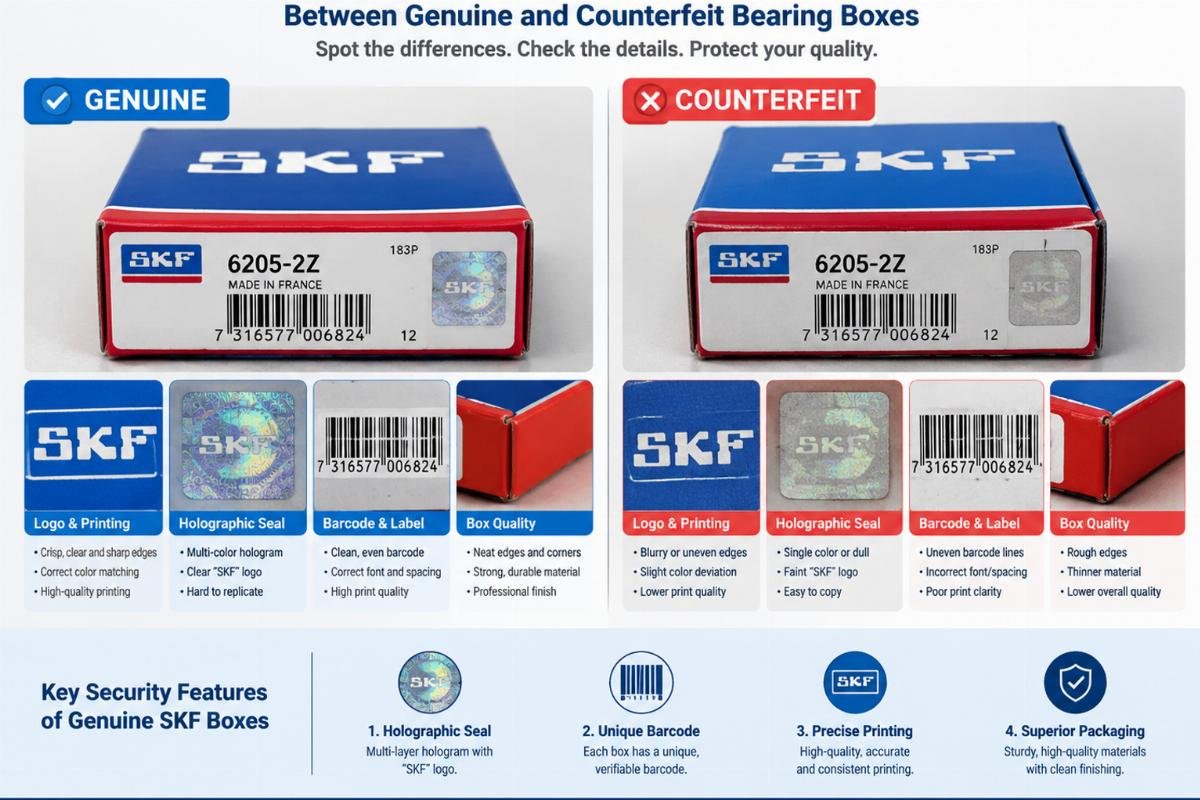
When sourcing Ski Lift and Cable Car Bearings, insist on full traceability. Ask for the original certificate of conformity and check the batch number. Genuine suppliers will provide this without hesitation. If the documentation is vague or missing, the parts are likely refurbished or counterfeit. In my experience, the cost of verifying authenticity is negligible compared to the expense of an emergency airlift replacement during the ski season. Always prioritize suppliers who offer transparent documentation over those offering the lowest price without proof of origin.
What Are the Key Selection Criteria for Cable Cars?
Matching the bearing type to the specific load profile and environmental conditions is critical for long-term reliability.
Cable car systems involve various bearing applications, each with unique requirements. Main sheaves require large diameter spherical roller bearings to handle misalignment and heavy radial loads. Carriage wheels need compact, high-load capacity units that can withstand shock loads from track irregularities. Tension systems rely on precise angular contact or cylindrical roller bearings to maintain cable tension without slippage.
Selecting the wrong type can lead to inefficiency and failure. For instance, using a deep groove ball bearing in a main sheave application might seem cost-effective, but it cannot accommodate the shaft deflection and misalignment inherent in large structures. This leads to edge loading and rapid degradation. [NEED_CITE: bearing selection guidelines for misalignment and heavy radial loads]
I recall a project where a resort upgraded its tensioning system. They initially considered standard cylindrical rollers but switched to genuine SKF spherical roller bearings after analyzing the potential for shaft misalignment due to foundation settling. This decision proved wise when minor structural shifts occurred during the first winter. The self-aligning capability of the spherical rollers prevented any increase in vibration or noise, ensuring smooth operation throughout the season.

When evaluating Ski Lift and Cable Car Bearings, consider the dynamic load rating relative to the actual operating conditions. Calculate the equivalent dynamic load based on the weight of the cabins, passengers, and wind forces. Ensure the selected bearing has a sufficient safety margin. Additionally, verify the seal design. Labyrinth seals or contact seals with low-friction materials are essential to keep contaminants out while retaining grease in harsh, snowy environments. Proper selection ensures that the bearing performs as intended, reducing the frequency of maintenance interventions.
How to Ensure Reliable Sourcing for Resort MRO?
Consolidating mixed-brand orders with a single trusted supplier minimizes logistics complexity and ensures faster response times for emergency replacements.
Maintenance, Repair, and Operations (MRO) for ski resorts often involves urgent needs. When a bearing fails, every hour of downtime translates to lost revenue. Sourcing from multiple vendors complicates logistics and increases the risk of receiving incompatible or counterfeit parts. A reliable supplier offers a one-stop solution, stocking genuine products from major brands like SKF, FAG, INA, and NSK.
Flexibility in minimum order quantities (MOQ) is also crucial. Resorts may need a single emergency spare part or a full container load for seasonal stockpiling. Suppliers who can accommodate both scenarios provide significant value. They also offer technical support, helping engineers cross-reference models and select equivalents when original part numbers are obsolete.
A Latin American mining operator faced a similar challenge with their haul truck fleet. By consolidating their bearing purchases with a single global supplier, they reduced lead times and gained access to technical expertise for failure analysis. This approach can be directly applied to ski resort MRO. Instead of managing multiple relationships, resorts can rely on a partner who understands the critical nature of their operations.
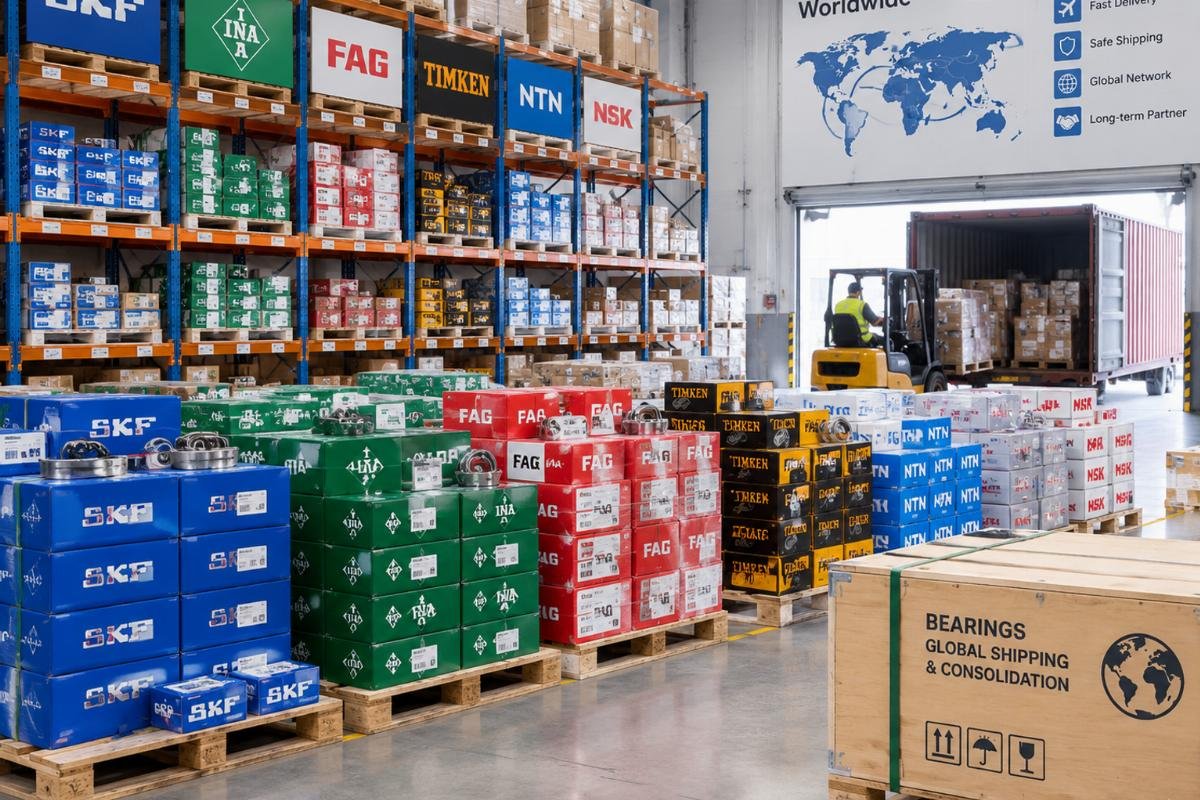
When choosing a partner for Ski Lift and Cable Car Bearings, look for suppliers with massive spot inventory and global shipping capabilities. They should offer inspection services to verify quality before shipment and provide long-term after-sales support. This includes assistance with failure analysis to prevent recurrence. By building a relationship with a reputable supplier, resorts can ensure they have access to genuine, high-quality bearings whenever needed, minimizing the risk of unexpected downtime.
Conclusion
Genuine traceability and precise technical selection are non-negotiable for ski lift reliability.
Extreme cold and dynamic loads demand bearings with correct internal clearance and compatible lubrication. Avoiding refurbished parts and ensuring full documentation protects against catastrophic failures. Partnering with a supplier who offers genuine Ski Lift and Cable Car Bearings with flexible sourcing options ensures operational continuity throughout the winter season.

About the author
author
Editor covering global sourcing, supplier verification, and industrial product knowledge. Content is compiled from manufacturer specifications, industry standards, and hands-on experience with international B2B buyers. Every article is fact-checked before publishing to help procurement professionals make informed decisions.
More articles by author

