Snow Plow & Winter Equipment Bearings: Wholesale Supplier
Stop premature Snow plow bearings failure caused by salt ingress and cold-induced grease stiffening. Prioritize multi-lip seals, C3/C4 clearances, and synthetic lubricants over basic load ratings to ensure operational reliability below freezing. Secure durable components for municipal fleets with our verified technical specifications.
 Written by
author
- Published on
- 7 min read
- Updated

Snow Plow & Winter Equipment Bearings: Wholesale Supplier
Higher load ratings do not guarantee longevity in winter operations.
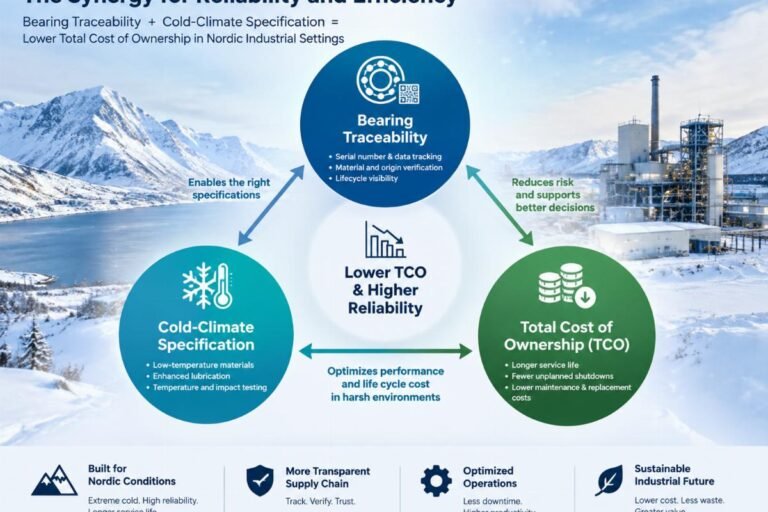
The primary cause of premature failure in snow plow and winter equipment bearings is not mechanical overload, but seal degradation from de-icing salts and lubricant stiffening in extreme cold. Selecting components with multi-lip sealing systems, C3 or C4 internal clearances for thermal contraction, and synthetic low-temperature grease ensures operational reliability when temperatures drop below freezing.
Walking the aisles at heavy machinery exhibitions in Chicago and Hanover, I have watched procurement managers for municipal fleets and private contractors inspect bearing housings with a level of scrutiny usually reserved for aerospace components. The environment these machines operate in is uniquely hostile. It is not just the cold; it is the combination of sub-zero temperatures and aggressive chemical agents. A common misconception among buyers new to this sector is that a heavier bearing will last longer. In reality, a robust tapered roller bearing with standard seals will fail faster than a lighter unit equipped with specialized protection if exposed to brine. [NEED_CITE: correlation between seal integrity and bearing life in corrosive environments]
Understanding why standard components fail requires looking beyond basic dynamic load ratings. The following analysis breaks down the technical specifications that actually matter for winter equipment, drawing from field observations and industry standards.
Why Do Standard Bearings Fail in Snow Plows?
Salt ingress and seal failure are the primary culprits, not load capacity.
Standard industrial bearings are often designed for clean or moderately contaminated environments. Snow plows, however, operate in a slurry of melted ice, road grit, and calcium chloride or magnesium chloride de-icers. These chemicals are hygroscopic and highly corrosive. When they penetrate the bearing housing, they wash away lubricant and attack the steel surfaces.
A North American retrofitter once shared a case where a fleet of plows experienced catastrophic bearing seizures within months of installation. The root cause was not excessive weight or impact, but the failure of single-lip rubber seals against salt spray. The brine penetrated the interface, leading to rapid corrosion of the rolling elements. [NEED_CITE: mechanisms of corrosion fatigue in bearing steels]
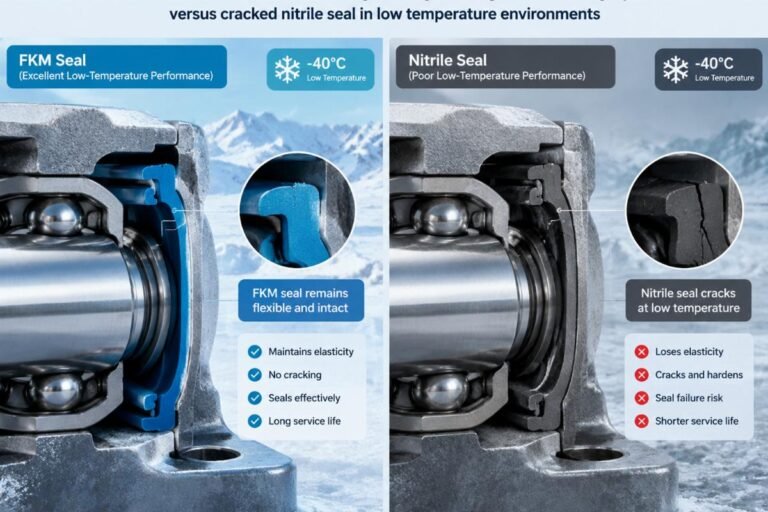
The failure mode is distinct. Instead of gradual wear, operators see sudden lock-ups or severe vibration caused by pitting on the raceways. This is why specifying bearings with enhanced sealing is critical. Multi-lip contact seals or even non-contact labyrinth seals with grease purge capabilities offer significantly better protection. The material of the seal itself also matters; standard nitrile rubber can become brittle in extreme cold, losing its ability to maintain contact with the shaft. Fluoroelastomer or specialized low-temperature compounds remain flexible, maintaining the barrier against contaminants.

Which Bearing Types Suit Winter Equipment Best?
Tapered and spherical rollers dominate, but require specific seal upgrades.
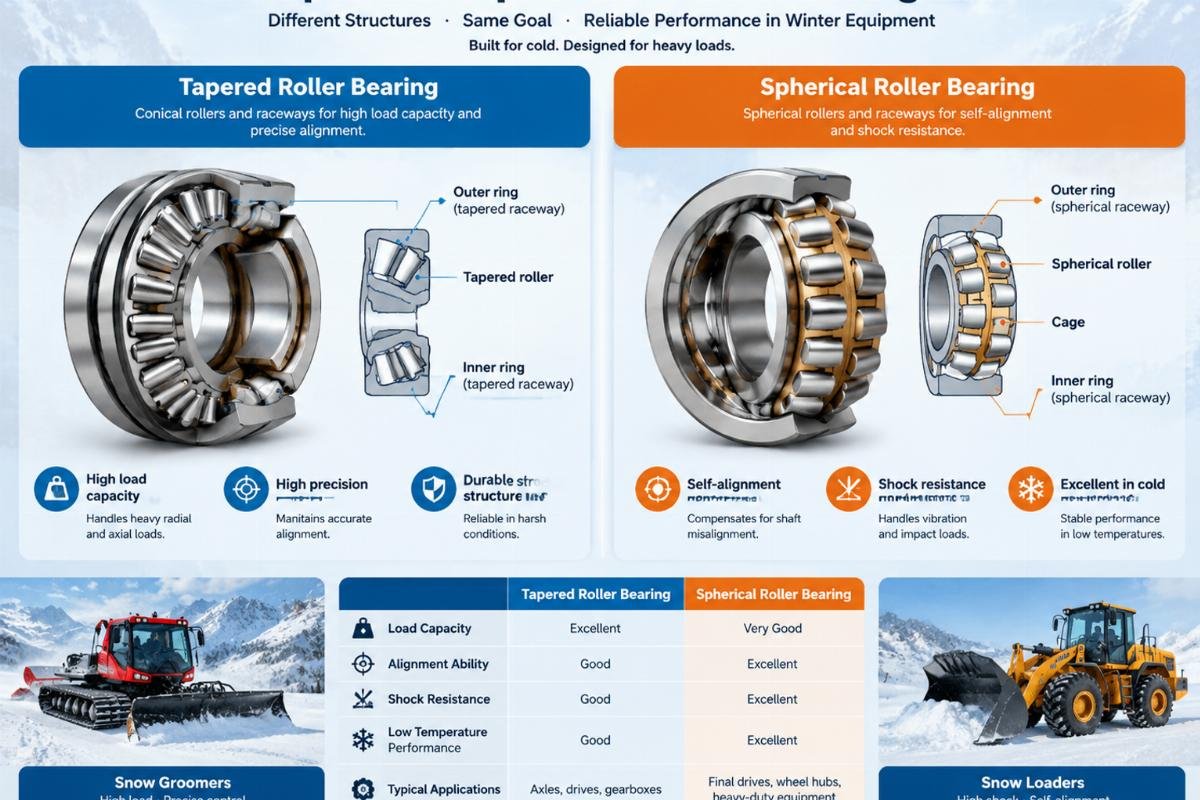
Not all bearing geometries perform equally under the combined radial and axial loads typical of snow plow blades and spreader mechanisms. Tapered roller bearings are the standard choice for wheel hubs and pivot points due to their ability to handle heavy thrust loads. However, their complex geometry makes them more vulnerable to misalignment if the housing distorts due to thermal shock.
Spherical roller bearings are frequently used in spreader assemblies where some degree of misalignment is inevitable. Their self-aligning capability compensates for shaft deflection, but the internal clearance must be carefully selected. In cold weather, metals contract. If the initial clearance is too tight, the bearing can preload itself as temperatures drop, leading to overheating and premature failure.
| Bearing Type | Typical Application | Key Winter Requirement | Seal Performance Need |
|---|---|---|---|
| Tapered Roller | Wheel Hubs, Blade Pivots | High thrust load capacity | Robust multi-lip seals |
| Spherical Roller | Spreader Mechanisms | Misalignment compensation | Wide inner ring seals |
| Cylindrical Roller | Track Systems, Conveyors | High radial load support | Protection against brinelling |
A municipal fleet maintenance manager noted that switching to spherical roller bearings with wider inner rings and integrated seals reduced downtime in their salt spreaders. The key was not just the bearing type, but the integration of the seal into the bearing unit itself, eliminating gaps where salt could enter. [NEED_CITE: best practices for bearing selection in off-road heavy equipment]
When sourcing Snow plow bearings, it is essential to verify that the specific variant chosen is rated for these conditions. Many standard catalog items do not include the necessary sealing upgrades unless explicitly specified.
How Does Low-Temperature Lubrication Impact Lifespan?
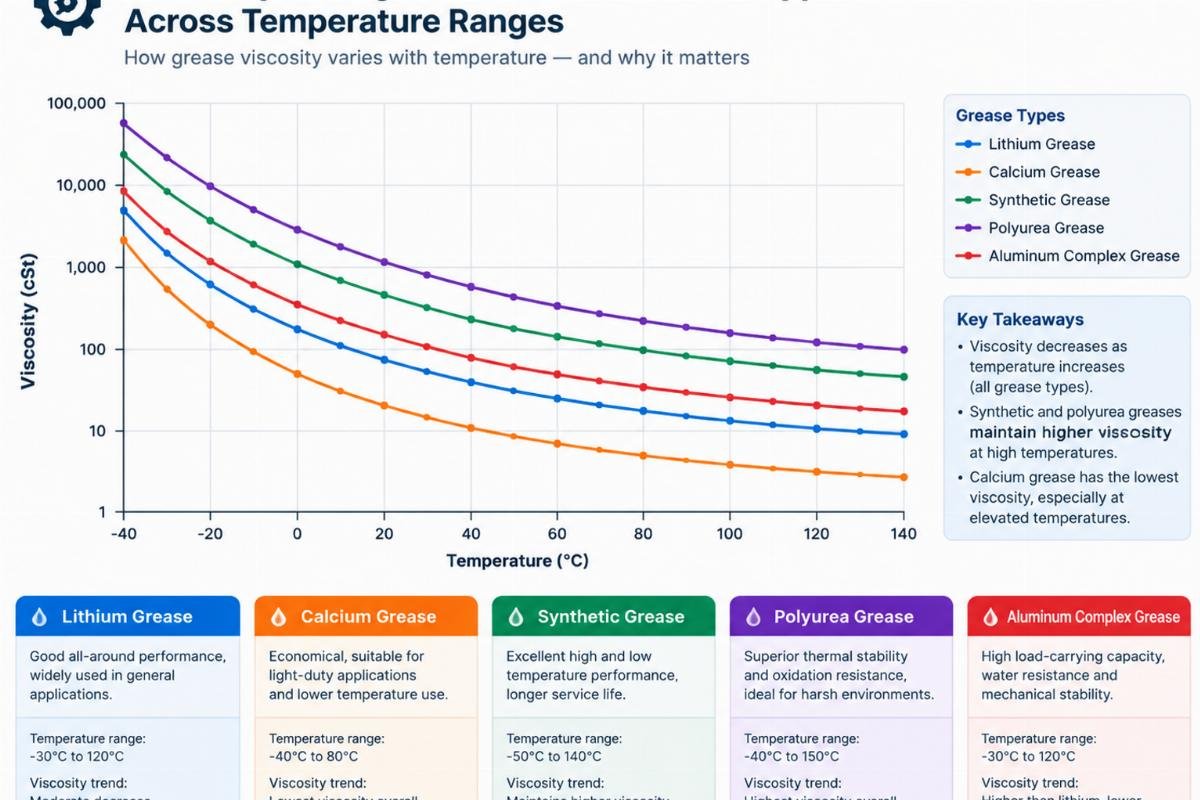
Grease viscosity dictates startup torque; synthetic greases outperform mineral oils below -20°C.
Even the most perfectly sealed bearing will fail if the lubricant inside turns to wax. Standard mineral oil-based greases have a high pour point. As temperatures drop, the oil thickens, increasing the torque required to start the bearing. In extreme cold, this resistance can be so high that it prevents the equipment from operating or causes excessive drag on the drive system.
Synthetic base oils, such as polyalphaolefins (PAO) or esters, maintain much lower viscosity at low temperatures. They flow more easily, ensuring that lubricant reaches the rolling elements quickly during startup. This is critical for preventing dry running and subsequent wear. [NEED_CITE: viscosity-temperature characteristics of synthetic vs mineral lubricants]
A case involving heavy-duty excavators used for winter road clearing highlighted this issue. The cylindrical roller bearings in the track systems suffered from brinelling due to thermal shock and inadequate lubrication film strength at startup. Switching to a synthetic grease with a lower base oil viscosity significantly improved performance. The equipment started smoother, and the incidence of early bearing failure dropped noticeably.
It is not enough to simply choose a “winter” grease. The consistency (NLGI grade) must also be appropriate. A softer grease (NLGI 1 or 0) may be required for very low temperatures to ensure pumpability and distribution, whereas a standard NLGI 2 grease might be too stiff. Buyers should consult technical data sheets for the low-temperature torque limits of the grease-bearings combination.
What Specifications Should Buyers Prioritize?
Focus on C3/C4 clearances, multi-lip seals, and corrosion-resistant coatings over basic dynamic load ratings.
When evaluating Snow plow bearings for procurement, the datasheet can be misleading if one only looks at the dynamic load rating (C). While important, this number does not reflect the bearing’s ability to survive the environmental challenges of winter operation. Instead, prioritize the following specifications:
- Internal Clearance: Standard clearance (C0) is often insufficient for winter applications. C3 or C4 clearances allow for thermal contraction of the shaft and housing without inducing harmful preload. This is particularly important for large bearings where the mass of the metal leads to significant dimensional changes. [NEED_CITE: ISO standards for bearing internal clearance classes]
- Seal Type and Material: Look for bearings with dual-lip contact seals made from low-temperature resistant materials. Some manufacturers offer seals with additional flingers or protective caps. The IP rating for salt spray resistance is a valuable metric, though often not listed in standard catalogs. Requesting test data from the supplier is advisable.
- Corrosion Resistance: Beyond seals, the bearing steel itself can be treated. Phosphate coatings or black oxide finishes on the outer ring can provide an extra layer of protection against surface rust during storage and initial exposure. For extreme environments, stainless steel variants exist, though they come with a premium cost and lower load capacity.
A European buyer once sourced a batch of bearings that looked identical to previous orders but failed rapidly. The difference was the internal clearance. The new batch had standard C0 clearance, which became effectively negative in the cold, leading to immediate overheating. Verifying the clearance class on the packaging and documentation is a simple but critical step.

Sourcing these specialized components requires a supplier who understands the nuance between a standard industrial bearing and one fit for winter service. Many general distributors stock only the most common variants, leaving buyers to discover the compatibility issues only after installation. A knowledgeable partner can guide the selection of Snow plow bearings that match the specific operational profile, whether it is a light-duty pickup plow or a heavy municipal spreader.
Our approach involves maintaining a diverse inventory of genuine products from major manufacturers like SKF, TIMKEN, and NSK, alongside reliable domestic lines. This allows us to offer mixed-batch procurement for MRO clients who need to replace various components across a fleet without managing multiple suppliers. We focus on providing the technical documentation and traceability that serious operators require, ensuring that every Snow plow bearings unit meets the stated specifications.
Conclusion
Durability in winter equipment is defined by environmental protection, not just load capacity.
Selecting the right bearings for snow plows and winter machinery requires a shift in focus from pure mechanical strength to resilience against cold and corrosion. Prioritizing advanced sealing, appropriate internal clearances, and low-temperature lubrication prevents the majority of premature failures. By understanding these technical nuances, buyers can secure components that deliver reliable performance throughout the harsh winter season.
Tags

About the author
author
Editor covering global sourcing, supplier verification, and industrial product knowledge. Content is compiled from manufacturer specifications, industry standards, and hands-on experience with international B2B buyers. Every article is fact-checked before publishing to help procurement professionals make informed decisions.
More articles by author