Wind Turbine Bearing Replacement: Genuine Brands, Bulk Supplier
Prevent costly downtime with our guide to wind turbine bearing replacement for O&M operators. Source genuine, traceable components from multi-brand suppliers to avoid counterfeit risks and ensure compatibility with harsh environments. Optimize emergency lead times through flexible consolidation strategies that protect your assets.
 Written by
author
- Published on
- 8 min read
- Updated

Wind Turbine Bearing Replacement: Genuine Brands, Bulk Supplier
Cheaper bearings often cost more in the long run.
Sourcing genuine, traceable wind turbine bearings from reliable multi-brand suppliers is the most effective strategy to prevent catastrophic failures and minimize unplanned downtime for O&M operators. Authentic components with verified documentation ensure compatibility with harsh environmental demands, while consolidated sourcing from full-range providers accelerates emergency lead times compared to single-brand channels.
I still remember the heat radiating off the nacelle of a turbine in Ethiopia. It was not just the sun; it was the friction of a yaw bearing that had failed prematurely. The client had opted for unbranded replacements to cut initial procurement costs. Within months, the entire turbine was stationary. We had to air-freight authentic spherical roller bearings to restore operations. The cost of that emergency logistics effort dwarfed the initial savings on the cheap parts. This painful lesson reshaped how I approach wind turbine bearing replacement. In heavy-load applications, cutting corners is a disaster waiting to happen. [NEED_CITE: impact of counterfeit bearings on wind turbine reliability]
When you are responsible for keeping a wind farm operational, the priority shifts from unit price to total cost of ownership. The right supplier does not just sell a part; they provide the assurance that the component will survive the dynamic loads and harsh conditions inherent to wind energy generation.
Why Do Wind Turbine Bearings Fail Prematurely?
Harsh environments and inadequate lubrication are the primary accelerants of bearing wear.
Wind turbines operate in some of the most demanding industrial environments on earth. From the salt spray of offshore installations to the abrasive dust of inland sites, the external conditions constantly challenge the integrity of sealing solutions and lubrication films. When a bearing fails, it is rarely a random event. It is usually the result of accumulated stress that exceeds the design limits of inferior materials or poor manufacturing consistency.
Consider the case of a wind farm in a high-dust region in Africa. The yaw bearings experienced premature wear because the seals could not effectively keep out fine particulate matter. The resulting contamination acted as an abrasive paste, grinding down the raceways. [NEED_CITE: common failure modes in wind turbine yaw bearings per ISO 15243] This led to extended downtime days and a cost ratio that far exceeded the value of higher-specification sealed bearings.
| Failure Factor | Impact on Bearing Life | Mitigation Strategy |
|---|---|---|
| Contamination (Dust/Salt) | Noticeably reduced service life | Enhanced sealing solutions |
| Poor Lubrication | Accelerated wear and fatigue | Regular interval monitoring |
| Misalignment | Uneven load distribution | Precision installation tools |
| Counterfeit Materials | Catastrophic early failure | Traceability verification |
The dynamic load rating of a bearing is not just a number on a datasheet; it is a promise of performance under specific conditions. If the material purity is compromised, as seen in many counterfeit products, the fatigue resistance drops significantly. This means that even if the bearing looks identical to a genuine SKF or FAG unit, its internal structure cannot withstand the cyclic stresses of wind rotation. [NEED_CITE: importance of material purity in bearing fatigue life]

Understanding these failure mechanisms is critical for any O&M team. It highlights why sourcing from a supplier who understands the technical nuances of wind turbine bearing replacement is essential. They can guide you toward components with the appropriate load capacities and sealing technologies for your specific site conditions.
How to Choose Between Main Shaft, Pitch, and Yaw Bearings?
Each bearing position requires specific load capacities and sealing solutions tailored to its function.
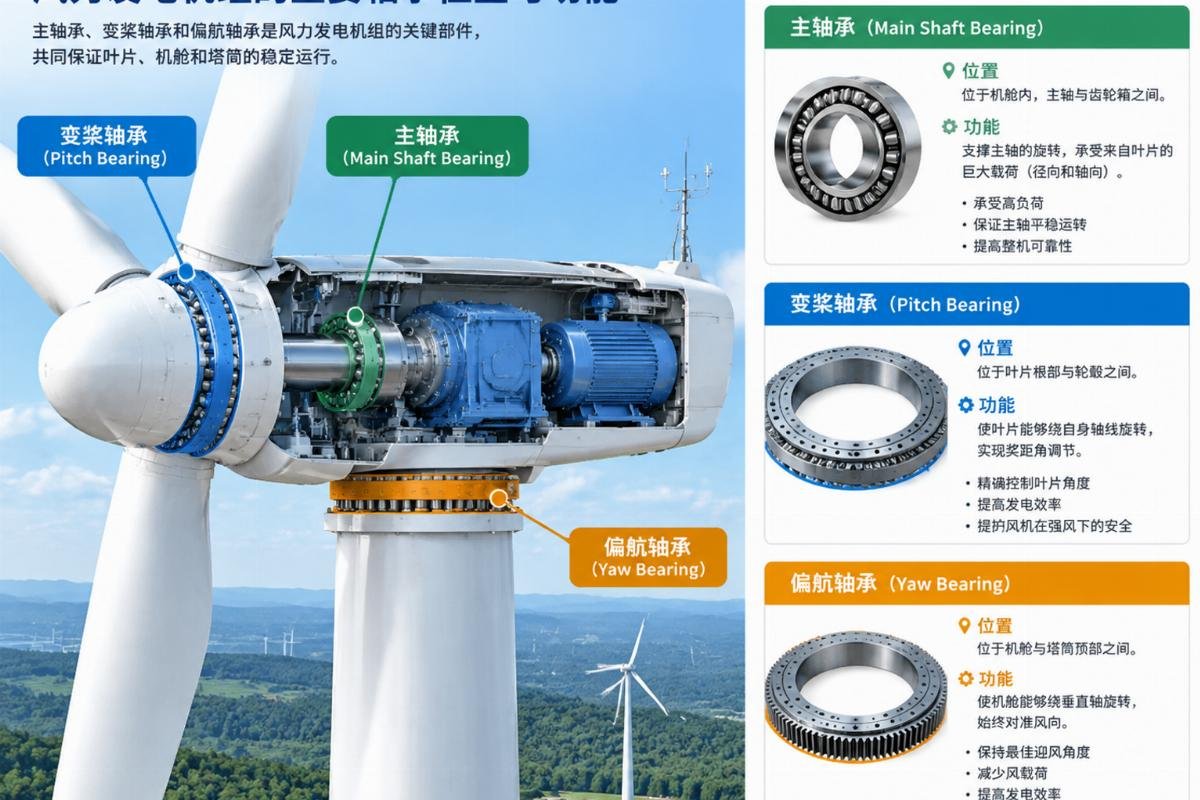
Not all bearings in a wind turbine are created equal. The main shaft, pitch, and yaw systems each face unique mechanical challenges. Selecting the wrong type, even from a reputable brand, can lead to suboptimal performance and early failure. A comprehensive wind turbine bearing replacement strategy must account for these distinct requirements.
The main shaft bearing supports the rotor and transfers the torque to the gearbox. It handles massive radial and axial loads. Here, spherical roller bearings or tapered roller bearings from brands like TIMKEN or NSK are common choices due to their ability to accommodate misalignment and heavy shocks. [NEED_CITE: typical bearing types used in wind turbine main shafts]
Pitch bearings adjust the angle of the blades to optimize power capture. They operate under oscillating motion and must resist false brinelling. Angular contact ball bearings or specialized slewing rings are often used. The precision of these components is vital for efficient energy production.
Yaw bearings rotate the nacelle to face the wind. They are subjected to slow oscillating movements and high static loads. Robust sealing is critical here to prevent ingress of environmental contaminants. A failure in the yaw system, as seen in the Ethiopia case, can halt the entire turbine.
| Bearing Position | Primary Load Type | Common Bearing Types | Key Selection Criteria |
|---|---|---|---|
| Main Shaft | Heavy Radial/Axial | Spherical Roller, Tapered Roller | High load capacity, misalignment tolerance |
| Pitch | Oscillating, Combined | Angular Contact, Slewing Rings | False brinelling resistance, precision |
| Yaw | Static, Slow Oscillation | Slewing Rings, Large Diameter Ball | Robust sealing, corrosion resistance |
Choosing the right component involves more than matching a part number. It requires understanding the operational context. A supplier with a full-range inventory can offer cross-brand equivalent model consultation, ensuring that you get the best technical fit for your specific turbine model. This expertise is invaluable when navigating the complexities of wind turbine bearing replacement.
Genuine vs. Aftermarket: How to Verify Bearing Authenticity?
Traceability documents and authorized multi-brand suppliers are the only reliable defense against counterfeit risks.
The market is flooded with aftermarket bearings that mimic the packaging and appearance of premium brands like SKF, FAG, and INA. However, the internal quality is often vastly inferior. Using these components in a wind turbine is a significant risk. A counterfeit main shaft bearing can fail catastrophically, causing secondary damage to the gearbox and generator. The replacement cost multiplier in such scenarios is substantial, not to mention the lead time delay for repairing the collateral damage. [NEED_CITE: economic impact of counterfeit bearings in heavy industry]
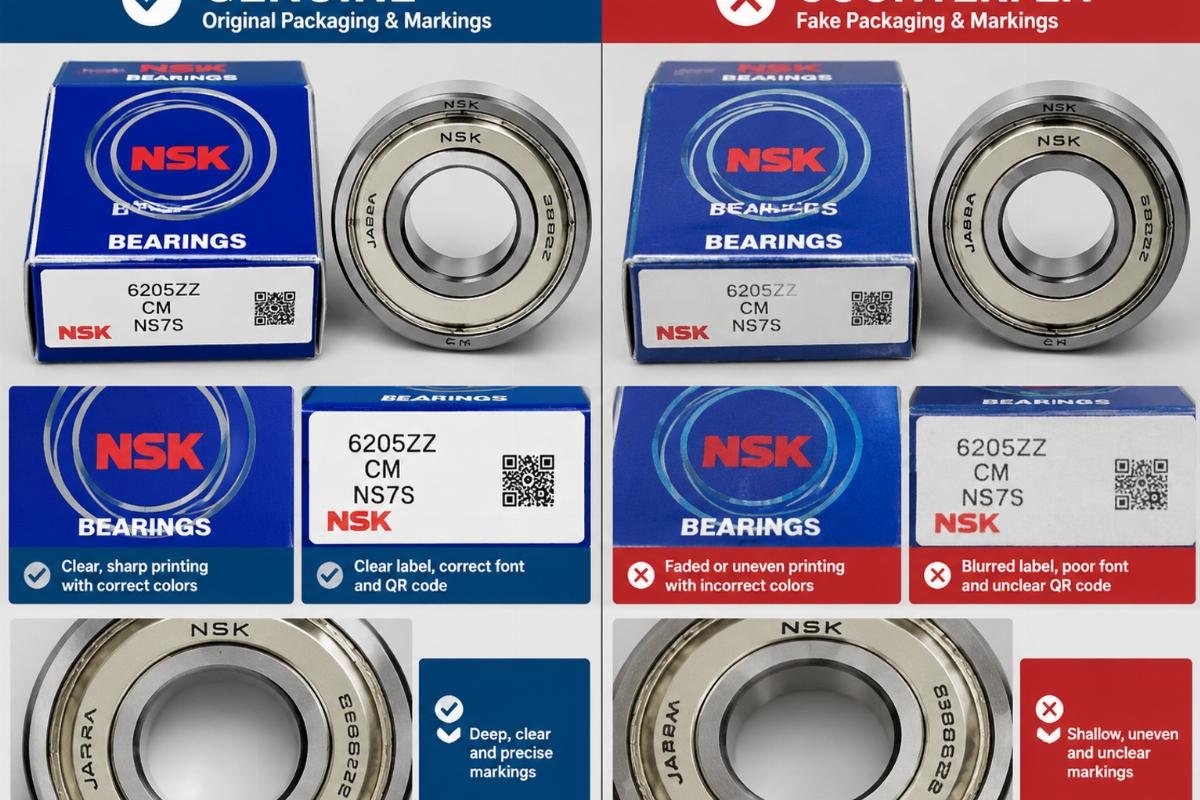
Verifying authenticity requires a rigorous approach. First, demand complete traceability documentation. Genuine bearings come with certificates that track the product from the manufacturer’s production facilities to the distributor. Second, source from authorized multi-brand suppliers who have direct relationships with the brands. These suppliers have access to genuine stock and the technical support to verify it.
A US buyer once shared how they identified a batch of fake bearings by checking the laser etching on the inner ring. The depth and clarity were inconsistent with genuine FAG products. This simple check saved them from a potential failure. However, visual inspection is not always enough. Laboratory analysis of material composition is the definitive test, but it is impractical for every purchase. Therefore, relying on the reputation and documentation practices of your supplier is key.
| Verification Method | Reliability Level | Implementation Difficulty |
|---|---|---|
| Visual Inspection | Basic | Low |
| Packaging Check | Basic | Low |
| Traceability Docs | Verifiable | Medium |
| Material Analysis | Certified | High |
Sourcing from a supplier who stocks genuine products from multiple premium global brands ensures that you are getting authentic components. This eliminates the guesswork and provides peace of mind for O&M operators. When you prioritize traceability, you protect your assets from the hidden dangers of counterfeit parts.
How to Optimize Lead Time for Emergency Replacements?
Flexible MOQ and global consolidation from full-range suppliers minimize downtime during urgent repairs.
When a turbine goes down, every hour counts. The traditional approach of sourcing from single-brand official channels can be slow, especially for emergency replacements. These channels often have rigid minimum order quantities and longer lead times. In contrast, a full-range supplier with massive spot inventory can provide faster solutions.
Consider the scenario of seasonal maintenance where multiple turbine models require attention. Sourcing mixed-brand bearings for different units from separate suppliers creates logistical nightmares. A supplier who offers complete one-stop sourcing solutions for mixed-brand, mixed-size bearing packages can consolidate these orders into a single shipment. This reduces administrative burden and shipping costs. [NEED_CITE: benefits of supply chain consolidation in MRO operations]
For example, a regional distributor in Southeast Asia needed to restock various bearings for a large wind farm project. By working with a supplier who offered container-load consolidation, they were able to mix SKF, NTN, and domestic Chinese lines in a single shipment. This flexibility allowed them to meet their budget constraints while ensuring they had the necessary SKU variety on hand.
Emergency consolidation is another critical advantage. When a critical failure occurs, having a supplier who can air-freight a single unit or a small batch from global stock is invaluable. This capability transforms a potential weeks-long outage into a matter of days. The ability to source from a wide network of brands means that if one brand is out of stock, an equivalent alternative from another premium brand can be sourced quickly.
| Sourcing Strategy | Lead Time Flexibility | Cost Efficiency |
|---|---|---|
| Single-Brand Official | Low | Variable |
| Multi-Brand Consolidator | High | High |
| Local Stockist | Medium | Low |
Optimizing lead time is not just about speed; it is about reliability. A supplier with a global footprint and a commitment to urgent consolidation services ensures that you have the parts you need, when you need them. This strategic approach to wind turbine bearing replacement keeps your turbines running and your revenue flowing.

Conclusion
Authenticity and agility define successful O&M strategies.
Prioritizing genuine, traceable bearings from multi-brand suppliers prevents costly failures and ensures long-term reliability. By understanding specific bearing requirements and leveraging flexible sourcing options, operators can significantly reduce unplanned downtime. This approach transforms maintenance from a reactive cost center into a proactive asset protection strategy.

About the author
author
Editor covering global sourcing, supplier verification, and industrial product knowledge. Content is compiled from manufacturer specifications, industry standards, and hands-on experience with international B2B buyers. Every article is fact-checked before publishing to help procurement professionals make informed decisions.
More articles by author