Dryer Cylinder Bearing Failures: Causes & Fixes – Wholesale Supplier
Most dryer cylinder bearing failures stem from uncontrolled installation interference and thermal mismanagement, not product defects. Correcting shaft tolerances, selecting heat-stable lubricants, and managing thermal expansion resolve these issues. Implement precise mounting and condition monitoring to prevent premature seizure and extend operational life.
 Written by
author
- Published on
- 7 min read
- Updated
Dryer Cylinder Bearing Failures: Causes & Fixes – Wholesale Supplier
Most dryer cylinder bearing failures are not caused by defective products, but by uncontrolled installation interference and thermal mismanagement.
The primary reason for premature failure in dryer cylinder applications is the loss of internal clearance due to improper fit control and high-temperature lubricant degradation. Correcting shaft and housing tolerances during mounting, combined with selecting heat-stable lubricants and managing thermal expansion, resolves the majority of these issues.
Walking into a paper mill in the Middle East last year, the air smelled of burnt grease and hot metal. A production line had stopped because a critical dryer cylinder bearing seized after only six months of operation. The maintenance team pointed at the blackened spherical roller bearing, insisting it was a quality defect from the supplier. They expected a replacement under warranty. However, when we dismantled the unit, the raceways showed clear signs of smearing and discoloration consistent with excessive preload, not material fatigue. The installer had forced the bearing onto the shaft without accounting for the thermal expansion that occurs once the cylinder reaches operating temperature. This experience reinforced a hard truth in heavy industry: selling bearings is easy, but ensuring they survive the installation process requires deep technical oversight. [NEED_CITE: common installation errors in rotating equipment]
Understanding why these components fail requires looking beyond the brand name on the box. It demands a rigorous examination of how mechanical fits interact with extreme heat.
What Are the Primary Causes of Dryer Cylinder Bearing Failures?
Failures in dryer cylinders are rarely sudden events; they are the cumulative result of installation errors and sustained thermal stress.
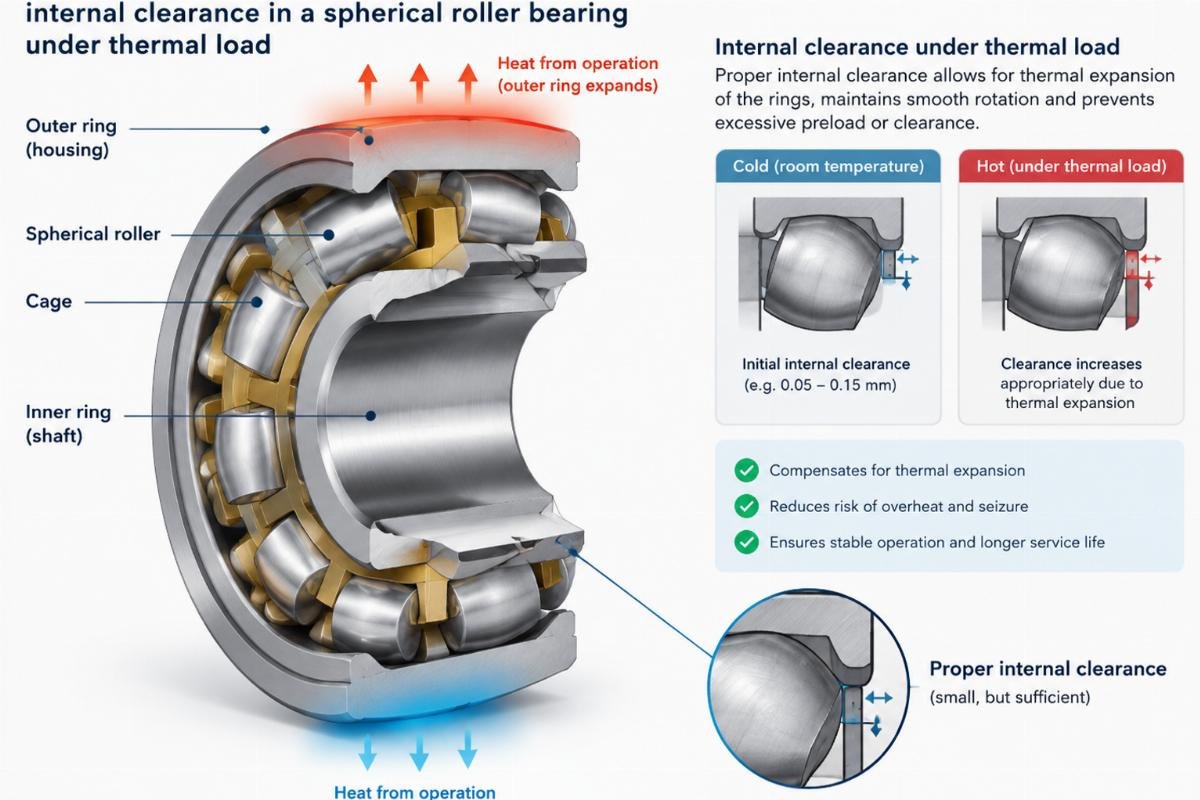
The two dominant factors driving premature failure are incorrect interference fits and lubricant breakdown. When a bearing is mounted with too tight an interference fit on the shaft, the inner ring expands radially. This expansion reduces the internal radial clearance of the bearing. In a cold state, the bearing might spin freely. But as the dryer cylinder heats up, the shaft expands further, eliminating the remaining clearance entirely. The rolling elements then operate under zero or negative clearance, generating immense friction and heat. [NEED_CITE: effect of interference fit on radial clearance reduction]
Simultaneously, standard lubricants cannot withstand the high temperatures inside a dryer section. As the temperature rises, the base oil separates from the thickener, a process known as oil bleeding or channeling. Without adequate oil film, metal-to-metal contact occurs, leading to rapid wear and eventual seizure. Many operators mistakenly believe that adding more grease will solve the heating issue. In reality, over-greasing causes churning, which generates additional heat and accelerates oil separation. [NEED_CITE: lubrication mechanics in high-temperature bearings]
| Failure Mode | Root Cause | Visual Symptom |
|---|---|---|
| Inner Ring Creep | Insufficient interference fit | Polished shaft surface, fretting corrosion |
| Seizure | Excessive interference fit + Thermal expansion | Discolored raceways, welded rolling elements |
| Lubricant Breakdown | High temperature + Wrong grease type | Dry, caked grease residue, oil separation |
| Fatigue Spalling | Misalignment or overload | Subsurface cracks, flaking material |
A cement plant operator in Southeast Asia faced similar vibration issues in their rotary kiln support rollers. The inner rings were creeping on the shafts because the fit was too loose, causing relative motion and fretting corrosion. By verifying the shaft tolerance and ensuring the correct interference range, the movement stopped. These cases highlight that the mechanical interface is just as critical as the bearing steel itself.

How to Diagnose Bearing Failure Symptoms on Site?
Identifying specific discoloration patterns, noise signatures, and temperature spikes allows for precise pinpointing of the failure mode before catastrophic damage occurs.
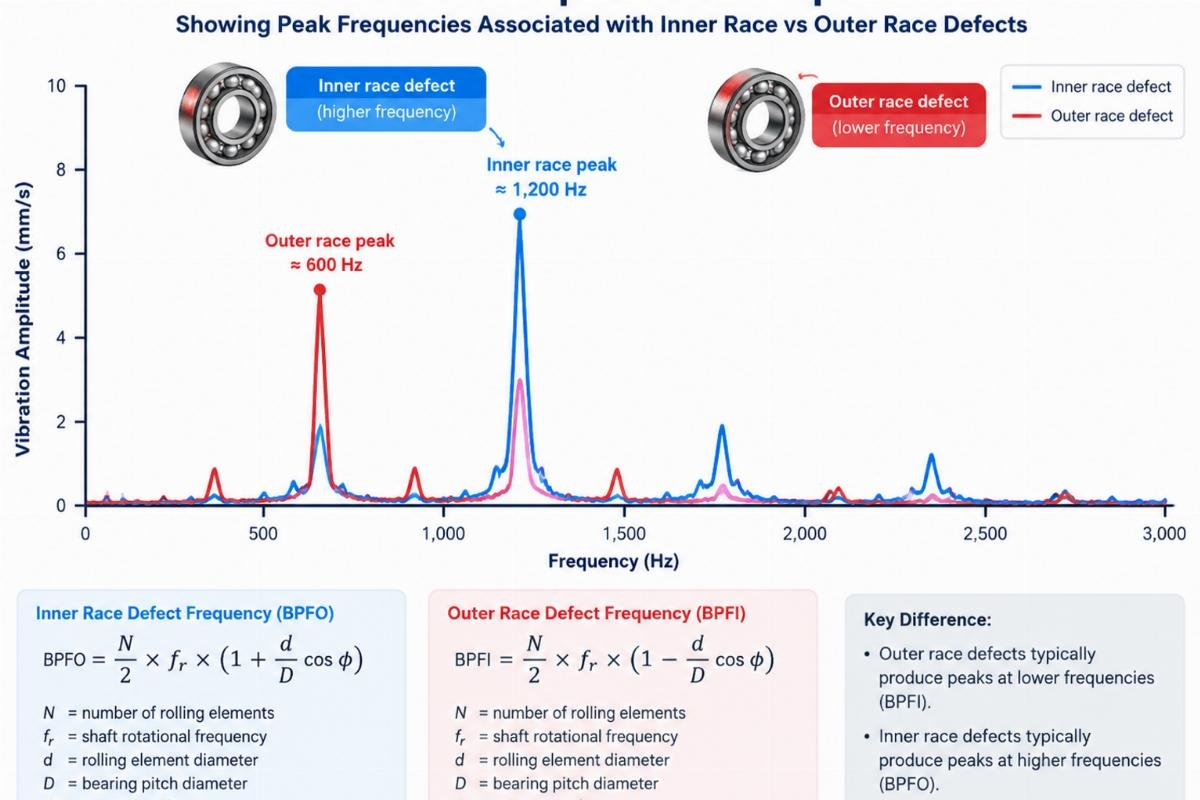
Diagnosis begins with observation. Before removing a bearing, technicians should monitor vibration spectra and temperature trends. A steady rise in temperature often indicates lubrication issues or excessive preload. Sudden spikes in vibration amplitude usually point to mechanical damage such as spalling or cage breakage. [NEED_CITE: vibration analysis standards for rotating machinery]
Visual inspection after removal provides definitive clues. If the raceways appear blue or straw-colored, the bearing has operated at temperatures far exceeding its design limit. This discoloration confirms that the hardness of the steel has been compromised, leading to rapid deformation. If the grease appears dry and chalky, it indicates that the dropping point of the lubricant was exceeded, causing the thickener to collapse.
In one instance, a textile dryer manufacturer reported unusual noise from their tension rollers. Upon inspection, the outer ring showed signs of false brinelling—small indentations caused by vibration while the machine was stationary. This suggested that the bearing was not properly secured or that the machine experienced excessive external vibration during idle periods. Identifying this early prevented a full-scale failure during production runs.
What Are the Step-by-Step Fixes and Maintenance Actions?
Correcting fit tolerances, optimizing relubrication volume, and managing thermal expansion are the essential steps to restore operational stability.
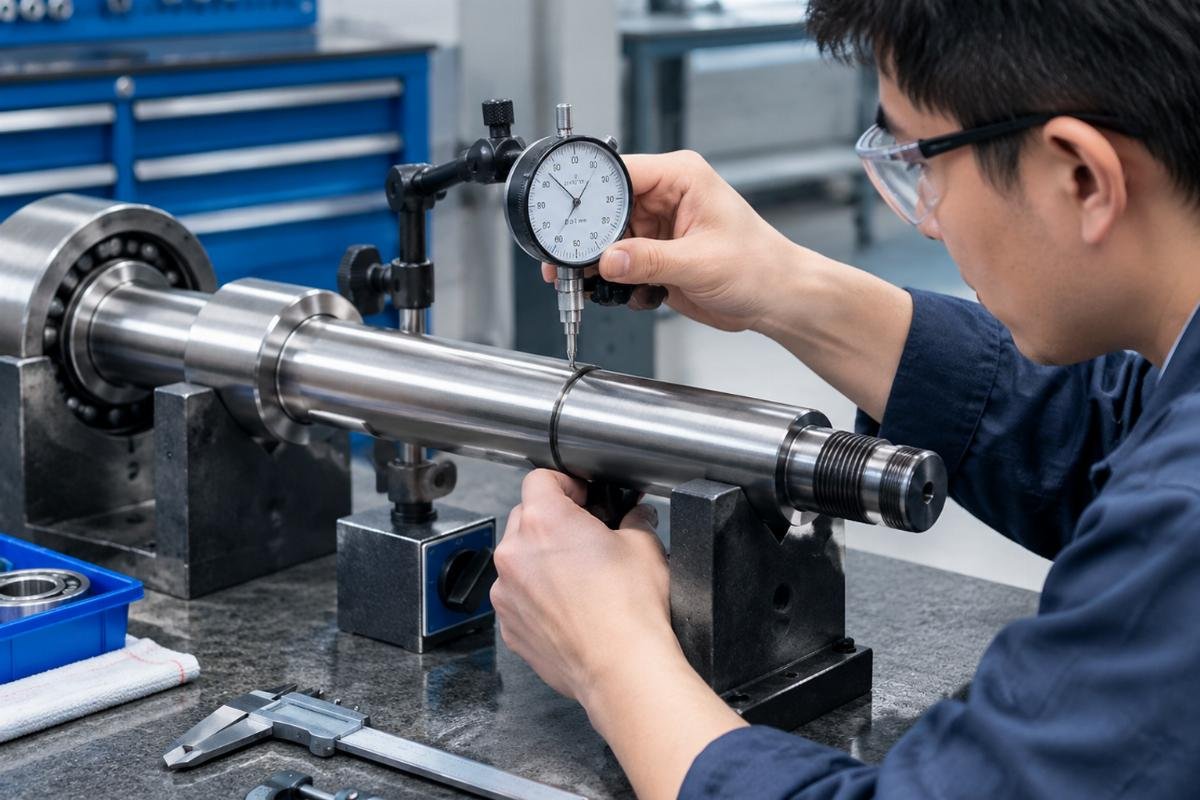
Fixing a failed dryer cylinder bearing involves more than swapping the component. The surrounding hardware must be verified to prevent recurrence. First, measure the shaft and housing dimensions using calibrated micrometers. Compare these measurements against the bearing manufacturer’s recommended tolerance classes. If the shaft is worn or out of tolerance, it must be machined or sleeved to restore the correct interference fit. [NEED_CITE: ISO tolerance classes for bearing seats]
Second, select a lubricant specifically designed for high-temperature applications. Look for greases with a high dropping point and synthetic base oils that maintain viscosity at elevated temperatures. Calculate the correct relubrication interval based on operating speed and temperature, rather than relying on fixed time schedules. Over-greasing is a common mistake; use ultrasonic monitoring tools to determine the exact amount of grease needed to fill the free space without causing churning.
Third, account for thermal expansion. When calculating the required internal clearance, consider the difference in thermal expansion coefficients between the bearing steel, the shaft, and the housing. Select a bearing with an initial clearance class that accommodates this expansion, ensuring that sufficient clearance remains at operating temperature. For example, a C3 or C4 clearance may be necessary depending on the temperature differential.
A regional distributor in Latin America worked with a sugar mill to implement these steps. By switching to a higher clearance bearing and using a synthetic high-temperature grease, they extended the service life of their dryer rolls significantly. The key was not just the product, but the precise application of technical principles during maintenance.
How to Prevent Future Failures Through Proper Installation?
Strict adherence to mounting procedures and continuous condition monitoring drastically extend service life and minimize unplanned downtime.
Prevention starts with proper handling and mounting. Never hammer a bearing directly onto the shaft. Use induction heaters to expand the inner ring uniformly, allowing it to slide onto the shaft with minimal force. This method avoids damaging the raceways and ensures a uniform fit. Verify the temperature of the bearing during heating to avoid exceeding the material’s tempering limit, which can reduce hardness. [NEED_CITE: safe heating limits for bearing installation]
Ensure that the housing bore is clean and free of burrs. Any irregularity can cause misalignment, leading to uneven load distribution across the rolling elements. Use alignment tools to check the concentricity of the shaft and housing after installation. Even minor misalignment can create edge loading, which dramatically reduces bearing life.
Implement a condition monitoring program. Regularly check temperature and vibration levels. Trending this data allows maintenance teams to detect anomalies before they become critical failures. For distributors and MRO operators, providing customers with access to genuine multi-brand spherical roller bearings and technical consultation on installation practices adds significant value. It transforms a simple parts transaction into a reliability partnership.
Our supply chain supports this approach by offering genuine products from major global brands alongside reliable domestic lines. We provide mixed-batch sourcing for urgent maintenance needs, ensuring that mills and plants can keep running without waiting for single-brand availability. Technical datasheets and selection support help local teams make informed decisions about clearance classes and lubrication requirements.

Conclusion
Dryer cylinder bearing reliability depends on precision installation and thermal management, not just component quality.
By controlling interference fits, selecting appropriate high-temperature lubricants, and monitoring operational conditions, operators can eliminate the root causes of premature failure. These technical adjustments turn unpredictable breakdowns into manageable maintenance tasks.
Tags

About the author
author
Editor covering global sourcing, supplier verification, and industrial product knowledge. Content is compiled from manufacturer specifications, industry standards, and hands-on experience with international B2B buyers. Every article is fact-checked before publishing to help procurement professionals make informed decisions.
More articles by author

