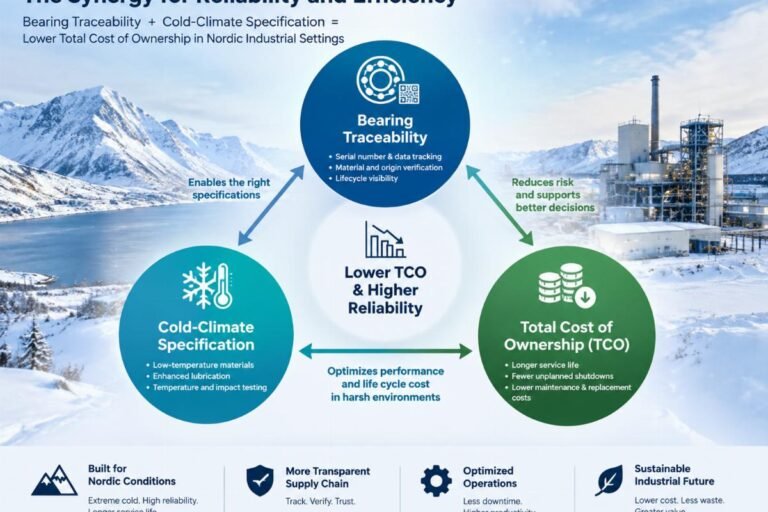
Electric Motor Bearings for Nordic Plants: Wholesale Supplier
Selecting Electric Motor Bearings for Nordic Plants requires matching low-temperature grease limits and VFD carrier frequencies to prevent cold-start failures. Learn how insulated coatings block electrical erosion and why specific clearance calculations outperform standard C3 units in sub-zero environments.
 Written by
author
- Published on
- 6 min read
- Updated
Electric Motor Bearings for Nordic Plants: Wholesale Supplier
Standard C3 clearance does not guarantee survival in sub-zero Nordic winters.
Selecting the right electric motor bearings for Nordic plants requires matching low-temperature grease limits and VFD carrier frequencies, not just relying on standard dimensional clearances. Most premature failures in these regions stem from hardened lubricants breaking the oil film during cold starts or electrical erosion due to unmatched inverter settings, rather than mechanical overload.
I still remember the look on a Swedish procurement manager’s face at the Hanover fair. He shook his head at a batch of insulated bearings, recounting how they suffered from electrical corrosion and seized within months in a Gothenburg plant. At that time, I had just transitioned from quality control to sales. Diving into the technical drawings, I realized the root cause was not the bearing steel itself, but the lubricant hardening at minus thirty degrees, leading to oil film rupture. This incident forced me to obsess over the specific operating conditions of Nordic motors, scrutinizing parameters from material purity to low-temperature limits. Now, when configuring bearings for European clients, I do not start with price. I ask for the minimum workshop temperature and the variable frequency drive (VFD) carrier frequency. If the parameters do not align, even free samples are rejected.
Understanding these nuances is critical for maintaining uptime in harsh environments. The following guide breaks down the specific requirements for sourcing reliable components.
Why Do Standard Bearings Fail in Nordic Extreme Cold?
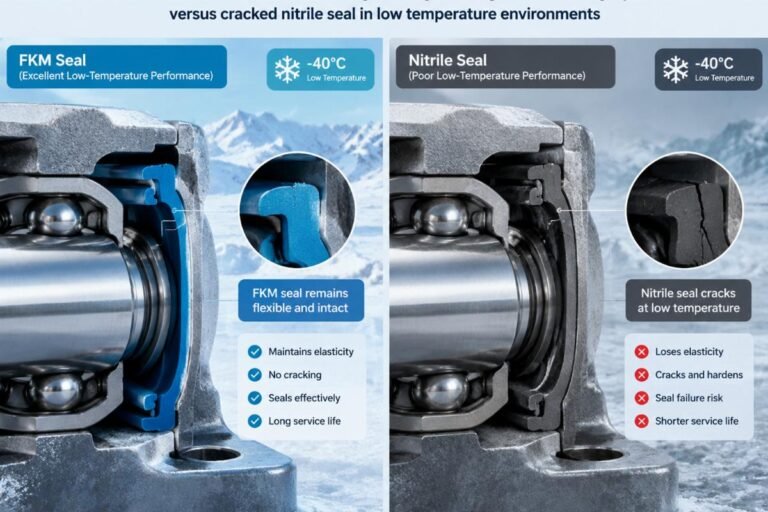
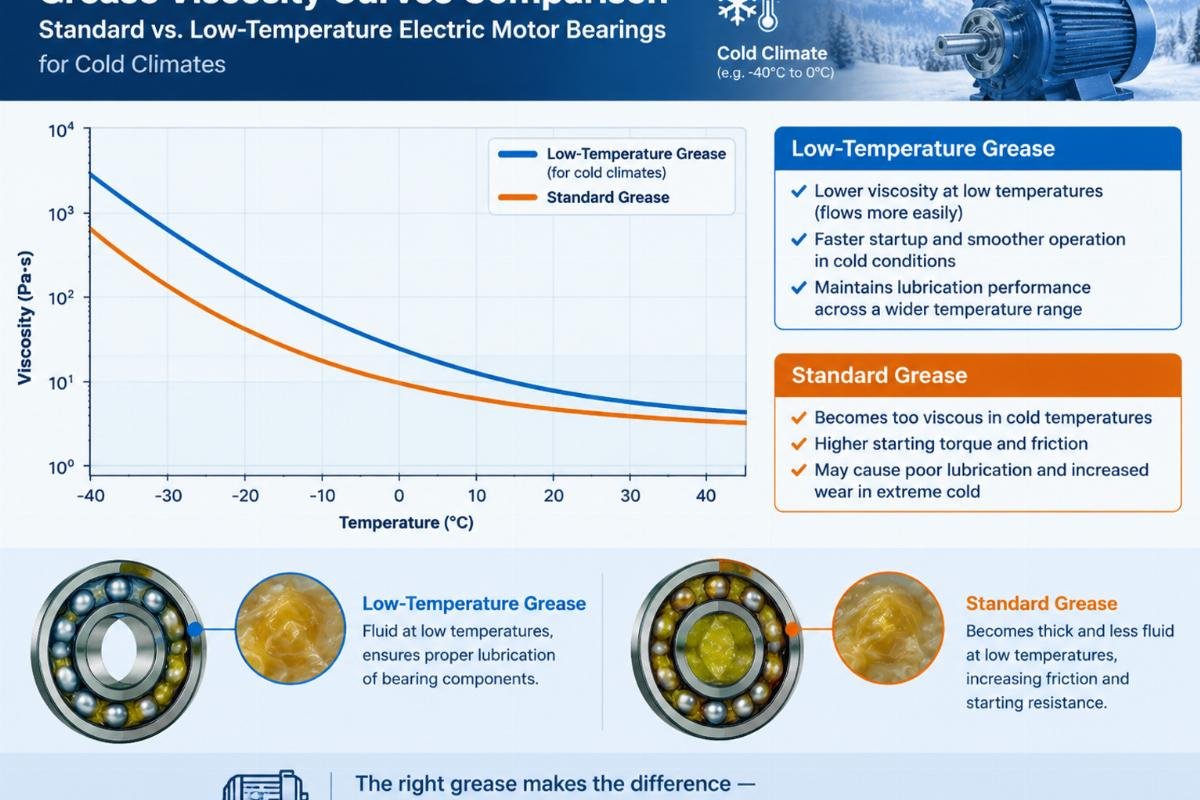
Sub-zero temperatures harden standard grease, breaking oil films and causing severe scoring.
In Nordic regions, ambient temperatures can drop significantly below freezing. Standard industrial greases, often designed for moderate climates, undergo a drastic increase in viscosity as temperatures fall. When a motor starts in these conditions, the thickened grease cannot flow quickly enough to form a protective hydrodynamic film between the rolling elements and raceways. This leads to metal-to-metal contact, resulting in immediate wear or seizure, a phenomenon known as scoring.
The issue is not merely about the grease dropping point but the viscosity ratio at startup. Many operators assume that increasing the radial clearance to C3 or C4 will solve the problem by accommodating thermal contraction. However, extreme cold shrinks both the inner and outer rings. Without specific clearance calculations that account for this differential contraction, the bearing may become too loose, causing vibration, or too tight if the housing contracts differently, leading to preload issues.
| Factor | Standard Bearing Setup | Low-Temperature Optimized Setup |
|---|---|---|
| Grease Base Oil | Mineral oil based | Synthetic PAO or Ester based |
| Viscosity at -30°C | Extremely high (Solid-like) | Maintains pumpability |
| Radial Clearance | Standard C3 | Calculated for thermal contraction |
| Cage Material | Standard Steel or Brass | Polyamide or special treated steel |
[NEED_CITE: ISO standards for bearing clearances and thermal expansion coefficients]
A case in point involved a pulp and paper mill in northern Sweden. They experienced repeated motor failures every winter. The maintenance team kept replacing bearings with standard C3 units, assuming wear was the culprit. Upon inspection, we found the grease had turned into a waxy solid. Switching to bearings pre-lubricated with low-temperature synthetic grease and verifying the internal clearance against the specific operating temperature range resolved the issue. This highlights why sourcing Electric Motor Bearings for Nordic Plants requires more than just checking the part number.

How to Select Insulated Bearings for VFD-Driven Motors?
Match the bearing insulation class with the inverter’s carrier frequency to prevent electrical erosion.
Modern industrial plants in the Nordics heavily utilize VFDs for energy efficiency. However, VFDs generate high-frequency common-mode voltages that can discharge through the motor bearings. This electrical discharge machining (EDM) effect creates small craters on the raceways, leading to fluting and eventual failure. Many operators mistakenly blame bearing quality for these failures, when the real issue is often unmatched carrier frequencies and the lack of proper insulation.
Insulated bearings feature a ceramic coating on either the inner or outer ring, or use hybrid designs with ceramic rolling elements. The key is to ensure the insulation resistance and voltage breakdown strength match the specific VFD application. Simply installing any “insulated” bearing is not enough; the coating thickness and material quality must withstand the peak voltages generated by the drive.
[NEED_CITE: IEC standards for electrical insulation testing in rotating machinery]
For a wind farm operator in Norway, upgrading to insulated bearings for a gearbox generator was critical. The previous standard bearings failed due to electrical erosion after a short period. By analyzing the VFD carrier frequency and selecting bearings with a robust insulating coating capable of handling the specific voltage spikes, the service life was extended significantly. This demonstrates that when searching for Electric Motor Bearings for Nordic Plants, one must consider the electrical environment as much as the mechanical load.

What Are the Key Specifications for Nordic Motor Bearing Stock?
Compare standard vs. low-temp vs. insulated bearings across load, speed, and temp limits.
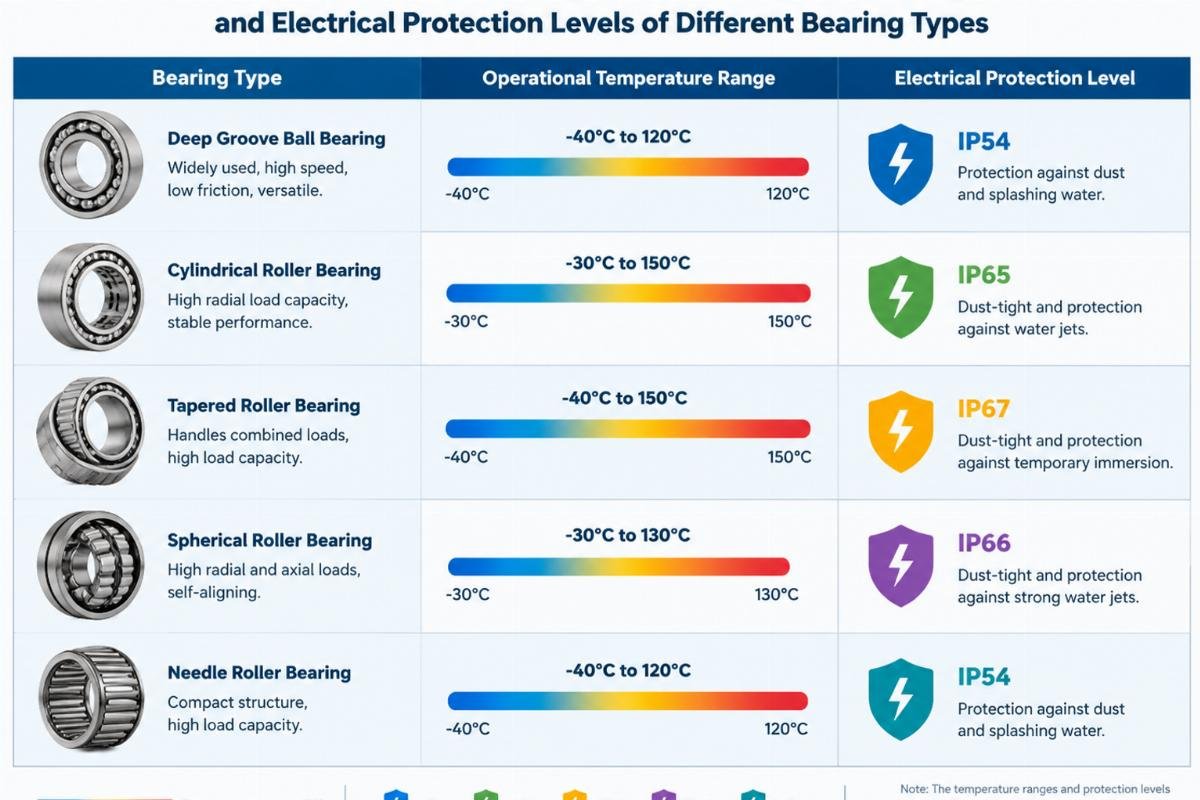
When building a stock list for Nordic operations, it is essential to differentiate between three main categories: standard, low-temperature, and insulated bearings. Each serves a distinct purpose, and mixing them up can lead to costly downtime.
Standard bearings are suitable for indoor, heated environments where temperatures remain above freezing. Low-temperature bearings are engineered with special steels and cages that retain toughness in extreme cold, preventing brittle fracture. Insulated bearings are mandatory for VFD-driven applications to prevent electrical damage. Often, a combination is required: a low-temperature, insulated bearing.
| Specification | Standard Bearing | Low-Temp Bearing | Insulated Bearing |
|---|---|---|---|
| Operating Temp Range | Moderate | Extended Low | Moderate to High |
| Electrical Protection | None | None | High Resistance |
| Grease Compatibility | General Purpose | Synthetic Low-Temp | Compatible with Coating |
| Typical Application | Indoor HVAC | Outdoor Wind/Cold Store | VFD Driven Motors |
[NEED_CITE: Bearing manufacturer technical bulletins on material properties at low temperatures]
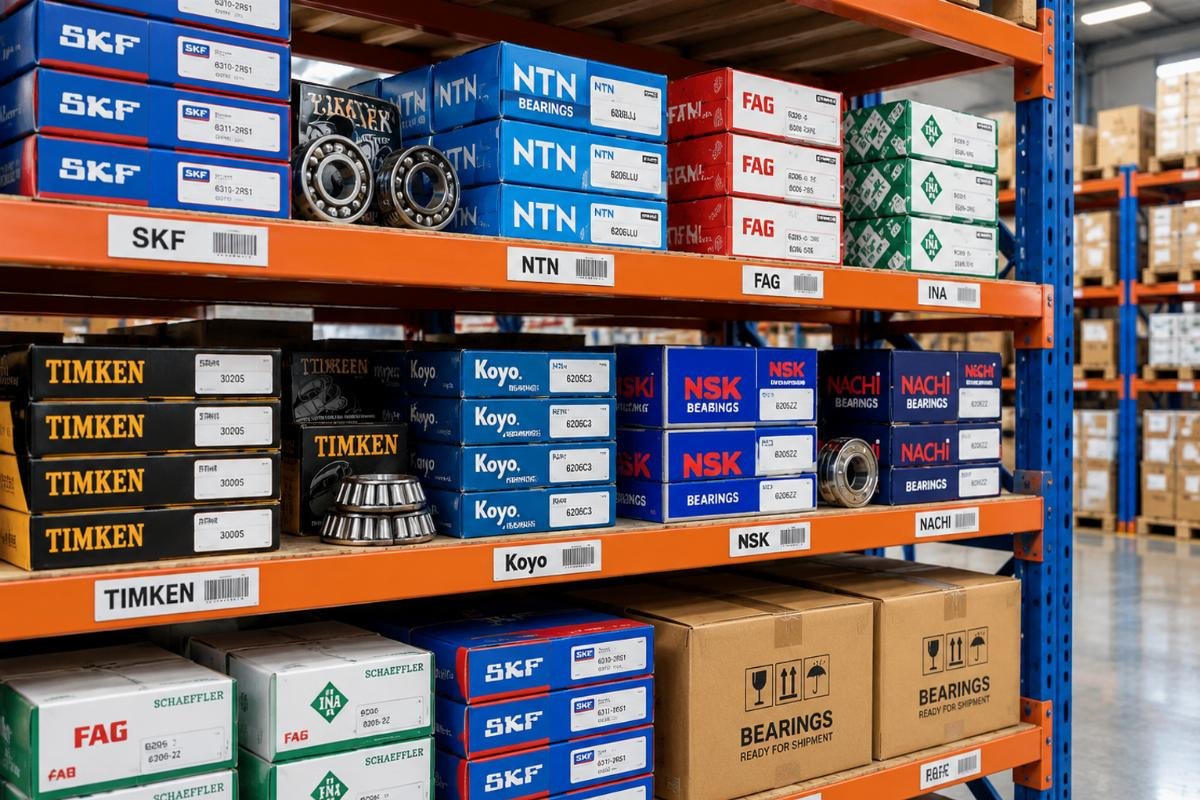
A mixed-brand emergency dispatch for a Swedish steel mill highlighted the importance of having the right stock. The facility needed immediate replacements for a critical conveyor motor operating in an unheated area. Having access to genuine low-temperature bearings from brands like SKF and FAG allowed for a quick swap, minimizing production loss. This underscores the value of a supplier who understands the specific needs of Electric Motor Bearings for Nordic Plants and maintains a diverse inventory.
How to Ensure Fast Lead Times for Mixed-Brand Replacements?
Rely on global suppliers with massive spot inventory and flexible MOQ for urgent MRO replacements.
Downtime in Nordic industries is expensive, especially during winter when logistics can be challenging. Waiting weeks for a single bearing from a direct brand channel is often not feasible. Instead, partnering with a supplier who holds significant spot inventory of multiple premium brands ensures faster access to critical spares.
Flexibility in minimum order quantities (MOQ) is also crucial. MRO operations often need single units or small batches for emergency repairs, whereas traditional distributors may require large bulk orders. A supplier offering cross-brand equivalent consultation can help identify suitable alternatives if the exact original part is out of stock, ensuring continuity without compromising on quality.
[NEED_CITE: Industry best practices for MRO supply chain resilience]
Consider a scenario where a mining operation in Finland faced a sudden breakdown. The original specified bearing was unavailable from the local distributor. By consulting with a global supplier holding stock of NSK, NTN, and TIMKEN bearings, an equivalent high-quality replacement was identified and shipped immediately. This ability to provide mixed-brand solutions is a key advantage when sourcing Electric Motor Bearings for Nordic Plants.
Conclusion
Correct selection prevents cold-start failures and electrical erosion.
Success in Nordic industrial environments depends on matching bearing specifications to extreme cold and VFD conditions. Prioritize low-temperature grease compatibility and proper electrical insulation over standard dimensions. Leveraging suppliers with diverse, genuine stock ensures rapid response to maintenance needs, keeping operations running smoothly year-round. For those seeking reliable Electric Motor Bearings for Nordic Plants, focusing on these technical details is paramount.
Tags

About the author
author
Editor covering global sourcing, supplier verification, and industrial product knowledge. Content is compiled from manufacturer specifications, industry standards, and hands-on experience with international B2B buyers. Every article is fact-checked before publishing to help procurement professionals make informed decisions.
More articles by author