Mine Conveyor Pulley Bearings: Sizing, Sealing & Wholesale Supplier
Proper sizing and advanced sealing for Conveyor pulley bearings for mines prevent premature failure from dust and moisture. Learn to select correct internal clearance classes and multi-lip or labyrinth seals based on site conditions to maintain operational continuity in harsh mining applications.
 Written by
author
- Published on
- 7 min read
- Updated

Mine Conveyor Pulley Bearings: Sizing, Sealing & Wholesale Supplier
Tighter seals do not always mean longer life. In high-dust mining environments, excessive seal friction generates heat that degrades grease faster than dust ingress, leading to premature bearing failure.
Proper sizing and advanced sealing for mining conveyor pulley bearings are critical to prevent premature failure from dust and moisture, reducing downtime. Selecting the correct internal clearance class and a multi-lip or labyrinth seal configuration based on specific site conditions—rather than defaulting to standard contact seals—is the most effective strategy for maintaining operational continuity in harsh mining applications.
I remember standing in the control room of a copper mine in Antofagasta, Chile, watching the main conveyor belt grind to a halt. The maintenance team had specified standard contact seals for the head pulley bearings, assuming they would keep out the fine copper dust. Within months, the seals had worn through due to the combination of abrasive particulate matter and occasional washdown water. The resulting friction overheated the bearings, causing the grease to carbonize and the rollers to seize. That shutdown cost far more than the price difference between standard and premium sealed units. It was a stark reminder that Conveyor pulley bearings for mines require a holistic approach to selection, where load calculation and sealing technology are equally weighted. [NEED_CITE: impact of seal friction on bearing temperature in dusty environments]
Understanding why these failures occur requires looking beyond the brand name and focusing on the engineering principles that govern performance in extreme conditions. This guide breaks down the technical requirements for selecting robust bearings, drawing from real-world field observations and industry standards.
How to Calculate the Right Bearing Size for Conveyor Pulleys?
Accurate load and speed calculations prevent thermal failure and ensure optimal internal clearance. Many failures stem not from poor quality, but from incorrect sizing that ignores dynamic loads and thermal expansion.
Selecting the right bearing size involves more than matching the shaft diameter. It requires a precise calculation of radial and axial loads, considering the tension of the conveyor belt, the weight of the material being transported, and the potential for shock loads during startup. [NEED_CITE: CEMA guidelines for conveyor pulley load calculations] An undersized bearing will overheat under heavy load, while an oversized one may suffer from skidding if the load is insufficient to maintain proper roller contact.
A common mistake in the industry is ignoring internal clearance. In mining operations, temperature fluctuations can be significant. Standard clearance bearings may become too tight as they heat up, leading to increased friction and premature wear. For high-temperature applications, selecting bearings with C3 or C4 clearance allows for thermal expansion without compromising structural integrity. [NEED_CITE: ISO standards for bearing internal clearance classes]
| Parameter | Standard Application | Heavy-Duty Mining Application |
|---|---|---|
| Load Rating | Basic Dynamic Load | Enhanced Static and Dynamic Load |
| Internal Clearance | Normal (C2/C0) | Increased (C3/C4) for Thermal Expansion |
| Cage Material | Steel or Polyamide | Reinforced Polyamide or Brass for Shock Resistance |
| Lubrication | Standard Grease | High-Temperature, Water-Resistant Grease |
In an iron ore conveyor project I reviewed, the initial design used standard clearance bearings. During peak summer operations, the ambient heat combined with friction caused the bearings to expand, eliminating the internal clearance. The result was rapid overheating and cage failure. By switching to bearings with C3 clearance and verifying the load rating against actual operating conditions, the client extended the service life meaningfully. This experience highlights why Conveyor pulley bearings for mines must be sized with a margin for error that accounts for real-world thermal dynamics.

Which Sealing Types Best Withstand Mine Dust and Washdowns?
Multi-lip and labyrinth seals outperform standard contact seals in high-moisture, high-dust environments. The choice of seal determines whether a bearing survives weeks or years in a mine.
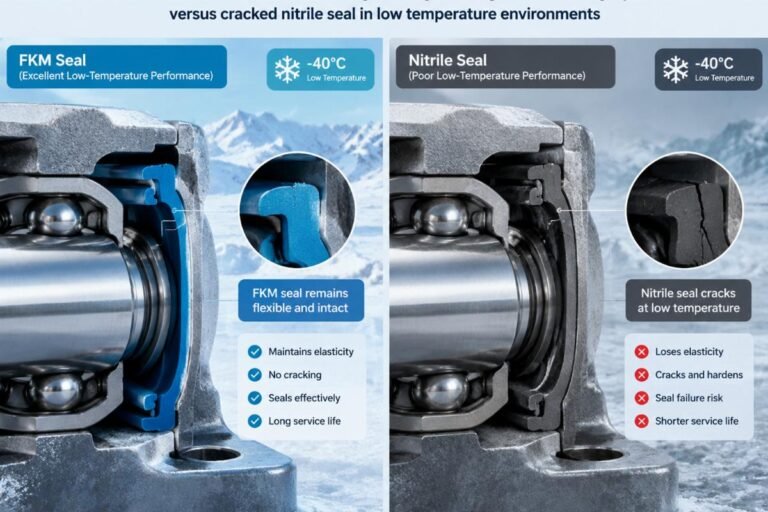
Sealing is often the weakest link in a bearing assembly. Standard rubber contact seals provide basic protection but generate significant friction, which can raise operating temperatures. In dusty environments like coal mines or cement plants, this heat accelerates grease degradation. Furthermore, if water is used for dust suppression or cleaning, standard seals may allow moisture ingress once the lip wears down.
Labyrinth seals, on the other hand, use a non-contact design with multiple chambers that trap contaminants before they reach the rolling elements. While they offer less protection against direct high-pressure water jets compared to triple-lip seals, they generate minimal heat and are highly effective against dry dust. For areas subject to washdowns, integrating triple-lip seals with purge ports allows for regular grease purging, which pushes out contaminants and replenishes lubrication. [NEED_CITE: effectiveness of purge ports in extending bearing life in washdown areas]
| Seal Type | Dust Protection | Water Resistance | Friction Level | Best Use Case |
|---|---|---|---|---|
| Standard Contact | Moderate | Low | High | Clean, Dry Environments |
| Labyrinth | High | Moderate | Low | High-Dust, Low-Moisture Areas |
| Triple-Lip with Purge | High | High | Moderate | Washdown Zones, Wet Mines |
At a coal wash plant, frequent high-pressure cleaning washed out the grease from standard sealed bearings, leading to rapid corrosion. By upgrading to Conveyor pulley bearings for mines equipped with triple-lip seals and purge ports, the maintenance team could inject fresh grease regularly, displacing water and debris. This change reduced the frequency of unplanned replacements significantly. When sourcing these components, it is essential to verify that the seals are compatible with the specific type of grease used and the environmental conditions of the site.

What Are the Hidden Costs of Mismatched Bearing Specs?
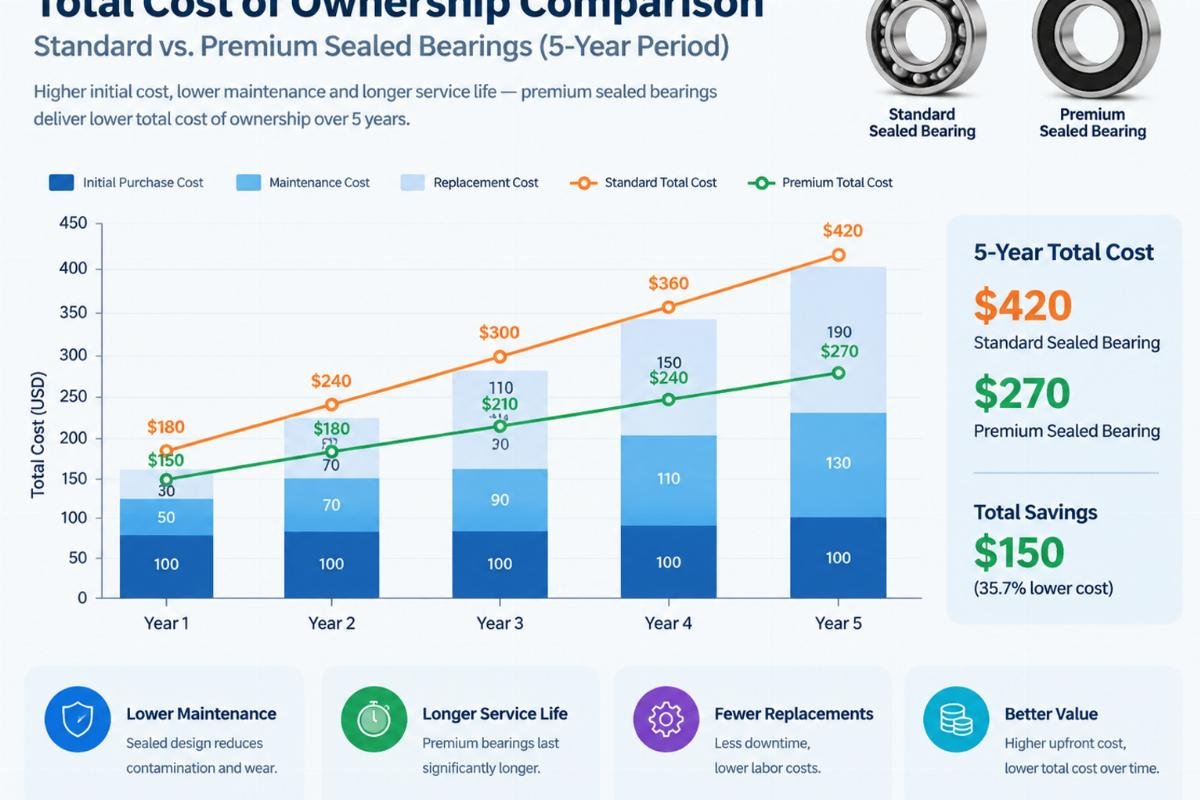
Cheap, poorly sealed bearings cause massive downtime costs far exceeding initial purchase savings. The true cost of a bearing includes installation, maintenance, and the revenue lost during unplanned stoppages.
Procurement teams often focus on the unit price of bearings, overlooking the total cost of ownership. A bearing that fails prematurely due to incorrect sizing or inadequate sealing can halt an entire production line. In mining, where every hour of downtime translates to significant revenue loss, the cost of a single failed bearing can dwarf the savings from buying cheaper alternatives. [NEED_CITE: average cost of unplanned downtime in mining operations]
Moreover, mismatched specs lead to higher maintenance labor costs. Frequent replacements require skilled technicians and specialized tools, diverting resources from preventive maintenance tasks. The cumulative effect of these hidden costs can be substantial over the lifespan of a conveyor system.
Consider a scenario where a distributor supplies standard bearings for a high-load application to save costs. The bearings fail within months, requiring emergency air freight for replacements and overtime pay for installation crews. The total expense, including lost production, ends up being several times the initial savings. This is why specifying Conveyor pulley bearings for mines with the correct load ratings and sealing technologies is a financial imperative, not just a technical one.
How to Verify Bearing Quality Before Bulk Purchasing?
Traceability documents and material certifications are mandatory to avoid counterfeit failures. Ensuring authenticity protects against substandard materials that fail under stress.
The global bearing market is flooded with counterfeit products that look identical to genuine items but lack the metallurgical quality and precision engineering required for heavy-duty applications. Counterfeit bearings often use inferior steel with higher inclusion levels, making them prone to early fatigue failure. [NEED_CITE: risks of counterfeit bearings in industrial applications]
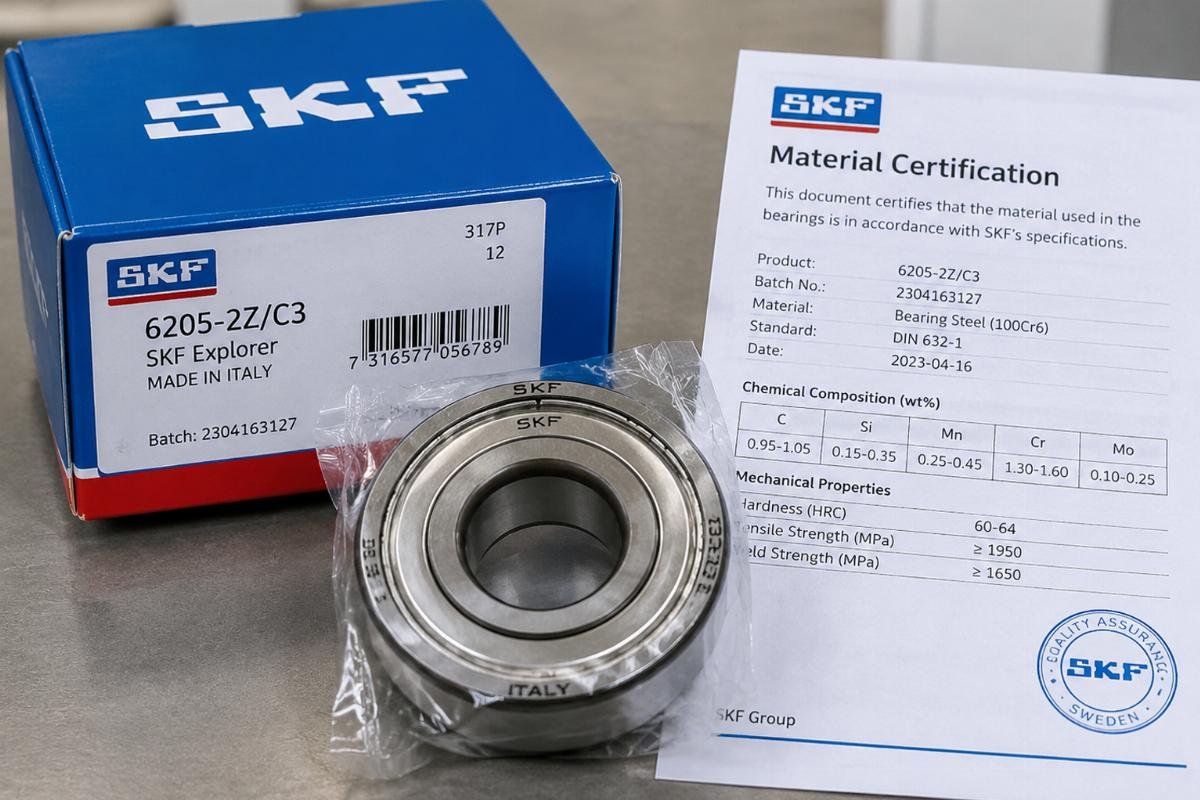
To mitigate this risk, buyers must demand full traceability documentation. This includes material certificates that verify the steel grade and heat treatment process, as well as batch numbers that can be traced back to the manufacturer’s production facilities. Reputable suppliers provide these documents as part of their standard service, ensuring that every bearing meets international quality standards.
When evaluating suppliers, ask for proof of authorization or direct sourcing channels. A reliable partner will have a robust inventory management system that tracks each item from the factory floor to the customer’s warehouse. They should also offer technical support to help select the right specifications for your application, ensuring that you receive Conveyor pulley bearings for mines that are genuinely fit for purpose.
Conclusion
Selecting the right bearing is an investment in operational reliability. Proper sizing, advanced sealing, and verified quality are non-negotiable for minimizing downtime in mining operations.
By focusing on technical specifications rather than just unit price, operators can avoid the hidden costs of premature failure. Whether dealing with abrasive dust or high-pressure washdowns, the right combination of clearance, seal type, and lubrication ensures that Conveyor pulley bearings for mines perform consistently under the toughest conditions. Prioritizing traceability and working with knowledgeable suppliers further safeguards against the risks of counterfeit products, ensuring long-term efficiency and safety.
Tags

About the author
author
Editor covering global sourcing, supplier verification, and industrial product knowledge. Content is compiled from manufacturer specifications, industry standards, and hands-on experience with international B2B buyers. Every article is fact-checked before publishing to help procurement professionals make informed decisions.
More articles by author