FCA vs DAP Incoterms for Nordic Buyers: Bearing Wholesale Guide
Master FCA vs DAP Incoterms Nordic to avoid hidden demurrage costs and winter weather damage for bearing imports. Shifting risk to the origin depot ensures transparent pricing and protects high-precision inventory from customs delays, making FCA the safer choice for Swedish and Finnish buyers.
 Written by
author
- Published on
- 7 min read
- Updated
FCA vs DAP Incoterms for Nordic Buyers: Bearing Wholesale Guide
DAP is not hassle-free; it is a hidden liability trap for Nordic imports.
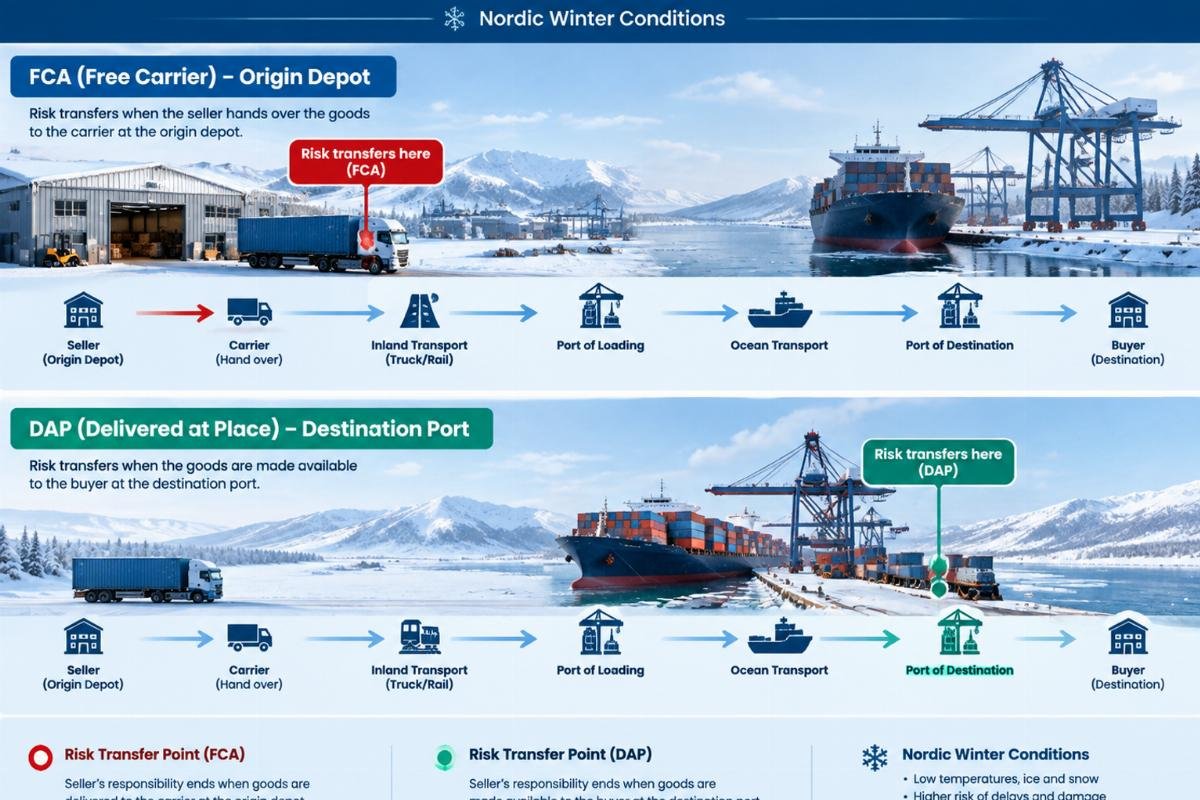
For bearing procurement in Sweden, Norway, and Finland, FCA is significantly safer than DAP. FCA transfers risk at the origin depot, ensuring the buyer avoids destination customs delays, winter weather damage, and unpredictable demurrage costs inherent in DAP shipments.
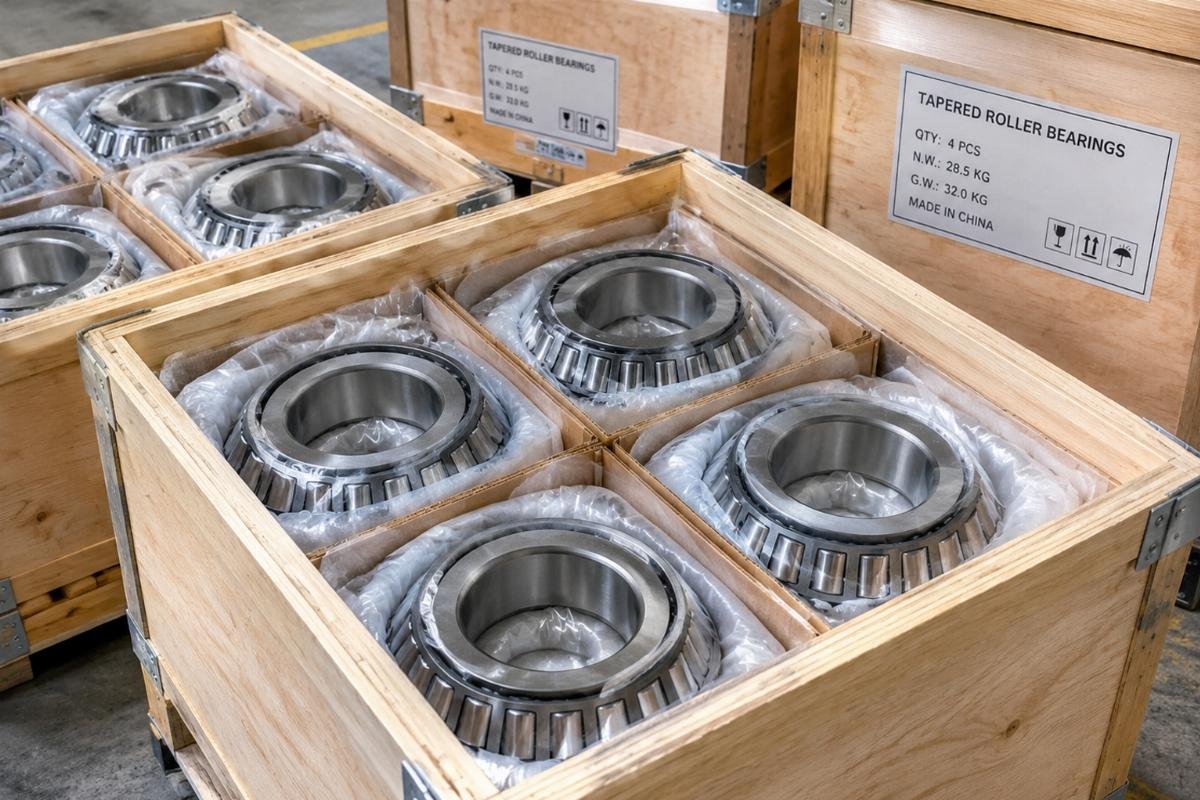
I still remember the silence on the phone line from Gothenburg two winters ago. A batch of tapered roller bearings sat on a frozen dock, wrapped in anti-rust paper that had turned into soggy pulp after a snowstorm delayed clearance by half a month. The buyer had signed DAP, thinking it meant “delivered without worry.” Instead, they faced a mid-six-figure loss claim and ruined inventory. That shipment taught me that in the Nordic region, where weather and customs efficiency fluctuate wildly, the Incoterm you choose dictates whether your profit margin survives transit or evaporates in port fees. Understanding the nuances of FCA vs DAP Incoterms Nordic is not just about logistics; it is about protecting the integrity of high-precision components like SKF or FAG bearings from moisture and handling errors before they even reach your warehouse.
The core difference lies in where the responsibility shifts. Under DAP, the seller bears all risks until the goods are ready for unloading at the named place of destination. In contrast, FCA requires the seller to deliver the goods to a carrier nominated by the buyer at a named place, often the seller’s premises or a forwarder’s depot. This distinction is critical when analyzing FCA vs DAP Incoterms Nordic because it determines who pays for the delay when a blizzard hits Hamburg or when customs officials in Stockholm decide to inspect every container of industrial machinery parts.
What is the core difference between FCA and DAP for Nordic imports?
FCA transfers risk at the origin, while DAP keeps the supplier liable until the goods reach your doorstep.
Many buyers assume DAP is simpler because the supplier handles the freight. However, this convenience comes with a steep price in risk exposure. When you choose DAP, the supplier controls the shipping method and carrier selection to minimize their own costs, not necessarily to protect your goods. If the carrier chooses a slower route to save money, your bearings sit in transit longer. If the supplier uses inadequate packaging to cut costs, the goods arrive damaged, and you must prove it happened during transit—a difficult task when you never saw the loading process.
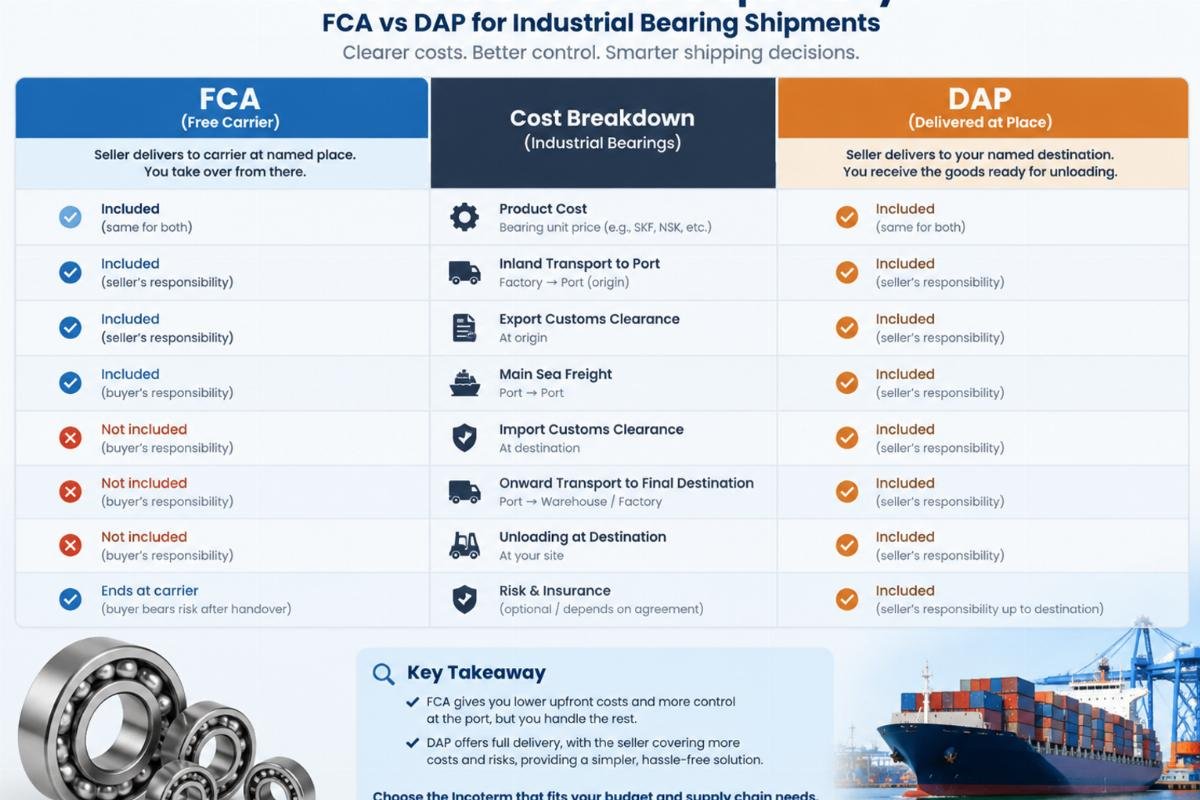
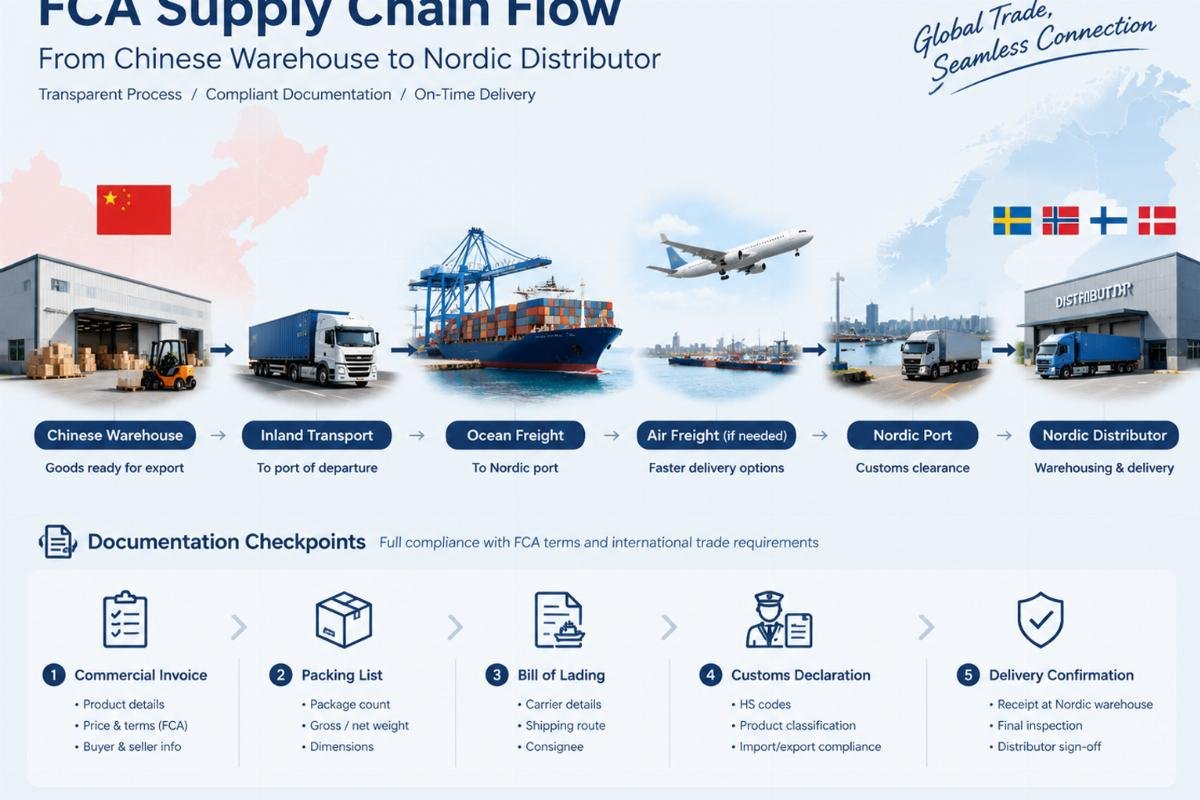
With FCA, you nominate the freight forwarder. You control the timeline, the carrier’s reputation, and the insurance coverage. For FCA vs DAP for bearing import Sweden, this means you can select a logistics partner with specific expertise in handling heavy industrial cargo and temperature-sensitive environments. The supplier’s job ends once they hand over the goods and export documentation at the origin. This clear cut-off point eliminates disputes over who is responsible for damage that occurs mid-ocean or during transshipment.
| Feature | FCA (Free Carrier) | DAP (Delivered at Place) |
|---|---|---|
| Risk Transfer Point | Origin depot or seller’s premises | Named place of destination |
| Customs Clearance (Export) | Seller’s responsibility | Seller’s responsibility |
| Customs Clearance (Import) | Buyer’s responsibility | Buyer’s responsibility |
| Freight Cost Control | Buyer controls carrier selection | Supplier controls carrier selection |
| Suitability for Nordic Winter | High (Buyer manages transit speed) | Low (Supplier may prioritize cost over speed) |
[NEED_CITE: ICC Incoterms 2020 official rules for risk transfer definitions]
Choosing the right term affects your landed cost transparency. Under DAP, suppliers often inflate the product price to cover potential freight volatility and risk premiums. With FCA, you see the exact freight cost separately, allowing for better budgeting and negotiation with local carriers who understand the Incoterms 2020 FCA DAP risks specific to Northern European ports.
Why does DAP cause hidden costs in Nordic winter?
Weather delays and customs bottlenecks turn DAP shipments into financial black holes.
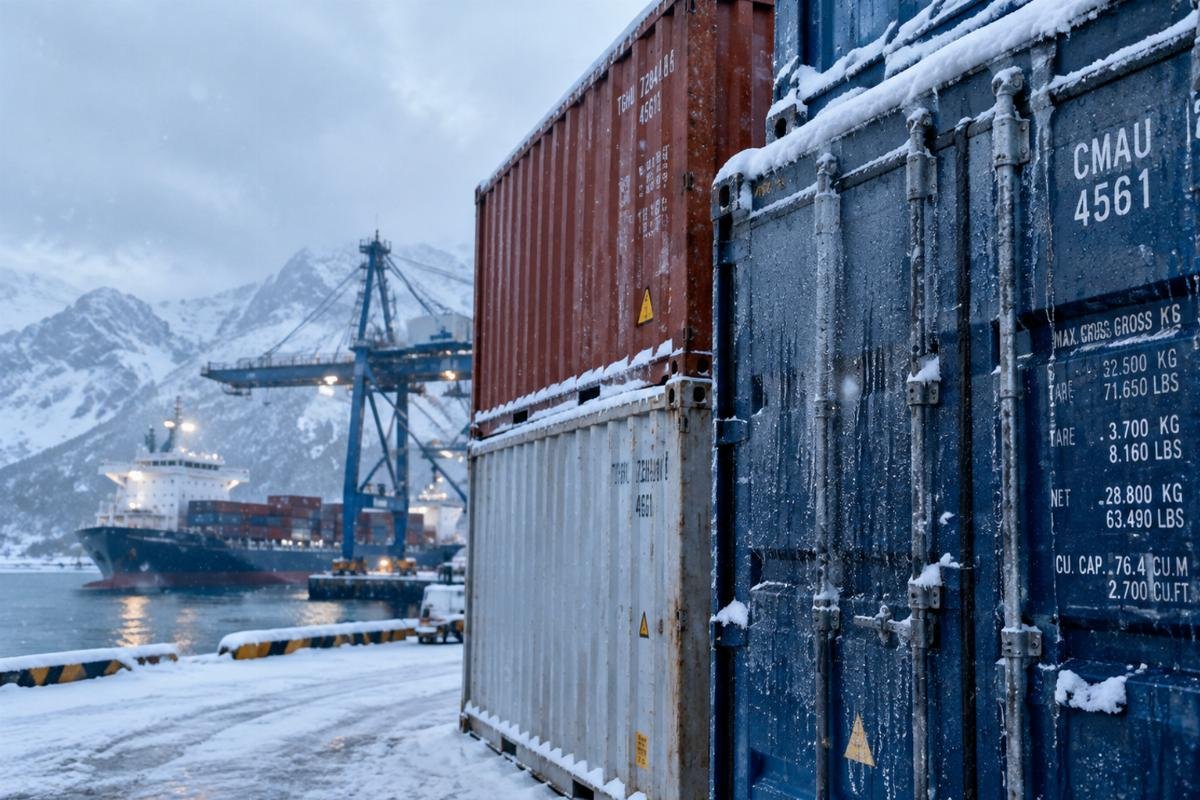
Nordic winters are unforgiving. Ports in Gothenburg, Oslo, and Helsinki frequently face operational slowdowns due to ice, snow, and reduced daylight hours. When a shipment arrives under DAP terms, any delay in unloading or customs clearance becomes the buyer’s problem financially, even if the supplier technically owns the risk until delivery. Why? Because demurrage and detention charges accrue daily. If customs holds a container for inspection due to incomplete paperwork—a common issue if the supplier’s documentation is generic—the clock ticks.
A distributor in Finland once shared how a DAP shipment of spherical roller bearings was held at customs for ten days due to a minor discrepancy in the certificate of origin. The supplier had used a standard template that did not match the specific batch numbers. The buyer paid substantial demurrage fees to release the cargo, eroding the margin completely. This scenario highlights why DAP customs clearance delays Nordic are a frequent topic of complaint among importers. The supplier, sitting thousands of miles away, has little incentive to rush the resolution, while the buyer faces immediate cash flow pressure.
Furthermore, moisture is the enemy of bearings. Even with high-quality rust preventive oil, prolonged exposure to humid, cold air during port delays can compromise protection. Anti-rust paper can absorb moisture if stored on an open dock during a snowfall. Under DAP, proving that the damage occurred due to the supplier’s poor packaging versus the carrier’s delay is a legal nightmare. By switching to FCA, buyers can instruct their forwarders to prioritize covered storage and faster clearance processes, mitigating these weather-related risks.
[NEED_CITE: Industry data on port demurrage costs in Northern Europe during winter months]
How does FCA protect your bearing inventory quality?
Risk cuts at the origin depot prevent transit moisture and delay risks.
When you opt for FCA, the risk transfers the moment the goods are handed over to your nominated carrier at the origin. This early transfer incentivizes the supplier to ensure the goods are perfectly packaged and documented before they leave their facility. If there is an issue with the packaging, it is identified and resolved at the source, not when the goods arrive wet and damaged in Scandinavia.
For high-precision bearings, such as angular contact ball bearings used in machine tools, consistency is key. Under FCA, you can require pre-shipment inspections by third-party agencies before the goods are released to the carrier. This step ensures that the bearings meet the specified tolerance classes, such as P4 or P5, before they enter the logistics chain. If a defect is found, it is the supplier’s responsibility to replace the goods immediately, avoiding the long lead times associated with returning defective cargo from abroad.
In contrast, DAP shipments often lack this rigorous pre-transit oversight because the supplier controls the process. They may consolidate goods with other items to save space, increasing the risk of crushing or impact damage. For FCA vs DAP for bearing import Sweden, the ability to mandate specific loading protocols—such as using air-ride trucks for domestic transport to the port or ensuring containers are dry and clean before loading—is a significant advantage of FCA. This control directly correlates to lower claims rates and higher customer satisfaction for distributors who resell these components to end-users.
[NEED_CITE: Best practices for bearing packaging and storage per ISO standards]
Which Incoterm should Nordic buyers choose for bearing procurement?
FCA is recommended for better risk control and transparent pricing.
For most Nordic buyers importing bearings, FCA is the superior choice. It offers transparency, control, and risk mitigation that DAP cannot match in a region prone to weather disruptions and strict customs enforcement. While DAP might seem easier initially, the hidden costs of demurrage, potential cargo damage, and inflated product prices make it a risky proposition for high-value industrial components.
By choosing FCA, you align yourself with partners who prioritize secure origin loading and complete export documentation. This approach ensures that your supply chain remains resilient, even when external factors like winter storms or customs strikes occur. You gain the flexibility to choose logistics providers who understand the specific requirements of FCA vs DAP Incoterms Nordic and can navigate the complexities of Northern European import regulations efficiently.
Our team specializes in facilitating this smooth transition. We provide comprehensive support for FCA shipments, ensuring that all bearings—from deep-groove ball bearings to heavy-duty spherical roller bearings—are prepared with meticulous attention to detail. Our export documentation is precise, minimizing the risk of customs delays, and our loading procedures adhere to strict quality standards to protect the integrity of every component. This expertise allows Nordic distributors and OEMs to focus on their core business, confident that their bearing inventory will arrive in perfect condition, ready for immediate use or resale.
Conclusion
Choose FCA to secure your margins and protect your inventory.
FCA offers Nordic bearing buyers greater control over logistics, reduced risk of weather-related damage, and transparent costing compared to DAP. By shifting risk to the origin, you avoid the hidden pitfalls of destination delays and ensure your high-precision components arrive in optimal condition.

About the author
author
Editor covering global sourcing, supplier verification, and industrial product knowledge. Content is compiled from manufacturer specifications, industry standards, and hands-on experience with international B2B buyers. Every article is fact-checked before publishing to help procurement professionals make informed decisions.
More articles by author