Gearbox Bearing Equivalents for Paper Mill Drives Wholesale Supplier
Find reliable Gearbox Bearing Equivalents for Paper Mill Drives that prevent catastrophic failure beyond simple dimensional matching. Learn to recalibrate internal clearance and lubrication protocols to withstand high temperatures, ensuring your emergency replacements deliver engineered survival rather than just a cheap swap.
 Written by
author
- Published on
- 8 min read
- Updated
Gearbox Bearing Equivalents for Paper Mill Drives Wholesale Supplier
Matching boundary dimensions is not enough to prevent catastrophic failure.
Reliable gearbox bearing equivalents for paper mill drives require strict recalibration of internal clearance and lubrication protocols, not just a dimensional match. Ignoring thermal expansion in high-temperature zones leads to rapid annealing and seizure, regardless of the brand name on the outer ring.
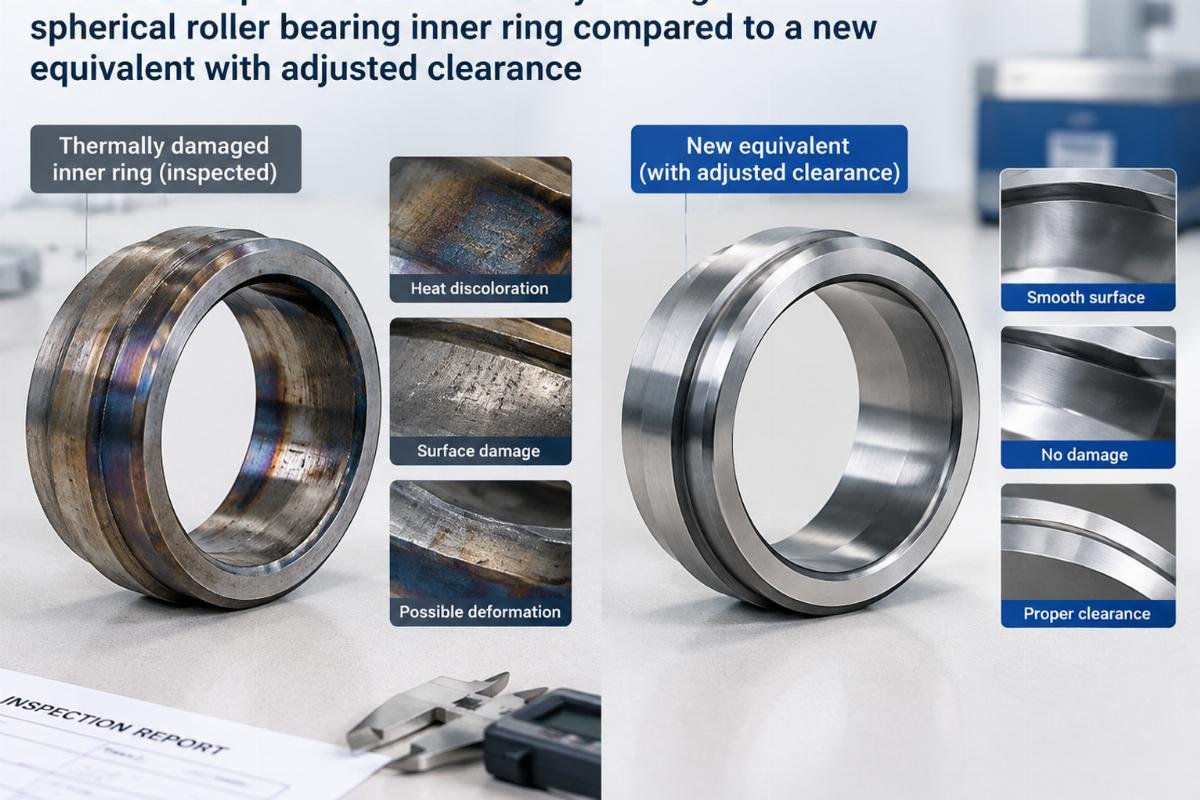
The humid air in Lagos clings to everything, including the steel of a disassembled drive gearbox. I remember standing over a massive paper machine transmission, the heat radiating from the housing even after it had cooled for hours. The original equipment manufacturer had specified a premium international brand spherical roller bearing. On paper, it was perfect. In reality, the inner ring had suffered severe thermal degradation, losing its hardness due to sustained high operating temperatures. The local team was facing a forty-day wait for an official replacement via sea freight. For a paper mill, stopping production for that long means losses that dwarf the cost of any single component.
I did not wait. Instead, I sourced a domestic equivalent from a reputable Chinese manufacturer, but I did not simply swap the part. I recalibrated the internal clearance to C4 to account for the extreme thermal expansion and switched to a high-temperature synthetic grease. The machine was running again in three days. This experience reinforced a critical truth: cross-brand substitution is not about finding the cheapest look-alike; it is about engineering survival into the replacement strategy. [NEED_CITE: ISO 15243 failure mode classification for thermal damage]
Selecting the right Gearbox Bearing Equivalents for Paper Mill Drives Wholesale Supplier involves more than checking a catalog number. It demands a deep understanding of how load, heat, and humidity interact within the specific context of pulp and paper production.
Why Do Paper Mill Gearbox Bearings Fail Prematurely?
Standard specifications fail when environmental adaptation is ignored.
Paper mills are hostile environments for mechanical components. The combination of high ambient heat, pervasive humidity, and continuous heavy loads creates a perfect storm for bearing failure. The most common culprit is not poor manufacturing quality, but rather the mismatch between standard bearing designs and the actual operating conditions.
In tropical or high-humidity regions, moisture ingress is a constant threat. When water contaminates the lubricant, it washes away the protective film, leading to corrosion and premature fatigue. Furthermore, the high operating temperatures generated by heavy gear loads cause the bearing steel to expand. If the internal clearance is not sufficient to accommodate this expansion, the rolling elements bind against the raceways. This generates even more heat, creating a vicious cycle that ends in annealing—the softening of the steel—and eventual seizure. [NEED_CITE: Effect of operating temperature on bearing internal clearance and life calculation]
A case from a Southeast Asian mill illustrates this clearly. The maintenance team kept replacing bearings with the exact same OEM-specified model. Each time, the bearing lasted only a few months before failing with signs of overheating. The issue was not the brand, but the clearance group. The standard C3 clearance was insufficient for the actual thermal growth in their specific gearbox design. By switching to an equivalent model with C4 clearance and upgrading the sealing system, the service life extended noticeably.

When evaluating a Gearbox Bearing Equivalents for Paper Mill Drives Wholesale Supplier, look for partners who understand these environmental factors. They should not just sell you a part; they should question your operating conditions. Do they ask about the ambient temperature? Do they inquire about the lubrication regimen? A supplier who ignores these details is likely offering a commodity, not a solution.
How to Build a Reliable Cross-Reference Matrix?
Match boundary dimensions, load ratings, and crucially, internal clearance groups.
Creating a cross-reference matrix for bearings is often treated as a simple lookup task. However, for critical applications like paper mill drives, this approach is dangerous. A reliable matrix must compare multiple technical parameters beyond just the bore, outside diameter, and width.
The first step is verifying the boundary dimensions. These must be identical to ensure the bearing fits into the housing and onto the shaft. Next, compare the dynamic and static load ratings. An equivalent bearing must meet or exceed the original’s capacity to handle the radial and axial loads imposed by the gears. Finally, and most importantly, assess the internal clearance group. Standard clearances may not suffice for high-temperature or high-load applications.
| Parameter | Original OEM Spec | Basic Equivalent | Engineered Equivalent |
|---|---|---|---|
| Boundary Dimensions | Exact Match | Exact Match | Exact Match |
| Dynamic Load Rating | Standard | Similar | Verified Match |
| Internal Clearance | C3 (Standard) | C3 (Default) | C3/C4 (Adjusted) |
| Cage Material | Steel/Brass | Standard Steel | Reinforced Brass/Steel |
| Sealing Type | Standard Contact | Basic Rubber | Enhanced Nitrile/Viton |
| Traceability | Full Batch | Limited | Full Batch-Level |
This table highlights the difference between a basic swap and an engineered substitution. Notice that the “Engineered Equivalent” adjusts the internal clearance and enhances the sealing type. These adjustments are critical for surviving the harsh conditions of a paper mill. [NEED_CITE: ISO 281 life calculation methodology and clearance selection guidelines]
A distributor in Latin America once shared a story about a client who switched to a lower-cost alternative without adjusting the clearance. The bearings failed repeatedly within weeks. When they finally consulted a technical expert, they discovered that the equivalent brand’s standard tolerance stack-up was slightly different, effectively reducing the operational clearance. By specifying a C4 clearance for the next batch, the problem was resolved. This underscores the need for technical support when selecting a Gearbox Bearing Equivalents for Paper Mill Drives Wholesale Supplier.

What Clearance and Lubrication Adjustments Are Mandatory?
Upgrading to C3/C4 clearances and high-temp greases is non-negotiable for equivalent survival.
Clearance and lubrication are the lifeblood of a bearing. In paper mill drives, the standard recommendations often fall short. The heat generated by friction and external sources causes the bearing components to expand. If the internal clearance is too tight, this expansion leads to preload, which drastically increases friction and temperature, accelerating failure.
For most paper mill gearbox applications, moving from a standard C2 or C0 clearance to a C3 or even C4 clearance is essential. This extra space allows the bearing to accommodate thermal growth without binding. The choice between C3 and C4 depends on the specific temperature range and the fit of the bearing on the shaft and in the housing. [NEED_CITE: Guidelines for selecting internal clearance based on operating temperature and fit]
Lubrication is equally critical. Standard lithium-based greases may break down under high temperatures or wash out in humid conditions. Switching to a synthetic polyurea or complex lithium soap grease with high dropping points and excellent water resistance can significantly extend bearing life. Additionally, consider upgrading the sealing arrangement. Standard rubber seals may harden and crack in high heat, allowing contaminants to enter. Viton or nitrile seals offer better resistance to heat and chemicals.
In a high-humidity mill in Africa, we observed premature washout of lubricant from the drive bearings. The solution was not just a bearing replacement, but a complete overhaul of the lubrication strategy. We introduced a grease with superior water-resistant properties and installed labyrinth seals to better protect the bearing cavity. The result was a substantial extension in service intervals.

When sourcing from a Gearbox Bearing Equivalents for Paper Mill Drives Wholesale Supplier, ensure they can provide bearings with the specific clearance groups you need. Do not assume that “standard” means “suitable.” Ask for documentation on the clearance distribution of their stock. A professional supplier will have this data readily available and will guide you toward the correct specification for your application.
How to Source Equivalents Without Compromising Quality?
Verify traceability and ISO compliance from global suppliers to avoid counterfeit traps.
The market is flooded with bearings that look identical to premium brands but lack the metallurgical quality and precision engineering. Counterfeit or substandard bearings pose a significant risk to production continuity. Sourcing reliable equivalents requires a rigorous verification process.
First, demand full traceability. Every bearing should come with documentation that traces it back to the manufacturing batch. This includes material certificates and quality control reports. ISO compliance is a baseline requirement, but it is not enough on its own. Look for suppliers who adhere to strict internal quality standards that exceed minimum ISO requirements.
Second, evaluate the supplier’s inventory and sourcing model. A reliable partner will have a mix of premium global brands and verified domestic alternatives. This allows for flexibility in sourcing, especially during urgent breakdowns. They should be able to provide technical datasheets and cross-reference information to help you make informed decisions.
A European wind farm operator once faced a supply chain disruption for a specific bearing type. They turned to a new supplier who offered a seemingly perfect equivalent at a low price. However, upon installation, the bearings exhibited excessive noise and vibration. Investigation revealed that the internal geometry was not optimized for the application, despite matching the outer dimensions. The lesson was clear: price and appearance are poor indicators of quality. Technical verification is essential.
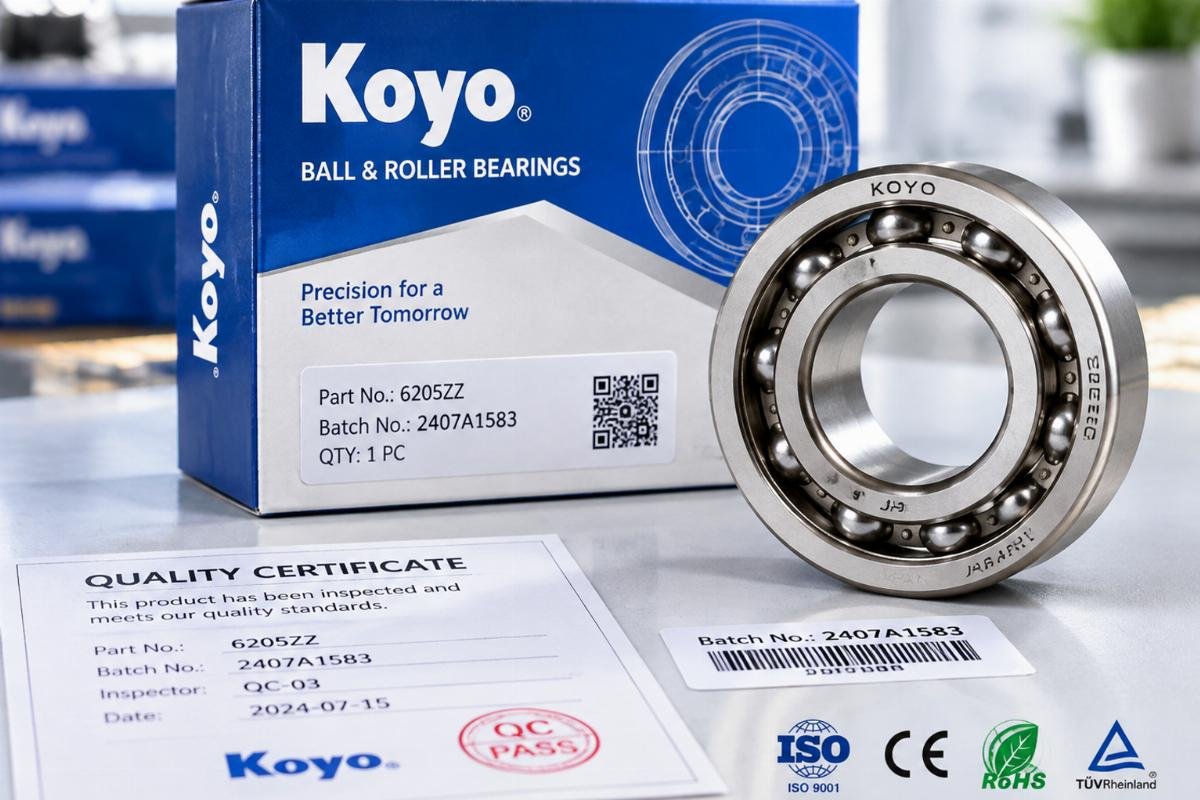
When engaging with a Gearbox Bearing Equivalents for Paper Mill Drives Wholesale Supplier, ask about their quality assurance processes. Do they perform incoming inspections? Can they provide sample units for testing? A transparent supplier will welcome these questions and provide the necessary evidence to build trust. Avoid suppliers who are vague about their sourcing origins or unwilling to share technical documentation.
Conclusion
Dimensional matching is merely the starting point for successful bearing substitution.
Surviving the harsh realities of paper mill operations requires a holistic approach to bearing selection. By focusing on internal clearance, lubrication compatibility, and verified quality, you can transform a potential liability into a reliable asset. The right partner does not just sell bearings; they engineer resilience into your supply chain. Choosing a knowledgeable Gearbox Bearing Equivalents for Paper Mill Drives Wholesale Supplier ensures that your replacements are not just cheap alternatives, but robust solutions tailored to your specific operational challenges.
Tags

About the author
author
Editor covering global sourcing, supplier verification, and industrial product knowledge. Content is compiled from manufacturer specifications, industry standards, and hands-on experience with international B2B buyers. Every article is fact-checked before publishing to help procurement professionals make informed decisions.
More articles by author

