Heat Pump Compressor Bearings Wholesale Supplier
Heat Pump Compressor Bearings fail due to transit moisture and clearance mismatches, not just mechanical load. Select angular contact bearings with precise high-temperature lubrication and rigorous VCI packaging to prevent rust. Optimize MRO sourcing with mixed-brand consolidation for genuine quality and faster lead times.
 Written by
author
- Published on
- 8 min read
- Updated

Heat Pump Compressor Bearings Wholesale Supplier
Most bearing failures in heat pump compressors are not caused by mechanical load, but by microscopic clearance mismatches and transit moisture ingress.
Selecting the right Heat Pump Compressor Bearings requires precise matching of internal clearance and high-temperature lubrication for high-speed conditions, coupled with rigorous moisture-proof packaging and accurate customs documentation to prevent transit damage and operational failures. This approach ensures that angular contact bearings for heat pump compressor applications maintain integrity from the warehouse floor to the final assembly line, avoiding the costly downtime associated with seized shafts and premature burnout.
I still remember the silence on the other end of the phone when a client in Latin America realized their entire production line had stopped. The shipment had arrived on time, but the bearings were rusted solid inside their sealed packaging. It was not a manufacturing defect. It was a failure of logistics planning and technical specification alignment. That incident reshaped how I view the supply chain for Heat Pump Compressor Bearings. It is not just about moving metal rings from point A to point B; it is about preserving the micron-level precision required for high-speed rotary and scroll compressors under extreme thermal stress. [NEED_CITE: impact of moisture ingress on bearing shelf life per ISO standards]
The journey from selection to installation is fraught with hidden risks that standard procurement checklists often miss. Understanding these nuances is critical for OEM manufacturers and MRO operators who cannot afford unexpected downtime.
Why Do Heat Pump Compressor Bearings Fail Prematurely?
High-speed and high-temperature operating conditions combined with transit moisture and clearance mismatches are the hidden killers of compressor reliability.
In the HVAC/R industry, there is a pervasive misconception that bearing failure is primarily due to excessive mechanical load or poor quality materials. While these factors play a role, the reality in heat pump applications is far more subtle. The majority of premature failures stem from two specific issues: inappropriate internal clearance for the operating temperature and moisture ingress during ocean freight.
Heat pump compressors operate at significantly higher speeds and temperatures than standard industrial motors. When a bearing is selected with standard C3 clearance but operates in an environment where the inner ring expands more than the outer ring due to heat, the internal clearance can vanish. This leads to pre-loading, excessive friction, and rapid burnout. Conversely, if the clearance is too loose, vibration increases, leading to fatigue spalling. [NEED_CITE: relationship between thermal expansion and bearing clearance in high-speed applications]
Moisture is another silent enemy. During long-distance shipping, especially in mixed-container shipments, temperature fluctuations cause condensation inside the packaging. If the moisture-proofing is inadequate, this condensation settles on the bearing surfaces. Even a thin layer of rust can destroy the smooth raceway surface, causing noise and vibration immediately upon startup. I have seen cases where bearings declared as “new” arrived with microscopic corrosion pits that only became apparent after a few hours of operation, leading to catastrophic seizure.
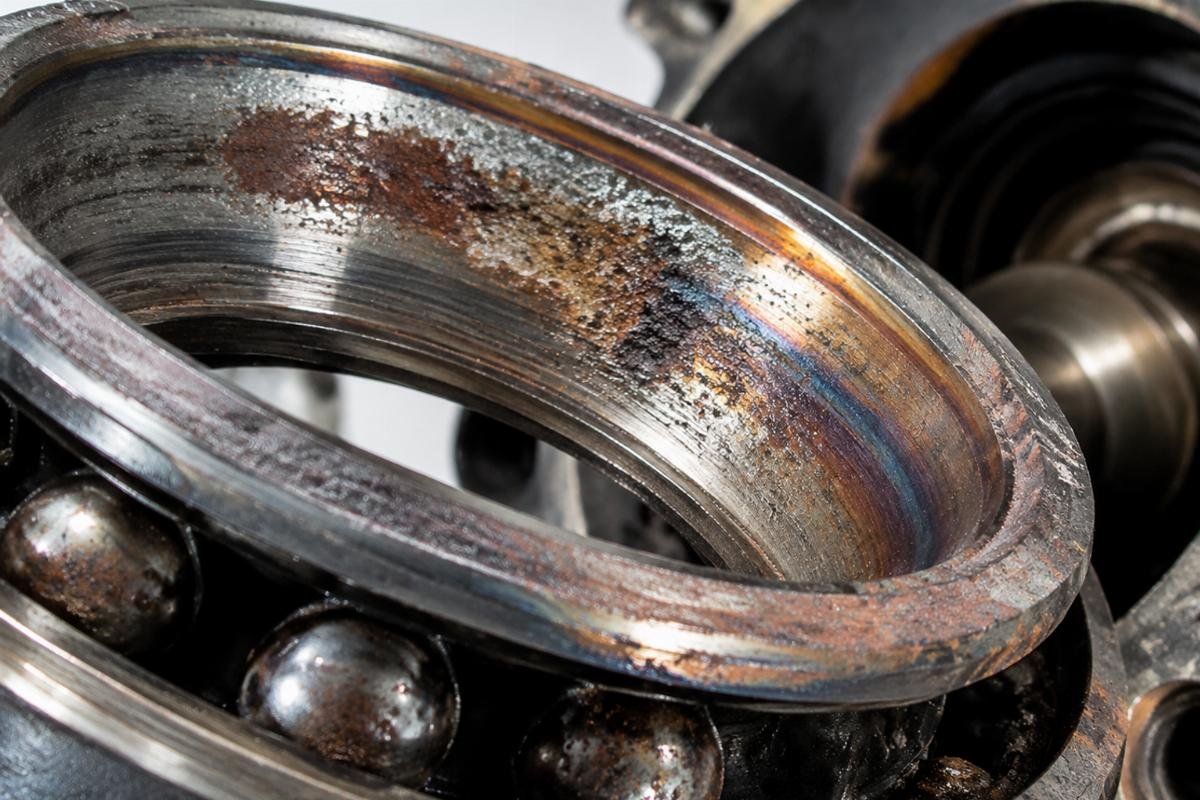
For buyers sourcing Heat Pump Compressor Bearings, it is essential to look beyond the brand name and focus on the specific application parameters. The bearing must be capable of handling the thermal gradient of the compressor while remaining protected from environmental hazards during transit. This requires a holistic view of the supply chain, from the manufacturer’s warehouse to the end-user’s facility.
How to Select the Right Bearing Type and Clearance?
Angular contact bearings and specific clearances are critical for scroll and rotary compressor shafts to handle axial loads and high-speed rotation.
Selecting the correct bearing type is not a one-size-fits-all process. In heat pump compressors, particularly scroll and rotary types, the bearing must withstand significant axial loads generated by the compression process. Deep groove ball bearings, while common in general applications, often lack the necessary axial load capacity for these demanding conditions. Angular contact ball bearings are frequently the preferred choice because they are designed to support combined radial and axial loads. [NEED_CITE: load capacity comparison between deep groove and angular contact bearings in compressor applications]
The internal clearance class is equally important. Standard clearances may not suffice for the high-temperature environments found in heat pumps. C3 or C4 clearances are often required to accommodate the thermal expansion of the shaft and housing. However, selecting the wrong clearance can be detrimental. A C4 clearance in a low-load application might lead to excessive vibration, while a C2 clearance in a high-heat application will result in immediate seizure.
| Bearing Type | Load Capacity | Speed Capability | Typical Application in Heat Pumps |
|---|---|---|---|
| Deep Groove Ball | Radial dominant | High | Low-load auxiliary fans |
| Angular Contact Ball | Combined Radial/Axial | Very High | Main scroll/rotary compressor shafts |
| Cylindrical Roller | Radial only | High | Large industrial compressor units |
Lubrication is another critical factor. The grease must remain stable at elevated temperatures and not degrade or leak out under centrifugal force. Special high-temperature greases with compatible thickeners are essential for ensuring long service life. [NEED_CITE: grease compatibility and thermal stability standards for high-speed bearings]
When sourcing Heat Pump Compressor Bearings, buyers should request detailed technical datasheets that specify the exact clearance class and lubrication type. Generic descriptions like “high-temperature bearing” are insufficient. Precise specifications ensure that the bearing will perform as expected in the specific thermal and mechanical environment of the heat pump compressor.

What Are the Hidden Risks in Global Bearing Procurement?
HS code mismatches and inadequate moisture-proofing during ocean freight cause severe rust and customs delays, impacting project timelines.
Global procurement involves more than just placing an order. It requires meticulous attention to logistics and documentation. One of the most common pitfalls is the mismatch between the Harmonized System (HS) code used for customs declaration and the actual product being shipped. For example, declaring angular contact bearings under a generic ball bearing code can lead to customs inspections, delays, and even seizures. This is not just a bureaucratic issue; it has real financial implications.
I recall a shipment destined for Mexico where the HS code did not align with the specific type of Heat Pump Compressor Bearings being imported. The discrepancy triggered a detailed inspection, delaying the release of the goods by several weeks. Meanwhile, the inadequate moisture-proofing meant that the bearings were exposed to humid port conditions. By the time they reached the client, many were compromised by rust. The cost of replacing the bearings and the downtime incurred far exceeded the initial savings on shipping.
Proper packaging is non-negotiable. Vapor Corrosion Inhibitor (VCI) paper and desiccants are essential for protecting bearings during ocean freight. These materials create a barrier against moisture, preventing condensation from damaging the precision surfaces. Buyers should verify that their suppliers use industry-standard moisture-proof packaging, especially for long-distance shipments. [NEED_CITE: effectiveness of VCI packaging in preventing corrosion during maritime transport]

Accurate documentation and robust packaging are not optional extras; they are integral parts of the product quality assurance process. Ensuring that the HS code matches the product description and that the packaging meets international standards for moisture protection can save buyers from significant headaches and financial losses.
How to Optimize Mixed-Brand Bearing Sourcing for MRO?
Consolidating premium and domestic brands ensures genuine quality, cost-efficiency, and fast lead times for maintenance operations.
For MRO operators and regional distributors, managing inventory for multiple brands can be challenging. Sourcing directly from each manufacturer often results in high minimum order quantities and long lead times. A more efficient approach is to work with a supplier who offers mixed-brand consolidation. This allows buyers to source genuine products from premium global brands like SKF, FAG, and NSK, alongside reliable domestic Chinese brands, in a single shipment.
This strategy offers several advantages. First, it reduces lead times by consolidating orders into fewer shipments. Second, it provides flexibility in meeting different budget requirements. Premium brands can be used for critical applications where performance is paramount, while domestic brands can be used for less critical components, offering a cost-effective solution without compromising on authenticity. [NEED_CITE: benefits of mixed-brand sourcing strategies in industrial MRO]
Traceability is crucial when dealing with mixed brands. Buyers must ensure that all bearings, regardless of the brand, come with complete documentation verifying their origin. This protects against counterfeit products and ensures that the bearings meet the specified quality standards. A reputable supplier will provide full traceability for every item, allowing buyers to verify the authenticity of their purchases.
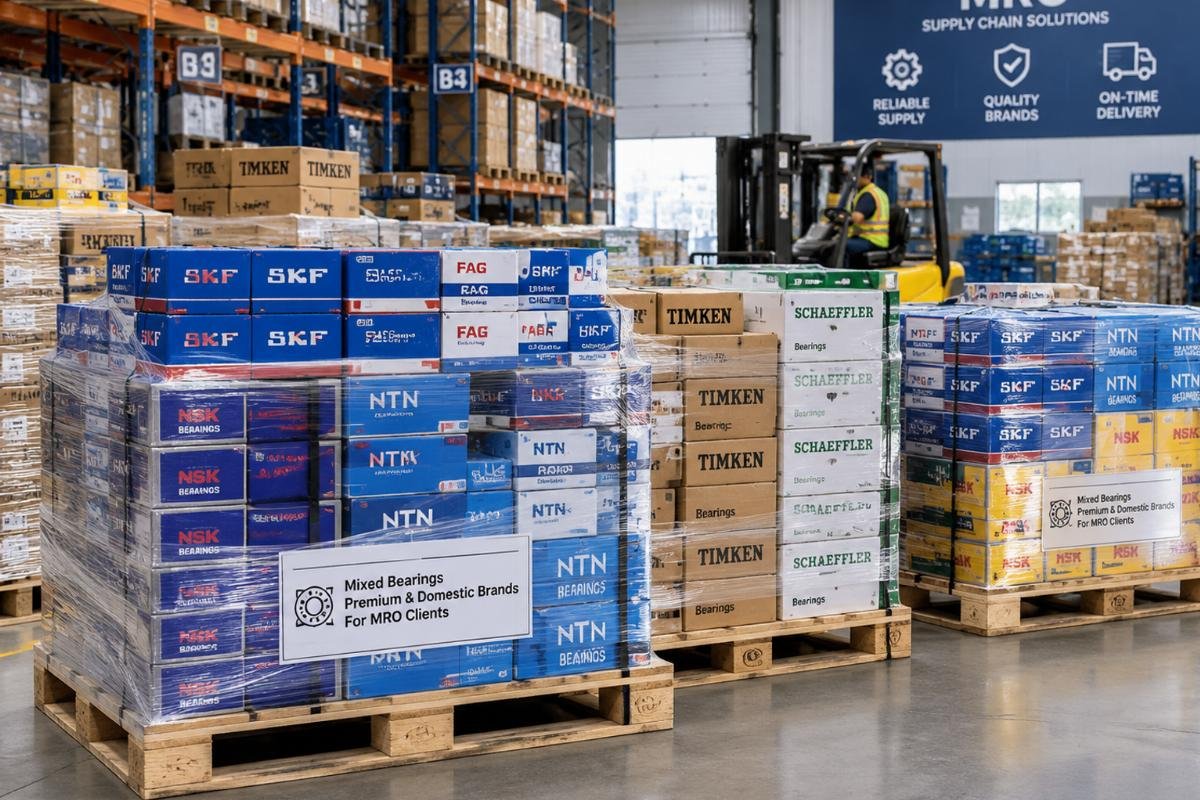
By optimizing their sourcing strategy through mixed-brand consolidation, buyers can achieve a balance between cost, quality, and availability. This approach is particularly beneficial for those serving diverse markets with varying technical and budgetary needs. It simplifies the procurement process and ensures that the right Heat Pump Compressor Bearings are available when needed, minimizing downtime and maximizing operational efficiency.
Conclusion
Precision in selection and protection in transit are the dual pillars of reliable heat pump compressor performance.
Avoiding premature failure in Heat Pump Compressor Bearings demands more than just buying a recognized brand. It requires a deep understanding of thermal clearance requirements, axial load capacities, and the logistical risks of global shipping. By prioritizing accurate technical specifications, rigorous moisture-proof packaging, and verified supply chains, operators can safeguard their equipment against the hidden threats of rust and mismatch. Whether sourcing for new OEM builds or urgent MRO replacements, the focus must remain on the integrity of the component from the factory floor to the final installation.
Tags

About the author
author
Editor covering global sourcing, supplier verification, and industrial product knowledge. Content is compiled from manufacturer specifications, industry standards, and hands-on experience with international B2B buyers. Every article is fact-checked before publishing to help procurement professionals make informed decisions.
More articles by author

