Low Temp Bearing Grease Below -30°C Wholesale Supplier
Prevent bearing seizure with Low temperature bearing lubrication grease below -30 °C by prioritizing base oil pour point over marketing labels. Learn to select synthetic oils and correct NLGI grades to minimize startup torque. Apply proper purging techniques to avoid starvation in extreme cold environments.
 Written by
author
- Published on
- 8 min read
- Updated

Low Temp Bearing Grease Below -30°C Wholesale Supplier
A label claiming “low temperature” performance is often a trap, not a guarantee.
Selecting the right lubricant for sub-zero environments requires ignoring marketing claims and focusing on base oil pour point and thickener structure to minimize startup torque and prevent seizure. The core argument is that real survival in extreme cold depends on rheological behavior at startup, not just the labeled temperature range on the container.
I still remember the silence in the control room at the Jubail LNG project. It was not the quiet of efficiency, but the heavy, suffocating silence of a cryogenic pump that had seized minutes after startup. The client had chosen a standard industrial grease because the datasheet claimed suitability for low temperatures. When we dismantled the unit, the bearing internals were not just worn; they were fused into a black, solid mass. The grease had not flowed. It had acted like concrete. That failure cost more than the entire initial lubrication budget for the year. Since then, I have learned that in temperatures below -30 °C, the physics of lubrication changes entirely. Viscosity is no longer just a number; it is the difference between rotation and destruction. [NEED_CITE: relationship between base oil viscosity and startup torque in cryogenic conditions]
Understanding why standard solutions fail is the first step toward selecting a reliable Low temperature bearing lubrication grease below -30 °C. This guide breaks down the technical criteria for selection and application, ensuring your operations do not repeat the mistakes made in the desert heat of Qatar or the frozen tundra of Siberia.
Why Do Standard Greases Fail Below -30 °C?
Most procurement teams assume that if a grease is labeled “all-season” or “low temp,” it will perform adequately in freezing conditions. This is a dangerous misconception. Standard greases fail in extreme cold due to two primary mechanisms: base oil solidification and thickener structure breakdown.
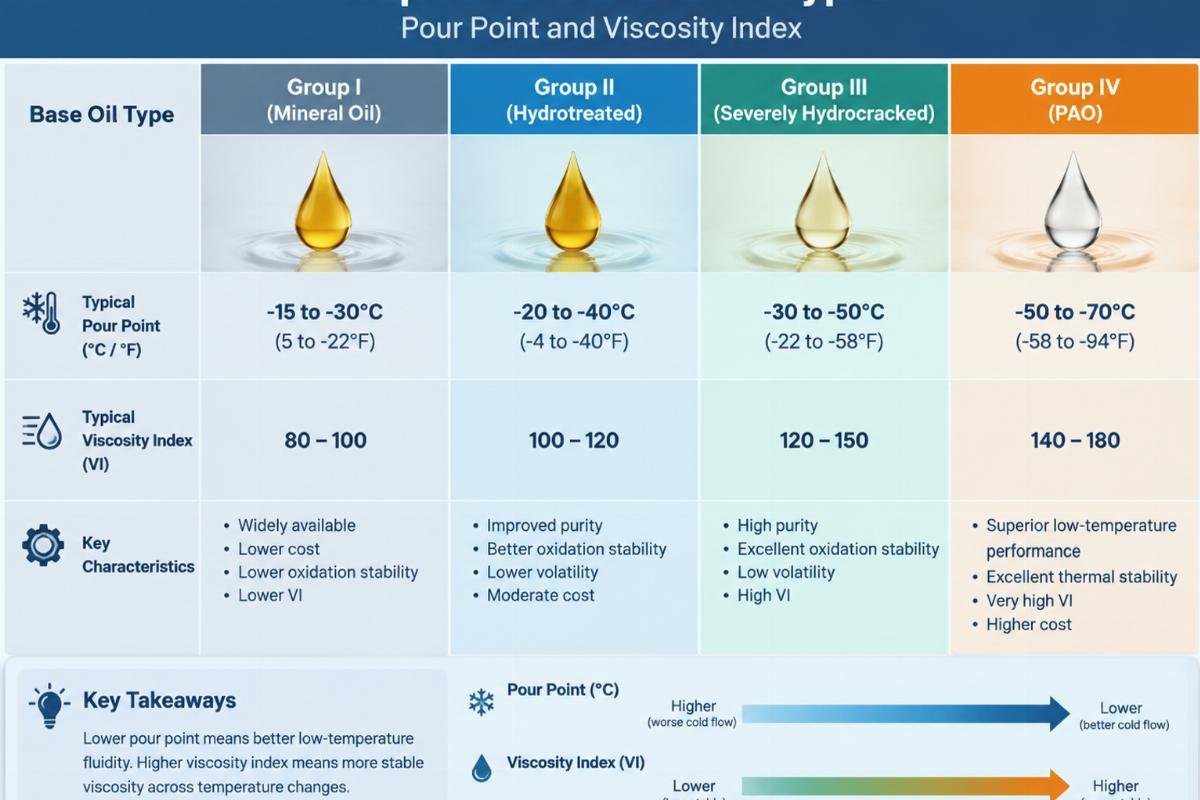
The base oil is the actual lubricating agent. In sub-zero temperatures, paraffinic oils begin to crystallize. As the temperature drops below the pour point, these wax crystals interlock, turning the fluid into a semi-solid gel. Even if the oil does not fully freeze, its viscosity increases exponentially. [NEED_CITE: ASTM D97 pour point testing standards for lubricants] When the bearing attempts to start, the motor must overcome this immense internal friction. The result is a spike in startup torque that can exceed the design limits of the drive system, leading to immediate mechanical failure or gradual wear from starvation.
The thickener, which holds the oil in place, also plays a critical role. Lithium-based thickeners, common in general-purpose greases, can become brittle and lose their fibrous structure in extreme cold. Instead of releasing oil smoothly under shear, the thickener matrix may collapse or channel, leaving the rolling elements dry.
| Failure Mode | Mechanism | Consequence |
|---|---|---|
| Base Oil Solidification | Wax crystal formation below pour point | Exponential viscosity increase, high startup torque |
| Thickener Brittleness | Loss of fibrous structure in cold | Poor oil release, bearing starvation |
| Channeling | Grease fails to flow back into raceway | Permanent paths formed, lack of replenishment |
In a cold-region mining operation, we observed excavators struggling to swing their booms in the morning. The ambient temperature had dropped significantly overnight. The grease inside the slew bearings had hardened to the point where the hydraulic pumps were operating at maximum pressure just to initiate movement. This was not a hydraulic issue; it was a lubrication failure. The wear rate on the rollers increased noticeably because the lubricant could not form a protective film during those critical first minutes of operation. [NEED_CITE: impact of startup lubrication starvation on roller bearing life]

To avoid these failures, one must look beyond the brand name and examine the chemical composition. A reliable Low temperature bearing lubrication grease below -30 °C must use synthetic base oils with inherently low pour points and thickeners that remain flexible in the cold.
How to Select the Right Grease for Sub-Zero Bearings?
Selection is not about finding the “thickest” grease for sealing, nor the “thinnest” for flow. It is about matching the rheological properties to the specific operating conditions. The three critical parameters are base oil type, thickener chemistry, and NLGI grade.
Base Oil Selection: Synthetic hydrocarbons (PAO) and esters are the standard for extreme cold. PAOs offer excellent low-temperature fluidity and compatibility with most seals. Esters provide even better lubricity and lower pour points but require careful compatibility checks with existing seals and greases. Mineral oils should be avoided entirely for applications below -30 °C, regardless of additive packages. [NEED_CITE: comparative analysis of synthetic vs mineral base oils in cryogenic applications]
Thickener Chemistry: Lithium complex thickeners are common, but for extreme cold, polyurea or specialized lithium complexes with modified structures are often superior. They maintain their structural integrity and oil-release characteristics at lower temperatures. Avoid simple lithium soaps if the temperature regularly dips below -30 °C.
NLGI Grade: In centralized lubrication systems, the NLGI grade is critical. A grade that is too hard (e.g., NLGI 2 or 3) will not pump through lines in the cold, causing line blockages and starved bearings. A softer grade (NLGI 1 or 0) may be necessary to ensure flow, but it must still have sufficient mechanical stability to stay in the bearing under load.
| Parameter | Recommended for < -30 °C | Avoid |
|---|---|---|
| Base Oil | PAO, Ester, PAG | Mineral Oil, Naphthenic |
| Thickener | Polyurea, Modified Li Complex | Simple Lithium Soap, Calcium |
| NLGI Grade | 1 or 0 (for centralized systems) | 2 or 3 (unless manual packing) |
| Pour Point | At least 10 °C below min ambient | Close to min ambient |
A wind farm operator in Northern Europe faced recurring issues with yaw bearings. The grease was channeling, creating permanent tunnels that prevented fresh lubricant from reaching the contact zones. The relubrication interval had to be reduced drastically, increasing maintenance costs and downtime. By switching to a grease with a more robust thickener structure and appropriate NLGI grade for the pumping system, the flow characteristics improved, and the channeling depth was minimized. [NEED_CITE: guidelines for grease channeling in large diameter bearings]
When sourcing these specialized lubricants, working with a Low temperature bearing lubrication grease below -30 °C wholesale supplier who understands these technical nuances is essential. They can provide the specific datasheets and test reports needed to verify the pour point and torque characteristics.
What Are the Correct Application Steps for Extreme Cold?
Even the best grease will fail if applied incorrectly. In extreme cold, the margin for error is non-existent. Proper cleaning, purging, and volume control are mandatory.
- Complete Removal of Old Grease: Do not mix new low-temp grease with old standard grease. Incompatibility can cause immediate softening or hardening. Use a compatible flushing oil or solvent to remove all traces of the previous lubricant. Ensure the bearing housing is clean and dry.
- Controlled Packing: For manually packed bearings, fill the free space completely but do not overpack the rolling elements themselves. Overpacking increases churning and heat generation, which is counterproductive in cold starts where heat is needed to lower viscosity.
- Purging Centralized Systems: If using a centralized system, purge the lines until fresh grease appears at the relief point. Old, hardened grease in the lines will block the flow of new lubricant. This may require multiple cycles and higher pump pressures initially.
- Volume Adjustment: In cold conditions, grease does not flow back as easily. Adjust the relubrication volume to ensure adequate supply without causing excessive seal pressure. Monitor the relief ports for signs of over-lubrication.
A common mistake observed in MRO operations is assuming that thicker grease provides better sealing against contaminants. In sub-zero temperatures, this extra resistance causes centralized pump failure and starvation. The pump cannot push the viscous material through the lines, and the bearing receives nothing. [NEED_CITE: best practices for relubrication volumes in extreme temperatures]

Ensuring the correct application technique is as important as the product itself. A knowledgeable Low temperature bearing lubrication grease below -30 °C wholesale supplier can provide detailed application guides tailored to specific bearing types and housing designs.
How to Monitor and Maintain Low-Temp Lubrication?
Maintenance in extreme cold is not about sticking to a calendar schedule; it is about monitoring performance indicators. The two most critical metrics are startup torque and grease condition.
Startup Torque Monitoring: Install torque sensors or monitor motor current during startup. A gradual increase in startup torque indicates that the grease is thickening or degrading. This is an early warning sign before catastrophic failure occurs. If the torque spikes suddenly, investigate immediately for contamination or grease hardening.
Grease Sampling and Analysis: Regularly sample the grease from the relief ports. Check for color changes, consistency, and the presence of wear metals. In cold environments, grease can oxidize differently, and moisture ingress can lead to ice formation within the lubricant. [NEED_CITE: methods for analyzing grease degradation in cold climates]
Interval Adjustment: Do not rely on fixed intervals. Adjust relubrication frequency based on actual operating hours and temperature profiles. If the equipment operates intermittently in extreme cold, more frequent, smaller doses of grease may be necessary to keep the lubricant fresh and flowing.
In a steel plant in a cold region, maintenance teams noticed that the startup torque of their conveyor bearings was increasing over time. By adjusting the relubrication interval and switching to a grease with better low-temperature flow properties, they stabilized the torque levels and extended the service life meaningfully. This proactive approach prevented unplanned downtime during peak production periods.

Effective monitoring requires data and expertise. Partnering with a Low temperature bearing lubrication grease below -30 °C wholesale supplier who offers technical support and failure analysis can help interpret these signals and optimize your maintenance strategy.
Conclusion
Survival in extreme cold is determined by physics, not labels.
Selecting and applying grease for temperatures below -30 °C demands a rigorous focus on base oil pour point, thickener structure, and application precision. Ignoring these factors leads to high startup torque, starvation, and eventual seizure. By understanding the underlying mechanisms of failure and adopting a data-driven maintenance approach, operators can ensure reliability in the harshest environments. For those seeking verified solutions, engaging with a specialized Low temperature bearing lubrication grease below -30 °C wholesale supplier ensures access to products and expertise that meet these stringent requirements.
Tags

About the author
author
Editor covering global sourcing, supplier verification, and industrial product knowledge. Content is compiled from manufacturer specifications, industry standards, and hands-on experience with international B2B buyers. Every article is fact-checked before publishing to help procurement professionals make informed decisions.
More articles by author

