Paper Machine Bearings: Dryer & Wet End Supplier
Selecting the right Paper Machine Bearings for wet end corrosion and dryer end heat prevents catastrophic downtime. Match internal clearance and seal types to operational zones rather than relying on standard units. Source genuine mixed-brand inventory with technical support to ensure reliability and minimize unplanned stops.
 Written by
author
- Published on
- 7 min read
- Updated

Paper Machine Bearings: Dryer & Wet End Supplier
Cheaper standard bearings cost more long-term due to frequent line stoppages.
Selecting the correct bearing type and material for wet end (corrosion) and dryer end (high-temp) applications is critical to prevent catastrophic paper machine downtime. The core distinction lies in environmental resistance versus thermal stability, not just load capacity.
I still remember the humidity in that Central Java workshop. It wasn’t just hot; it was heavy, clinging to every surface. We were midway through a wet end retrofit when the client decided to cut costs by swapping specified sealed spherical roller bearings for standard deep groove ball bearings. The logic seemed sound on paper: same shaft diameter, lower price tag. But paper mills are not clean rooms. Within months, the rainy season hit. Moisture and pulp slurry found their way into the unsealed units. The result was not a gradual wear pattern but a sudden, violent failure. The cage disintegrated, jamming the dryer cylinder and forcing a two-day shutdown of the entire paper line. That silence on the factory floor was louder than any machinery noise. It taught me that in paper production, the environment dictates the component, not the other way around. [NEED_CITE: common failure modes in paper machine bearings per ISO 15243]
This experience underscores why sourcing the right Paper Machine Bearings requires a nuanced understanding of both mechanical loads and chemical environments. A bearing that performs flawlessly in a dry conveyor system will fail rapidly in a paper mill’s wet section. Conversely, a corrosion-resistant unit may not withstand the thermal expansion cycles of the dryer section. The key is matching the specific engineering features to the zone of operation.
What are the key differences between wet end and dryer end bearings?
Wet end bearings require robust corrosion resistance and effective sealing, while dryer end bearings demand high-temperature stability and precise internal clearance.
The paper machine is essentially two different worlds joined by a web of paper. The wet end is a hostile environment characterized by water, steam, acidic pulp, and cleaning chemicals. Here, the primary enemy is contamination. Standard bearings lack the protective barriers needed to keep moisture out and lubricant in. When water ingress occurs, it leads to rust, lubricant washout, and premature fatigue. [NEED_CITE: impact of water contamination on bearing lubrication life]
In contrast, the dryer section operates under sustained high temperatures. The challenge here is thermal expansion. As the rolls heat up, they expand. If the bearing internal clearance is too tight, this expansion creates excessive preload, leading to overheating and cage failure. If the clearance is too loose, vibration increases, causing uneven wear. The material composition must also resist softening at elevated temperatures, maintaining hardness and structural integrity.
| Feature | Wet End Requirements | Dryer End Requirements |
|---|---|---|
| Primary Threat | Moisture, Pulp Slurry, Chemicals | High Temperature, Thermal Expansion |
| Sealing Type | Heavy-duty Labyrinth or Contact Seals | Standard Seals or Open Designs with Heat-resistant Grease |
| Internal Clearance | Standard (C3 often sufficient) | Expanded (C3 or C4 required for thermal growth) |
| Cage Material | Polyamide or Steel with Corrosion Coating | Steel or Brass with High-Temp Stability |
| Lubrication | Water-resistant Synthetic Grease | High-Temperature Synthetic Grease |
A Southeast Asian mill once attempted to use the same bearing type for both sections to simplify inventory. The wet end units corroded within a year, while the dryer end units suffered from cage fractures due to insufficient clearance for thermal expansion. This mismatch highlights why a one-size-fits-all approach fails in paper manufacturing. Sourcing Paper Machine Bearings requires segmenting the order by operational zone, not just by shaft size.

How to choose the right bearing type for each section?
Spherical roller bearings are the industry standard for heavy loads and misalignment, but specific seal designs determine their suitability for wet or dry zones.
For most paper machine applications, especially in the press and dryer sections, spherical roller bearings are preferred. Their self-aligning capability compensates for shaft deflection and housing misalignment, which is common in large, heavy rolls. However, the basic type is not enough. The differentiation lies in the suffixes and internal design features.
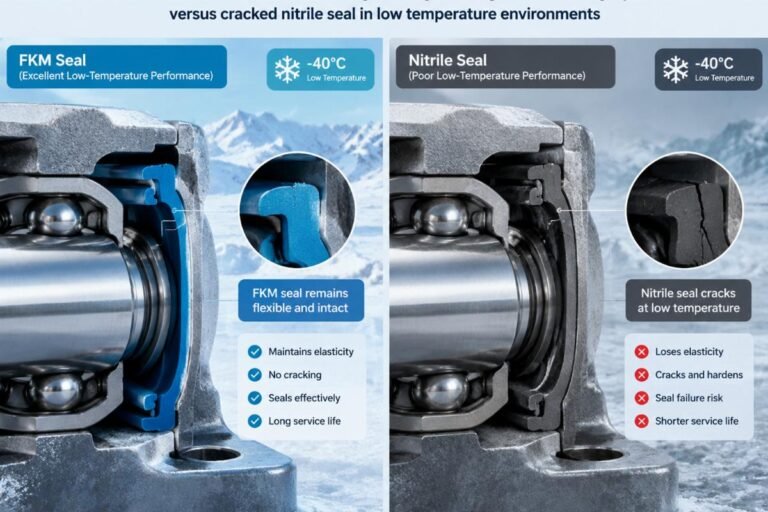
In the wet end, look for bearings with enhanced sealing systems. Labyrinth seals create a tortuous path that blocks water and pulp fibers while allowing for some axial movement. For extreme conditions, bearings with contact seals offer better protection but may generate more heat due to friction. It is crucial to verify that the seal material is compatible with the specific chemicals used in the pulping process. [NEED_CITE: chemical compatibility of bearing seal materials]
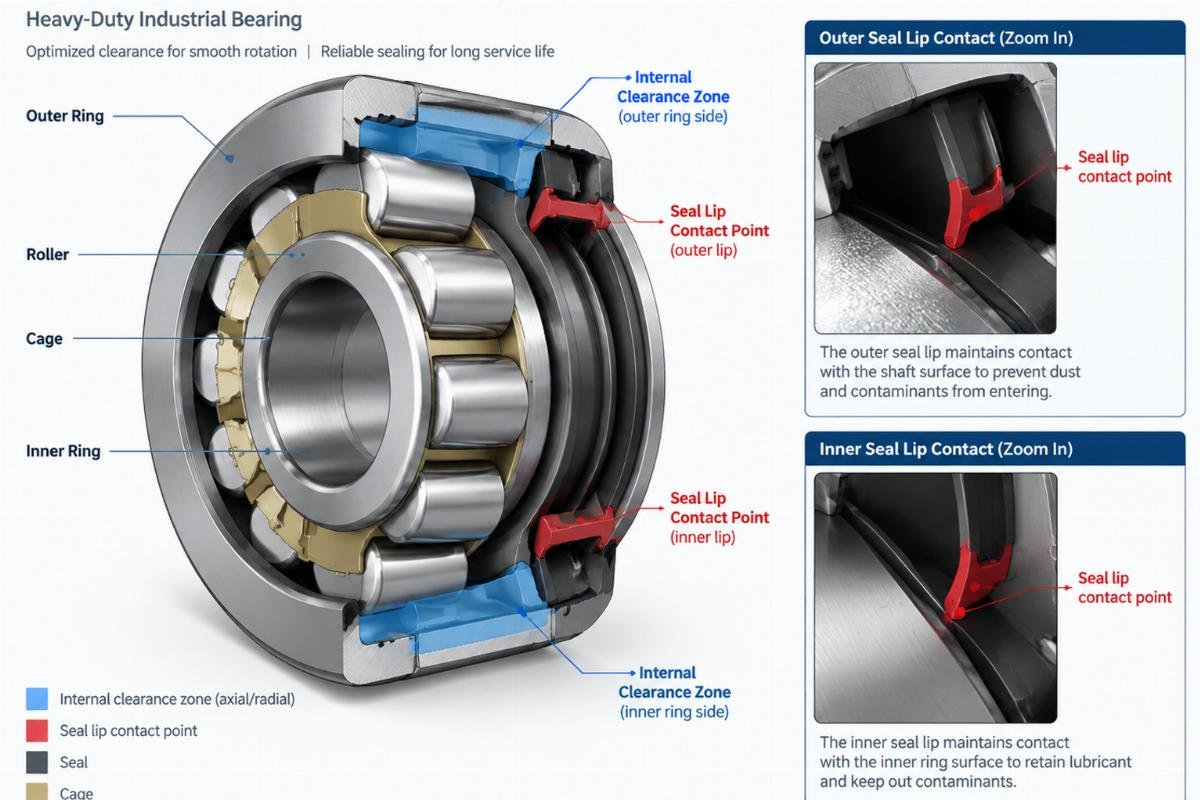
For the dryer end, the focus shifts to cage design and clearance. Steel cages are generally preferred for their strength at high temperatures, though brass cages are also common for their smooth running characteristics. The internal clearance must be selected based on the operating temperature range. A C3 clearance is often the minimum for dryer applications, but C4 may be necessary for higher speed or temperature scenarios. Misjudging this parameter is a frequent cause of early failure.
A European distributor recently shared a case where a mill switched from open bearings to sealed units in the dryer section without adjusting the clearance. The added friction from the seals, combined with thermal expansion, caused the bearings to run hot and fail prematurely. This illustrates that selecting Paper Machine Bearings is a balancing act between protection and thermal management.

What specifications prevent premature failure in paper mills?
Proper internal clearance, robust cage materials, and effective sealing are the three pillars of bearing longevity in paper mills.
Beyond type selection, specific technical specifications dictate performance. Ignoring these details often leads to the “infant mortality” of bearings, where failures occur shortly after installation despite correct mounting practices.
First, internal clearance is non-negotiable. As mentioned, thermal expansion in the dryer section requires adequate space for the rolling elements to move. Without it, the bearing seizes. In the wet end, while thermal expansion is less of an issue, the presence of water can affect lubrication viscosity, making proper clearance essential for maintaining an oil film.
Second, cage material matters. In high-speed dryer sections, the centrifugal forces on the cage are significant. Steel cages offer superior strength, while polyamide cages provide lighter weight and better damping but may have temperature limits. Choosing the wrong cage can lead to fragmentation under load. [NEED_CITE: bearing cage material performance limits at high temperatures]
Third, sealing effectiveness must be verified. Not all seals are created equal. Some are designed only to keep dust out, while others are engineered to withstand water jets and chemical sprays. For wet end applications, the seal must be robust enough to handle continuous exposure to moisture without deteriorating.
A mill in Latin America experienced repeated failures in its press section. Investigation revealed that the bearings had standard dust seals instead of the specified water-resistant seals. The constant spray from the shower pipes washed out the grease, leading to rapid wear. Upgrading to the correct sealed Paper Machine Bearings resolved the issue, extending service life significantly.
How to source genuine mixed-brand bearings efficiently?
Verify traceability, use one-stop consolidation for MRO, and prioritize suppliers with technical selection support.
Sourcing bearings for a paper mill overhaul is complex. Mills often operate with equipment from various OEMs, requiring a mix of brands like SKF, FAG, NSK, or TIMKEN. Managing multiple suppliers for each brand increases administrative burden and lead times. Consolidating these orders through a single, reliable channel simplifies procurement.
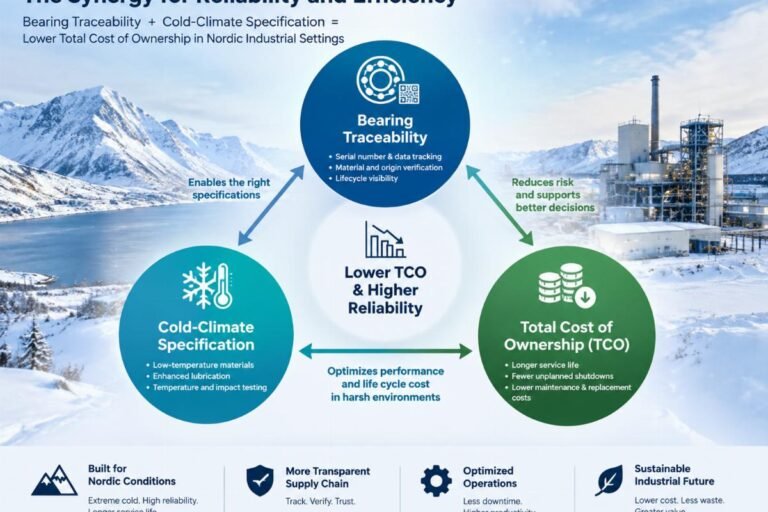
Traceability is paramount. Counterfeit bearings are a persistent risk in the global market. Genuine products come with full documentation, including material certificates and batch numbers. This traceability ensures that the bearings meet the specified standards and allows for root cause analysis if a failure occurs. [NEED_CITE: importance of supply chain traceability in preventing counterfeit industrial components]
Flexibility in minimum order quantities (MOQ) is also crucial for MRO operations. Sometimes, only a few specific units are needed for an emergency repair, while other times, a full container of mixed sizes is required for a scheduled overhaul. A supplier that can accommodate both scenarios provides valuable operational resilience.
Technical support is another key factor. Selecting the right bearing involves more than just matching a part number. It requires understanding the application’s nuances. Suppliers who offer cross-brand equivalent consultation and technical selection guidance help avoid costly mistakes. For instance, if a specific brand is unavailable, a knowledgeable supplier can recommend a genuine alternative with equivalent dimensions and load ratings, ensuring minimal downtime.
A Middle East steel plant operator noted that consolidating their bearing purchases reduced their procurement lead time substantially. Instead of waiting for individual shipments from different manufacturers, they received a single, verified shipment containing all necessary Paper Machine Bearings for their annual maintenance window. This efficiency translated directly into reduced downtime and lower overall maintenance costs.

Conclusion
Correct bearing selection prevents catastrophic downtime.
Choosing the right Paper Machine Bearings involves balancing corrosion resistance for the wet end with thermal stability for the dryer end. Prioritize genuine products with verified traceability and seek suppliers who offer technical expertise alongside logistical efficiency. This approach ensures reliability and minimizes unplanned stops.
Tags

About the author
author
Editor covering global sourcing, supplier verification, and industrial product knowledge. Content is compiled from manufacturer specifications, industry standards, and hands-on experience with international B2B buyers. Every article is fact-checked before publishing to help procurement professionals make informed decisions.
More articles by author