Sawmill Bearings: How to Choose Bearings for Saw Lines
Selecting the right sawmill bearings requires prioritizing robust sealing and optimal clearance over basic dimensions to prevent unplanned downtime. Choose C3/C4 clearance and triple-lip or labyrinth seals to withstand heavy radial loads, high temperatures, and pervasive wood dust in harsh processing lines.
 Written by
author
- Published on
- 7 min read
- Updated

Sawmill Bearings: How to Choose Bearings for Saw Lines
Bigger is not always better. In the harsh environment of a sawmill, an oversized bearing often generates more heat than it can dissipate under moderate loads, leading to premature failure.
Selecting the right sawmill bearings requires prioritizing robust sealing and optimal internal clearance over basic dimensional specifications. To withstand heavy radial loads, high operating temperatures, and pervasive wood dust, operators must choose spherical roller or insert bearings with C3/C4 clearance and triple-lip or labyrinth seals. This approach prevents dust ingress and thermal jamming, which are the primary causes of unplanned downtime in wood processing lines.
I still remember the silence in a Chilean sawmill. It was not the peaceful quiet of a job well done, but the dead stop of a main saw line. The maintenance team had installed standard deep groove ball bearings on a high-speed conveyor. Within days, fine wood dust had penetrated the standard rubber seals, mixed with the grease, and formed an abrasive paste inside the cage. Under heavy load and rising temperature, the bearing seized. The line stayed down for three days while they replaced the shaft and housing. That incident changed how I view specification sheets. Dimensions matter, but in wood processing, the battle is won or lost at the seal lip and the internal gap. [NEED_CITE: common failure modes in contaminated environments per ISO 15243]
Understanding why standard setups fail is the first step toward reliability. Let us look at the specific criteria that separate a bearing that lasts months from one that lasts years.
Why Do Standard Bearings Fail in Saw Lines?
Wood dust is not just dirt; it is an abrasive contaminant that destroys standard lubrication films. When combined with the thermal expansion of steel shafts in high-friction zones, standard bearings face a dual threat that generic industrial specs do not address.
In many general manufacturing plants, a standard shielded bearing works fine. In a sawmill, however, the air is thick with particulate matter. Standard contact seals may keep large debris out, but fine sawdust works its way past single-lip designs. Once inside, it acts like grinding compound. [NEED_CITE: effect of particulate contamination on bearing fatigue life]
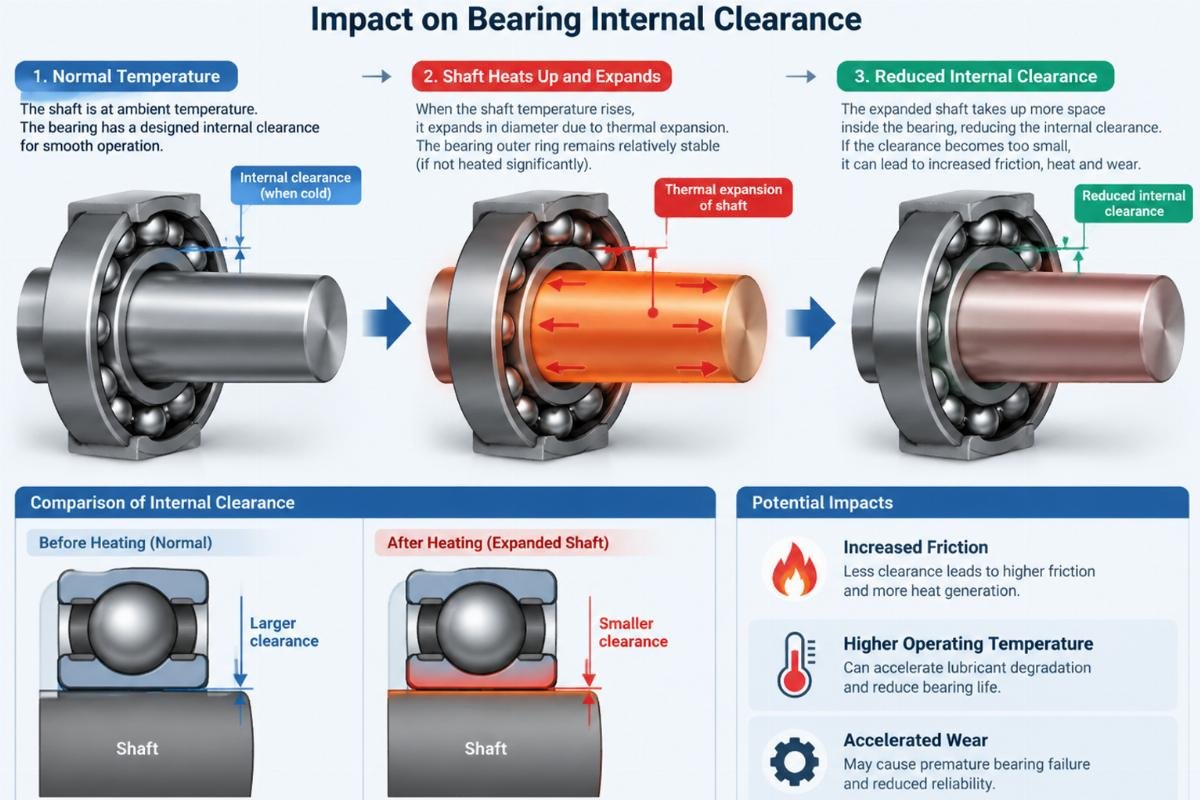
Furthermore, saw lines generate significant heat. As the shaft heats up, it expands. If the bearing has standard internal clearance (C2 or Normal), this expansion removes the necessary operating gap. The rolling elements become pre-loaded by the housing itself, causing rapid temperature spikes and eventual seizure. I have seen technicians blame the brand when the real culprit was the clearance class. A bearing that fits perfectly at room temperature can be a tight fit at operating temperature if the wrong clearance is chosen.
The solution is not just a “stronger” bearing, but a smarter configuration. We need bearings designed to accommodate misalignment from shaft deflection under heavy log loads and enough internal space to handle thermal growth without binding.
How to Match Bearing Types to Sawmill Zones?
Not all positions on a saw line require the same bearing architecture. Using a heavy-duty spherical roller on a light-duty return conveyor is wasteful and potentially harmful due to increased friction, while using a light insert bearing on a headrig is a recipe for catastrophic failure.
To help MRO operators and OEMs make the right choice, consider this comparison of common bearing types used in wood processing:
| Application Zone | Recommended Bearing Type | Key Advantage | Sealing Requirement |
|---|---|---|---|
| Headrig / Main Saw | Spherical Roller Bearing | High radial load capacity, accommodates misalignment | Heavy-duty Labyrinth or Triple-lip |
| Conveyor Rolls | Insert Ball Bearing (Y-bearing) | Easy replacement, self-aligning | Integrated Rubber Seal (often sufficient) |
| Gearboxes / Drives | Cylindrical Roller Bearing | High speed capability, precise radial support | Standard Lip Seal (cleaner environment) |
| Tensioning Units | Deep Groove Ball Bearing | Moderate load, high precision | Shielded or Single Lip |
[NEED_CITE: ABMA load rating guidelines for industrial machinery]
A case from a Southeast Asian plywood mill illustrates this mismatch. The facility used deep groove ball bearings on their main log feed rollers. The radial loads from uneven logs caused early spalling on the raceways. After switching to spherical roller bearings, which can handle both heavy radial loads and slight shaft misalignments, the maintenance interval extended noticeably. The spherical design allows the inner ring to tilt slightly relative to the outer ring, preventing edge loading that destroys ball bearings.
However, for lighter duties like chain conveyors, insert bearings are often preferred. They are easier to mount on square or round shafts and can be replaced quickly during short maintenance windows. The key is matching the load profile to the bearing geometry. Oversized bearings in low-load zones generate excess heat due to higher internal friction, while undersized bearings in high-load zones suffer from fatigue.

What Clearance and Sealing Specs Are Critical?
Standard seals fail in sawmills; triple-lip or labyrinth seals are mandatory, not optional. Similarly, standard clearance is often insufficient for the thermal dynamics of wood processing equipment.
When selecting sawmill bearings, two technical parameters dominate the decision: internal clearance and sealing integrity.
Internal Clearance:
For most sawmill applications, especially those involving long shafts or high speeds, C3 or C4 clearance is essential. C3 clearance provides a larger internal gap than standard, allowing for thermal expansion of the shaft and inner ring without creating destructive preload. In extremely hot environments or where large temperature differentials exist between installation and operation, C4 may be required. [NEED_CITE: ISO standards for bearing radial internal clearance] Choosing the wrong clearance is a silent killer. It does not show up during installation but manifests as overheating after a few hours of run time.
Sealing Technology:
Wood dust is hygroscopic; it absorbs moisture and becomes sticky. A simple rubber lip can get clogged or worn down by abrasive particles.
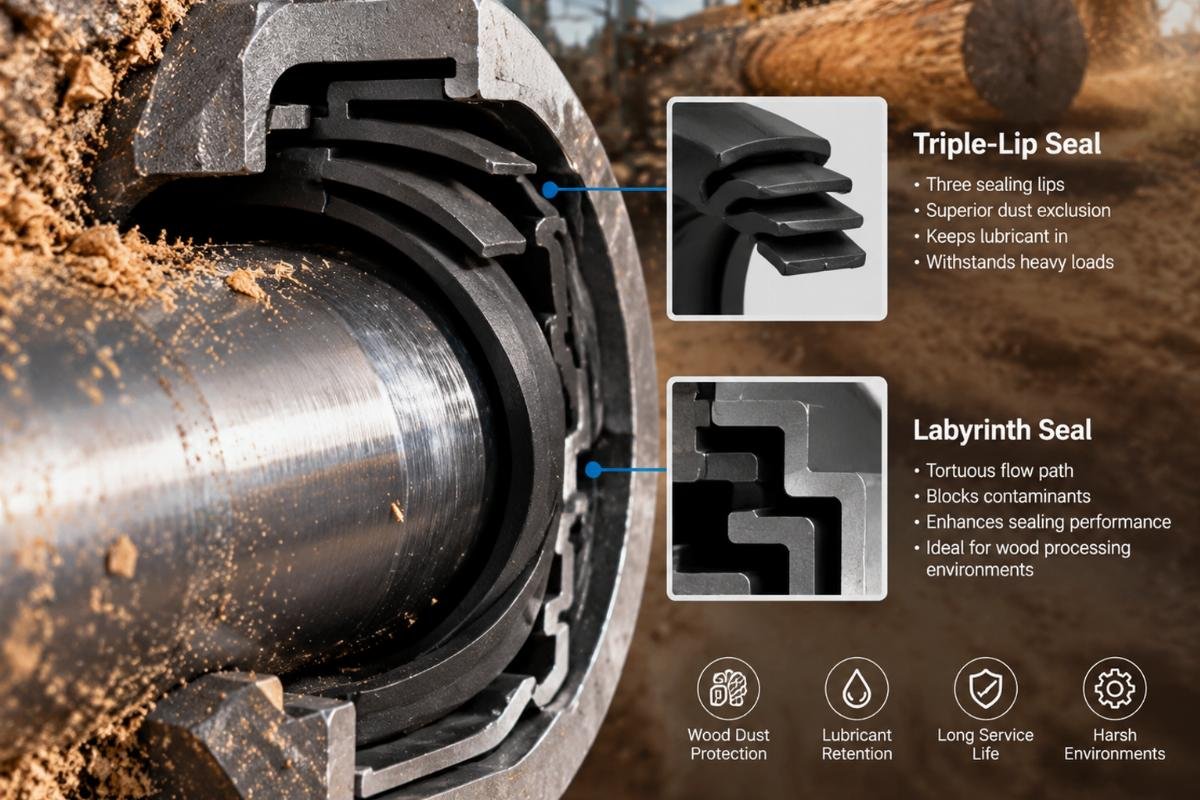
- Triple-lip seals: Provide multiple barriers against dust ingress. They are effective for moderate contamination levels.
- Labyrinth seals: Create a tortuous path that dust cannot easily navigate. These are ideal for high-contamination zones like the headrig or edger.
- V-ring seals: Often used in conjunction with other seals to protect the shaft surface itself.
I once reviewed a failure analysis from a European mill where standard seals were used on a planer feed unit. The dust had packed into the seal groove, hardening like concrete and destroying the seal lip. Switching to a labyrinth-sealed unit solved the issue. The initial cost was higher, but the reduction in downtime paid for the upgrade within months.
How to Verify Bearing Quality Before Installation?
Traceability and material certification are your insurance against counterfeit parts. In the global market, genuine bearings from brands like SKF, FAG, NSK, and TIMKEN are frequently counterfeited. Installing a fake bearing is worse than installing no bearing at all, as it gives a false sense of security.
Before installation, verify the following:
- Packaging Integrity: Genuine bearings come in high-quality, branded packaging with holographic labels or specific batch codes. Check for spelling errors or poor print quality.
- Material Certification: Request material certs for critical applications. High-carbon chromium steel (such as AISI 52100 equivalent) is standard for high-load bearings. [NEED_CITE: industry standards for bearing steel purity]
- Visual Inspection: Look for smooth, polished raceways. Rough surfaces or discoloration indicate poor manufacturing or improper storage.
- Seal Flexibility: Gently press the seal. It should be flexible and return to shape. Brittle seals suggest old stock or poor-quality rubber.
Sourcing from a supplier who offers full traceability documentation is crucial. We maintain strict quality assurance protocols, ensuring that every bearing, whether from a premium global brand or a reliable domestic line, meets ISO compliance. This level of verification helps MRO operators avoid the risk of unplanned downtime caused by substandard components.

Conclusion
Choosing the right sawmill bearings is about balancing protection and performance. Prioritize C3/C4 clearance to handle thermal expansion and invest in robust sealing solutions like triple-lip or labyrinth designs to keep wood dust out. Match the bearing type to the specific load zone, using spherical rollers for heavy duties and insert bearings for lighter, accessible roles. By focusing on these technical details rather than just dimensions, you can significantly extend service life and minimize costly interruptions in your wood processing operations.
Tags

About the author
author
Editor covering global sourcing, supplier verification, and industrial product knowledge. Content is compiled from manufacturer specifications, industry standards, and hands-on experience with international B2B buyers. Every article is fact-checked before publishing to help procurement professionals make informed decisions.
More articles by author