How Nordic Buyers Run Remote Supplier Audits for Bearings
Nordic buyers use remote supplier audits to verify systematic traceability and ISO-compliant processes rather than just physical stock. Learn how to prepare digital dossiers, ensure anti-rust packaging compliance, and handle real-time Q&A to pass video inspections and secure long-term mixed-batch bearing contracts.
 Written by
author
- Published on
- 7 min read
- Updated
How Nordic Buyers Run Remote Supplier Audits for Bearings
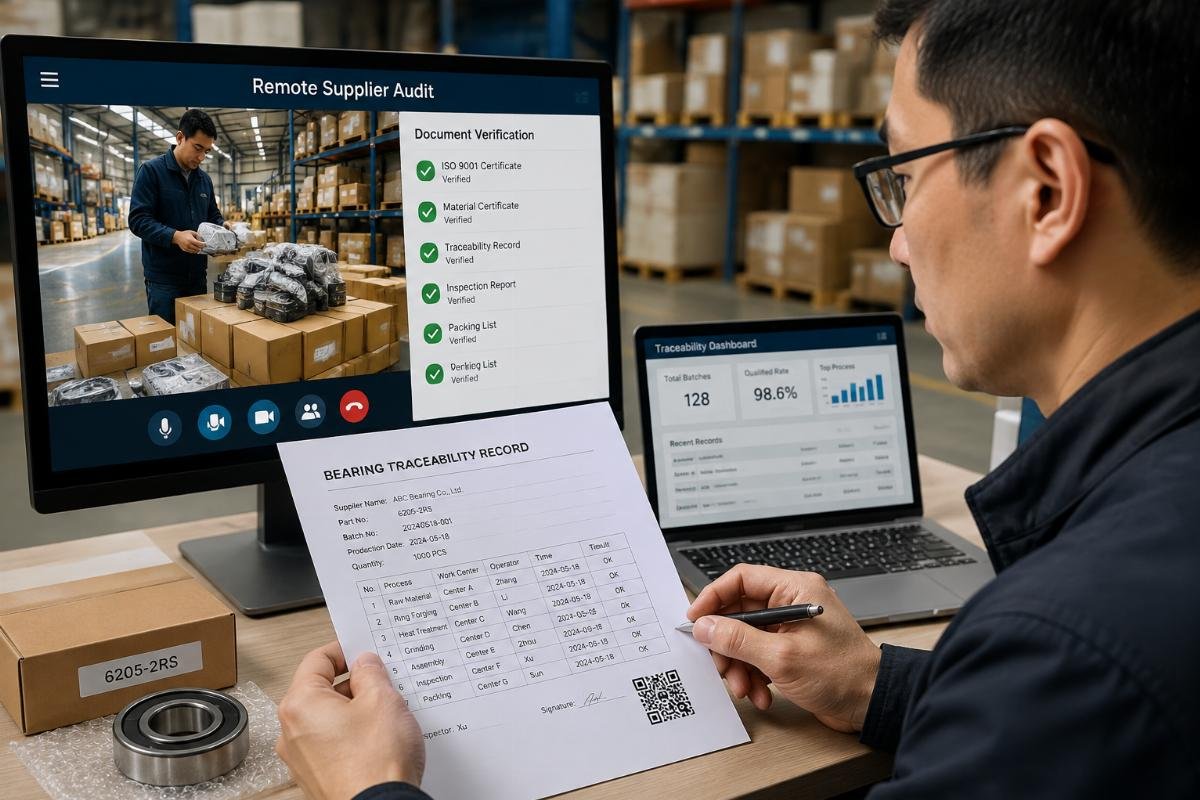
Remote supplier audits are not about counting stock; they are about verifying the system.
Nordic buyers conduct remote supplier audits to validate systematic traceability, standardized packaging, and ISO-compliant processes for mixed-brand bearing orders. They prioritize digital documentation chains and visual compliance with anti-rust SOPs over mere physical inventory volume. A successful remote factory audit checklist focuses on proving that every SKU, from premium international brands to domestic lines, has a verifiable chain of custody and is stored under conditions that prevent degradation before shipment.
I still remember the silence on the video call when a Finnish procurement manager paused his screen share. He wasn’t looking at the rows of SKF or FAG boxes in my warehouse. He was staring at a corner where the lighting was poor, and the plastic wrapping on a pallet of spherical roller bearings looked loose. Then he asked for the batch traceability documents for a specific set of deep-groove ball bearings. I handed over the papers, but half were missing the original mill certificates. The order was paused immediately. That moment shifted my perspective entirely. It wasn’t about having the goods; it was about proving their history and handling integrity through a lens. [NEED_CITE: importance of traceability in MRO supply chains]
This experience is common for distributors aiming to secure long-term contracts with Northern European clients. They do not just buy bearings; they buy risk mitigation. Here is how you can prepare your operation to pass their scrutiny.
What Exactly Are Nordic Buyers Looking for in a Remote Video Audit?
They are auditing your process, not just your product.
Most suppliers assume a remote video audit is a virtual tour of stock levels. In reality, Nordic buyers use these sessions to stress-test your quality management system. They want to see if your operational reality matches your ISO 9001 certification. [NEED_CITE: ISO 9001 visual compliance requirements]
During a live walkthrough, auditors look for discrepancies between your documented procedures and actual practice. For instance, if your quality manual states that all premium brand bearings must be stored in climate-controlled zones, but the camera pans to show NSK or NTN products stacked near a loading dock door exposed to humidity, you fail the visual check. It does not matter if the bearings are genuine; the storage condition violates the systematic draft they are evaluating.
Key focus areas include:
- Systematic Traceability: Can you link a specific box in the video to a digital record instantly?
- Handling SOPs: Are workers wearing gloves? Is there evidence of proper lifting equipment for heavy-duty bearings?
- Documentation Accessibility: How quickly can you pull up a certificate of origin or a material test report during the call?
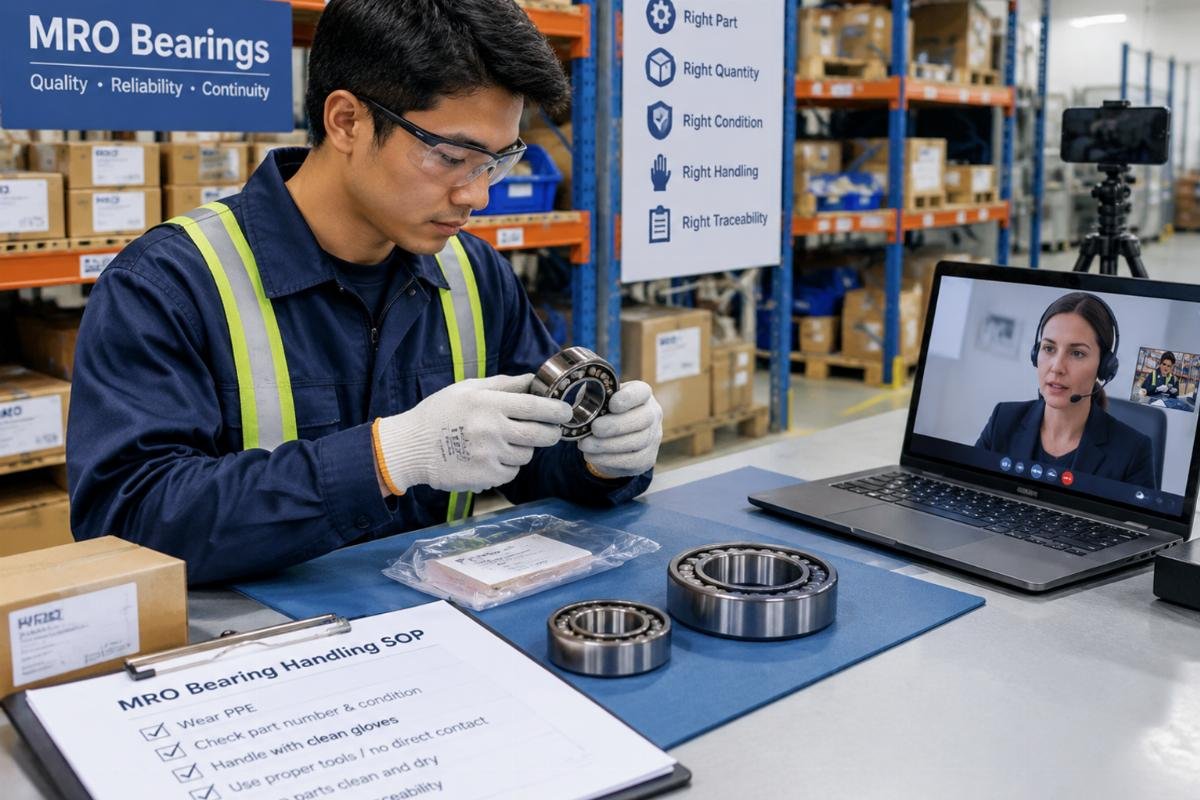
The goal is to demonstrate that your warehouse operates as a controlled extension of the manufacturer’s facility. If the process looks chaotic, the buyer assumes the product integrity is compromised. This is why preparing a digital dossier beforehand is critical. It shows you are ready for the remote factory audit checklist items before they are even asked.
How to Prepare the Traceability Dossier for Mixed-Brand Bearing Orders?
Traceability is the backbone of trust in mixed-batch procurement.
When sourcing mixed-brand packages, such as combining TIMKEN tapered roller bearings with ZWZ or HRB units for a large project, the documentation complexity increases. Nordic buyers require a clear chain of custody for each brand tier. Premium brands like SKF, FAG, INA, and KOYO demand original mill certificates that match the batch numbers on the packaging. Domestic lines require consistent quality assurance records that prove they meet the specified technical standards. [NEED_CITE: bearing industry association guidelines on documentation]
A common failure point is incomplete data for a portion of SKUs. In one case, a distributor lost a contract because they could not provide the original origin proof for a small subset of angular contact ball bearings within a larger container consolidation. The buyer viewed this gap as a potential entry point for counterfeit goods, regardless of the authenticity of the rest of the shipment.
To prepare your dossier:
- Digitize All Certs: Ensure every part number has a scanned copy of its certificate linked to its inventory ID.
- Batch Matching: Verify that the batch numbers on the physical labels match the documents exactly.
- Tiered Documentation: Separate files for premium international brands and reliable domestic lines to streamline verification.
| Documentation Type | Premium Brands (SKF, FAG, NSK, etc.) | Domestic/Reliable Lines (ZWZ, HRB, LYC) |
|---|---|---|
| Origin Proof | Original Mill Certificate Required | Factory Quality Inspection Report |
| Traceability Level | Full Batch-Level Traceability | Sample-Level or Batch-Level |
| Verification Speed | Instant Digital Access Expected | Standard Review Time Accepted |
| Risk Profile | Low if Documented | Moderate if Gaps Exist |
This structured approach ensures that when a buyer asks for proof during a remote supplier audit, you can deliver it without hesitation. It transforms your documentation from a paperwork burden into a competitive advantage.

What Warehouse Visuals Can Make or Break a Remote Audit?
Packaging is the first line of defense against corrosion and rejection.
You can have the best bearings in the world, but if the anti-rust packaging looks sloppy on camera, the order is at risk. Nordic buyers are particularly sensitive to moisture damage, given their focus on long-term reliability in harsh industrial environments. They look for standardized wrapping, clear labeling, and proper stacking methods. [NEED_CITE: anti-rust packaging standards for industrial bearings]
In a previous audit, a video inspection revealed improper anti-rust packaging in a warehouse corner. Some cylindrical roller bearings were wrapped in thin, torn plastic, exposing them to ambient air. This visual flag led to the rejection of a container-load consolidation because the buyer feared hidden corrosion. It was not about the bearing quality itself, but the handling protocol.
Critical visual checks include:
- Anti-Rust Integrity: Ensure all VCI paper or plastic wraps are intact and sealed.
- Label Clarity: Part numbers and brand logos must be legible and undamaged.
- Storage Conditions: No direct contact with concrete floors; use of pallets and shelving is mandatory.
- Cleanliness: The warehouse floor and shelves should be free of dust and debris.
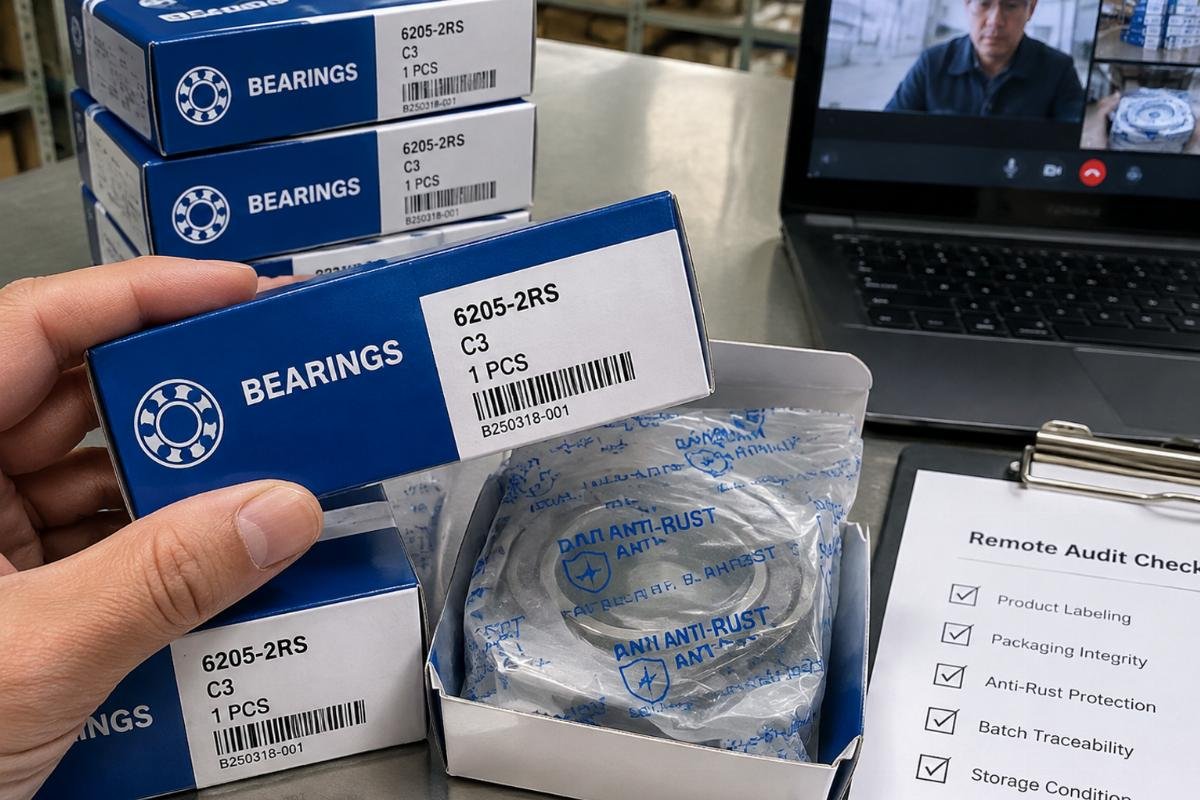
Preparing your warehouse for these visual checks involves more than just cleaning. It requires implementing strict SOPs for packaging and storage. When a buyer sees consistent, professional packaging across all brands, from IKO needle bearings to large spherical roller units, it signals a high level of operational discipline. This visual consistency is often the deciding factor in passing a remote factory audit checklist.
How to Handle Real-Time Q&A During a Live Video Walkthrough?
Confidence comes from preparation, not improvisation.
During the live video feed, buyers will ask technical questions that test your knowledge and support capabilities. They may inquire about technical selection for specific applications or failure analysis support. Your ability to answer these questions accurately and promptly demonstrates your expertise and reliability. [NEED_CITE: technical support expectations in bearing distribution]
For example, a buyer might ask about the suitability of a specific precision special-application bearing for a high-speed machine tool application. Instead of guessing, refer to your technical datasheets and cross-brand equivalent model consultation resources. If you do not know the answer, admit it and promise to follow up with verified information from the manufacturer. Honesty builds more trust than incorrect speculation.
Tips for real-time Q&A:
- Have Technical Data Ready: Keep datasheets for common part numbers accessible.
- Know Your Inventory: Be able to locate specific items quickly during the tour.
- Demonstrate Support: Explain your process for failure analysis and application guidance.
- Stay Calm: If a question is complex, take a moment to formulate a precise answer.

By treating the Q&A session as a collaborative technical discussion rather than an interrogation, you position yourself as a partner rather than just a vendor. This approach aligns with the expectations of Nordic buyers who value long-term relationships and systematic reliability. It reinforces the value of your complete traceability documentation and ISO-compliant QA processes.
Conclusion
Passing a remote audit is about proving system integrity.
Nordic buyers use remote supplier audits to verify that your operations match your claims. Focus on systematic traceability, standardized packaging, and responsive technical support. By preparing your digital dossier and maintaining visual compliance, you can secure long-term mixed-batch contracts.
Tags

About the author
author
Editor covering global sourcing, supplier verification, and industrial product knowledge. Content is compiled from manufacturer specifications, industry standards, and hands-on experience with international B2B buyers. Every article is fact-checked before publishing to help procurement professionals make informed decisions.
More articles by author