Small Bearing Orders to Nordics: Express Shipping Costs from Wholesale Supplier
Unexpected express shipping costs to Nordics often exceed cargo value due to volumetric weight and remote area surcharges. Learn to calculate true landed costs by factoring in dimensional formulas and zip code fees. Optimize packaging and consolidate small bearing orders to avoid budget overruns.
 Written by
author
- Published on
- 7 min read
- Updated
Small Bearing Orders to Nordics: Express Shipping Costs from Wholesale Supplier
The quoted express freight is rarely the final landed cost.
For small bearing orders heading to the Nordics, express shipping costs are frequently driven by volumetric weight calculations and remote area surcharges rather than the actual cargo mass. Buyers must account for dimensional weight formulas and specific zip code fees to avoid unexpected spikes that can exceed the value of the bearings themselves.
I still recall the silence on the other end of the line when a maintenance lead in northern Sweden received my initial freight estimate. We were shipping a set of large spherical roller bearings for a wind farm turbine repair. The quote looked standard based on the scale reading at our Shenzhen warehouse. However, once the packages hit the transit hub in Stockholm, the carrier applied a remote area surcharge for the final leg into the fjords. Combined with the volumetric weight penalty from the bulky protective packaging, the final express shipping costs to Nordics jumped significantly. The freight bill ended up higher than the bearing invoice. I covered the difference from our margin to keep the relationship intact, but it was a costly lesson in how geography and physics dictate logistics pricing in this region.
Understanding these hidden variables is critical for MRO operators and distributors who rely on urgent deliveries. Without accurate forecasting, budget overruns become inevitable.
Why do express shipping costs to the Nordics spike for small orders?
Remote surcharges and volumetric weight dominate the pricing structure for small shipments.
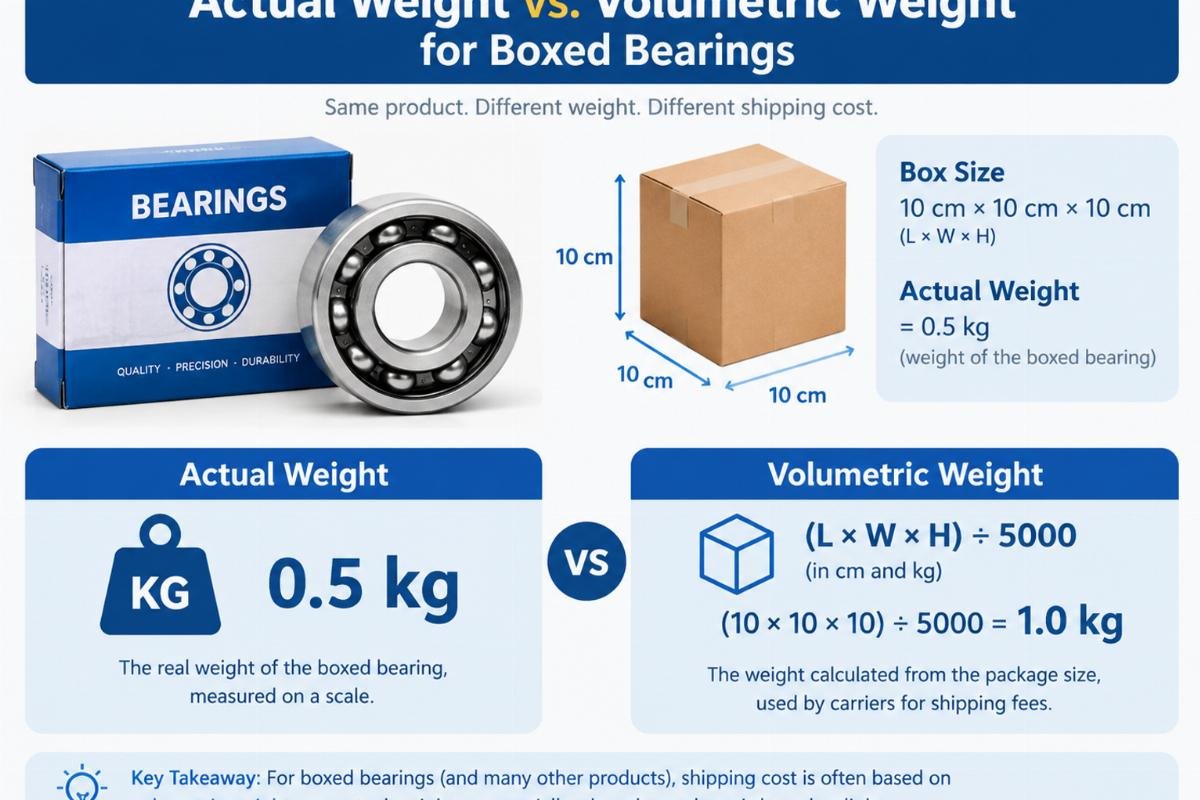
Many procurement managers assume that express freight is calculated strictly on the actual weight shown on the commercial invoice. This is a common misconception that leads to budget shortfalls. In reality, carriers use a dimensional weight formula to determine the chargeable weight. For bearings, which are dense but often require substantial padding and sturdy boxing to prevent damage during transit, the volume often outweighs the mass.
Consider a mixed-brand order of small deep-groove ball bearings sent to a workshop in rural Norway. The actual weight might be only five kilograms. However, if the packaging dimensions are large due to individual box protection, the carrier applies a divisor to calculate the volumetric weight. If this calculated figure exceeds the actual weight, you pay for the air space, not the steel. [NEED_CITE: standard dimensional weight calculation methods for major international couriers]
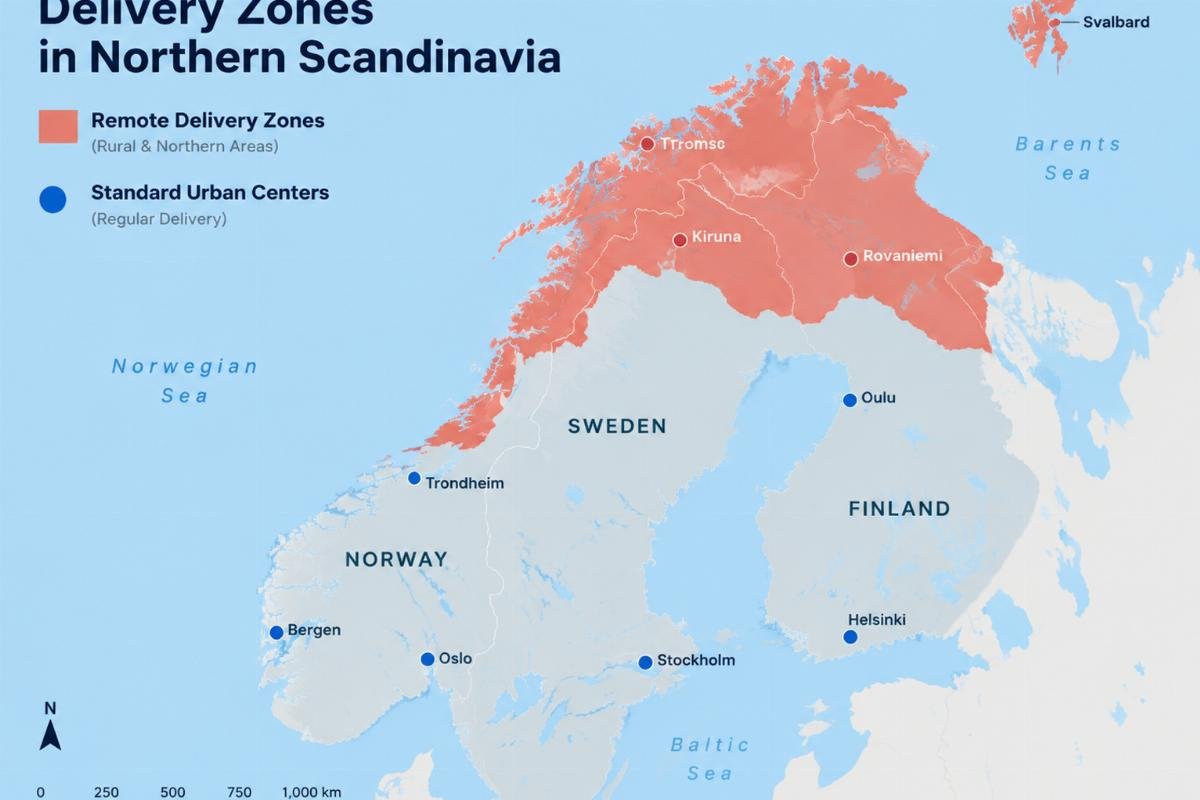
Furthermore, the Nordic geography presents unique challenges. While capital cities like Oslo or Helsinki may fall within standard delivery zones, industrial sites are often located in remote areas. Carriers maintain specific lists of remote zip codes that trigger additional fees. These surcharges are not always visible in the initial online quote tools. A delivery to a coastal fish processing plant or a mining site in Lapland will incur these extra costs. [NEED_CITE: carrier remote area zip code definitions for Scandinavia]
The combination of these two factors creates a perfect storm for small orders. The fixed administrative costs of processing an express shipment are spread over a smaller value base, making the percentage impact of surcharges much higher. This is why express shipping costs to Nordics can appear disproportionately high for emergency spare parts compared to bulk sea freight consignments.
To mitigate this, buyers should request quotes based on package dimensions, not just product weight. Understanding the carrier’s specific divisor for volumetric weight allows for more accurate internal cost modeling before placing the order.
How to calculate the true landed cost for bearing deliveries?
Factor in dimensional weight, fuel surcharges, and zip code fees to get an accurate total.
Calculating the true cost requires moving beyond the basic freight rate. The landed cost includes several variable components that fluctuate monthly or even weekly. Fuel surcharges are a primary example. These are indexed to global oil prices and can change rapidly. During periods of high volatility, the fuel component can add a significant percentage to the base freight rate. [NEED_CITE: global fuel surcharge index trends for air freight]
For precision bearings used in OEM prototype testing in Finland, timing is also crucial. If a shipment is delayed in transit due to customs clearance or weather, the applicable fuel surcharge might be adjusted based on the date of departure or arrival, depending on the carrier’s terms. This adds another layer of uncertainty to the final invoice.
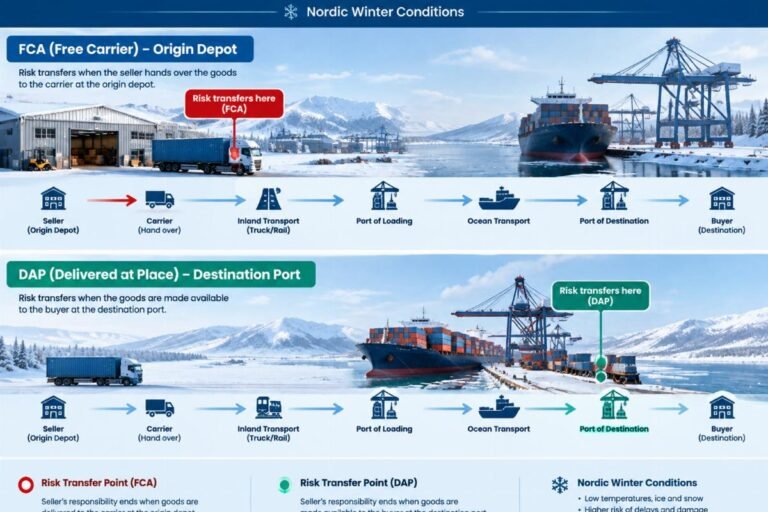
Another critical element is the customs valuation basis. Express shipping costs to Nordics are often calculated on the DAP (Delivered at Place) term, meaning the buyer handles import duties and VAT. However, the freight cost itself is part of the taxable base for VAT in many European jurisdictions. Therefore, a higher freight cost due to volumetric weight penalties also increases the VAT payable upon import. This cascading effect means that inefficient packaging does not just increase shipping fees; it increases tax liabilities as well.
| Cost Component | Impact Level | Variability |
|---|---|---|
| Base Freight Rate | High | Low (Contracted) |
| Volumetric Weight Adjustment | High | Medium (Packaging dependent) |
| Remote Area Surcharge | Medium | High (Location dependent) |
| Fuel Surcharge | Medium | High (Market dependent) |
| Customs VAT on Freight | Low | Low (Statutory) |
This table illustrates how different components contribute to the final expense. Note that while the base rate might be stable, the adjustments for volume and location are where most surprises occur. [NEED_CITE: EU VAT directives on importation of goods including transport costs]
Buyers should ask suppliers to provide the exact packed dimensions and gross weight before confirming the order. Using these figures, one can apply the carrier’s published volumetric divisor to estimate the chargeable weight. Adding a buffer for potential fuel surcharge fluctuations and checking the destination zip code against the carrier’s remote area list provides a much more realistic budget figure.
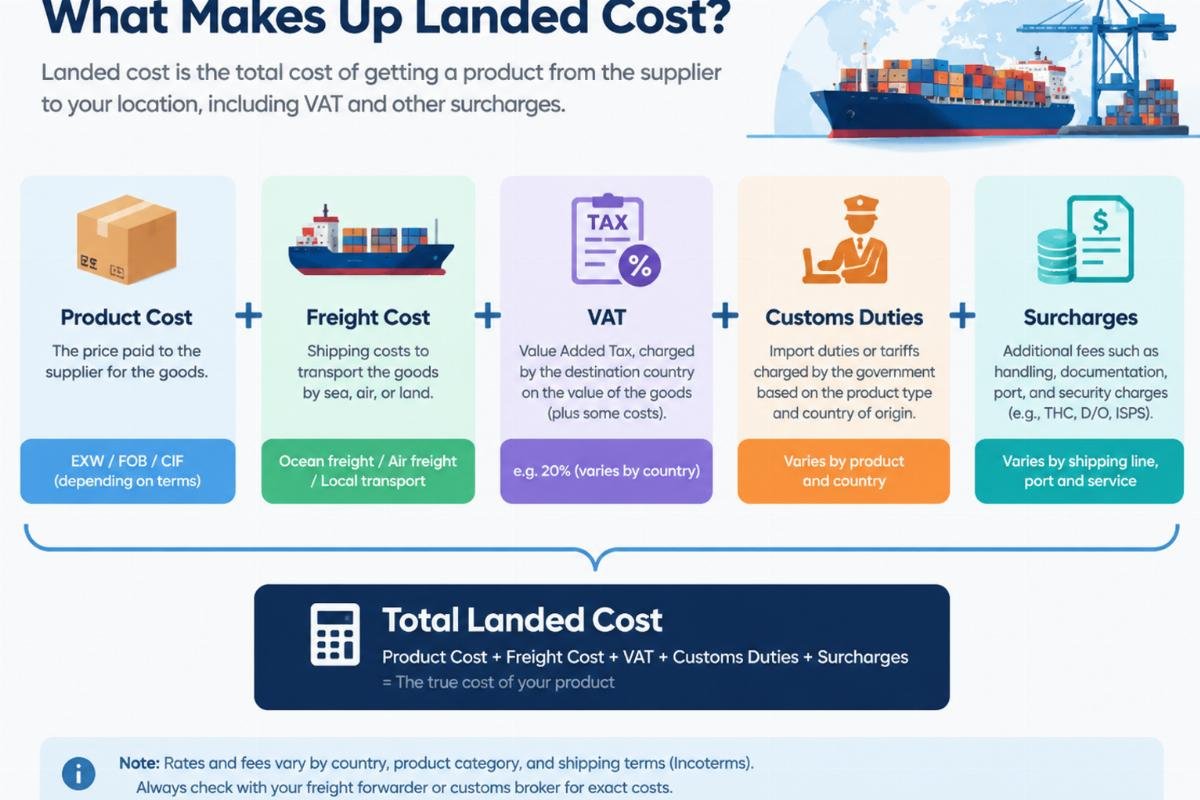
By breaking down the quote into these constituent parts, procurement teams can identify which levers they can control, such as packaging efficiency, and which are external market forces.
What are the best practices to optimize freight for small Nordic orders?
Consolidate shipments, optimize packaging, and select proper courier tiers.
Optimization starts at the packing stage. Bearings are robust, but their packaging is often overly conservative. Using excessive foam or oversized boxes increases the volumetric weight unnecessarily. Switching to tight-fitting, rigid cartons that minimize empty space can drastically reduce the dimensional weight. For mixed-brand orders, combining multiple small items into a single master carton instead of sending individual parcels can also lower the per-unit cost. This approach leverages the economies of scale even within small batches.
Consolidation is another powerful tool. Instead of placing three separate urgent orders for different bearing types over a month, consider coordinating with your supplier to hold stock and ship them together in one consolidated express parcel. This reduces the number of times remote area surcharges or administrative fees are applied. It also simplifies customs clearance, as there is only one entry to process. [NEED_CITE: benefits of shipment consolidation for small parcel logistics]
Selecting the right service tier is equally important. Not every emergency requires next-day delivery. Often, a deferred express service that takes two to three days longer can offer significant savings without compromising operational timelines. For MRO replacements, planning ahead by a few days can unlock these lower-tier options. Additionally, some carriers offer specific products for industrial goods that may have different volumetric divisors or surcharge structures compared to general document or consumer parcel services.

Suppliers who offer global shipping consolidation and inspection services can play a key role here. By inspecting and repacking mixed-brand bearing packages at the origin, they can ensure that the volume is minimized before the goods ever enter the carrier’s network. This proactive step addresses the root cause of high volumetric charges.
Finally, maintaining an open dialogue with the logistics provider about frequent destinations can help. Some carriers may offer negotiated rates or waive certain surcharges for regular shippers to specific industrial zones. Building this relationship ensures that you are not always paying the standard retail rates for express shipping costs to Nordics.
Conclusion
Accurate forecasting prevents profit erosion on small bearing orders.
Express shipping to the Nordic region involves complex variables beyond simple weight. Volumetric calculations and remote area surcharges are the primary drivers of unexpected costs. By optimizing packaging, consolidating shipments, and understanding the full landed cost structure, buyers can manage these expenses effectively. Strategic planning turns logistics from a cost center into a controlled variable in the supply chain.

About the author
author
Editor covering global sourcing, supplier verification, and industrial product knowledge. Content is compiled from manufacturer specifications, industry standards, and hands-on experience with international B2B buyers. Every article is fact-checked before publishing to help procurement professionals make informed decisions.
More articles by author