Explorer vs X-life Spherical Rollers: Wholesale Supplier
Choosing between SKF Explorer vs FAG X-life spherical roller bearings requires aligning internal clearances and cage designs with heavy-duty conditions rather than matching basic dimensions. Blind substitution based on load ratings often causes premature failure in high-temperature environments. Understand specific geometric nuances to prevent costly downtime.
 Written by
author
- Published on
- 9 min read
- Updated
Explorer vs X-life Spherical Rollers: Wholesale Supplier
Identical outer dimensions do not guarantee interchangeability.
Choosing between SKF Explorer and FAG X-life spherical roller bearings requires aligning specific internal clearances and cage designs with exact heavy-duty operating conditions, rather than just matching basic dimensions. Blind substitution based solely on catalog load ratings often leads to premature failure in high-temperature or high-vibration environments because these premium series optimize different aspects of bearing geometry and material purity for distinct stress profiles.
I still recall the silence in a crushing plant in Linyi after a main drive shaft seized. We had replaced a failed unit with what we thought was an equivalent premium bearing, relying on the basic dynamic load rating printed in the catalog. The new unit lasted less than six months before the cage fragmented. The issue was not the load capacity but the thermal expansion mismatch. The original equipment manufacturer had specified a clearance group that accounted for significant heat generation during operation, while our replacement, though technically an “Explorer” class equivalent from another brand, had a standard clearance that tightened under heat, causing skidding and rapid wear. That mid-six-figure loss taught me that premium spherical roller bearing selection is not about matching numbers on a spreadsheet but understanding the metallurgical and geometric nuances embedded in brands like SKF Explorer and FAG X-life.
For distributors and MRO managers, the challenge lies in translating these technical subtleties into procurement decisions. When sourcing an SKF Explorer vs FAG X-life spherical roller bearings solution, one must look beyond the brand name to the specific application variables such as temperature gradients, vibration frequencies, and contamination levels.
What Are the Core Design Differences Between Explorer and X-life?
Both series represent the pinnacle of their respective manufacturers’ engineering, yet they prioritize different performance characteristics through distinct cage materials and surface treatments.
The core argument in any premium spherical roller bearing comparison is that while both SKF Explorer and FAG X-life aim to extend service life, they achieve this through different design philosophies. SKF Explorer bearings typically focus on optimized internal geometry that reduces friction and heat generation, often utilizing high-performance steel with controlled cleanliness levels. [NEED_CITE: SKF Explorer technology overview and internal geometry optimization principles]. In contrast, FAG X-life bearings emphasize enhanced raceway surface finish and specialized cage designs that improve lubrication retention and resistance to smearing under poor lubrication conditions. [NEED_CITE: FAG X-life performance features and surface treatment methodologies].
| Feature | SKF Explorer Series | FAG X-life Series |
|---|---|---|
| Primary Design Focus | Optimized internal geometry for reduced friction | Enhanced surface finish for lubrication retention |
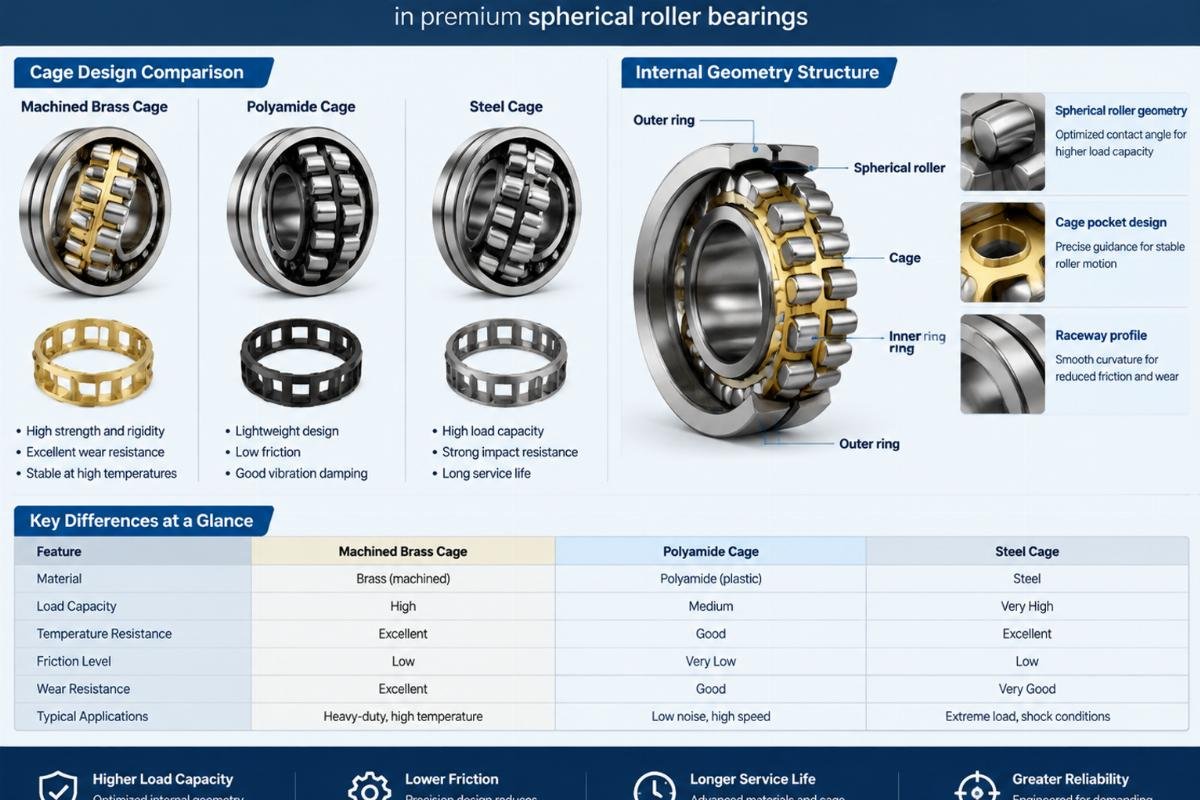
| Cage Material Options | Standard steel, brass, or polymer depending on series | Often features reinforced polyamide or machined brass for high stability |
| Steel Cleanliness | High-purity steel with controlled inclusion density | Premium vacuum-degassed steel for extended fatigue life |
| Surface Treatment | Standard polished raceways | Specialized super-finished raceways in select models |
| Thermal Stability | Designed for consistent performance across standard ranges | Optimized for high-load scenarios with potential thermal spikes |
A European cement plant operator once reported that switching from a standard series to FAG X-life fans resulted in noticeably extended maintenance intervals. However, when they attempted to use SKF Explorer bearings in the same high-temperature kiln drive positions without adjusting the clearance group, they experienced increased noise levels. This was not a defect but a mismatch in design intent. The SKF Explorer FAG X-life difference becomes critical when the operating environment deviates from standard conditions. For instance, in applications with high shock loads, the cage design plays a pivotal role. Some X-life models utilize cages that offer higher guidance stability, which is crucial in vibrating screens where axial displacement can occur. Conversely, Explorer bearings might offer better overall efficiency in continuously rotating, moderately loaded applications due to their lower friction torque.

Understanding these distinctions prevents the common mistake of treating all premium bearings as identical commodities. When evaluating heavy-duty spherical roller bearing selection, it is essential to consult the specific technical catalogs for each series, as the “Explorer” or “X-life” designation covers a wide range of sub-types with varying capabilities.
How Do Load Ratings and Internal Clearances Compare Under Thermal Stress?
Basic load ratings are similar, but thermal clearance retention varies significantly in high-temperature heavy-load scenarios.
One of the most counter-intuitive views in bearing selection is that a higher basic dynamic load rating always wins. In reality, mismatched clearance in high-temperature zones causes skidding and rapid wear, negating any theoretical advantage in load capacity. [NEED_CITE: ISO standards for bearing life calculation and thermal expansion effects]. Both SKF Explorer and FAG X-life bearings offer improved load carrying capabilities compared to standard series, but their behavior under thermal stress differs due to their internal clearance groups and material properties.
In a mining crusher application, the ambient temperature might be moderate, but the operational temperature of the bearing can rise substantially due to heavy loads and shock. If a bearing with standard internal clearance (C3) is used where a C4 clearance is required, the inner ring expands more than the outer ring, reducing the internal clearance. If the clearance becomes negative, the bearing operates under preload, leading to excessive heat generation and eventual seizure. This was the root cause of the failure in the Linyi case mentioned earlier. The SKF Explorer vs FAG X-life spherical roller bearings debate often overlooks this critical parameter.
| Parameter | Impact on Performance | Consideration for Selection |
|---|---|---|
| Internal Clearance Group | Determines operational play under thermal load | Must match expected temperature rise and fit tolerances |
| Dynamic Load Rating | Indicates fatigue life under constant load | Useful for comparative sizing but not absolute life prediction |
| Thermal Expansion Coefficient | Affects dimensional stability | Critical for housings with different material properties |
| Lubricant Viscosity | Influences film thickness | Must be compatible with operating temperature range |
A Middle East steel mill experienced repeated failures in their continuous caster rolls. They were using premium bearings with high load ratings but had not accounted for the extreme thermal gradients. By switching to a bearing series with a specifically designed clearance group for high-temperature operations and ensuring proper lubrication viscosity, they achieved a substantially longer service life. This highlights that the SKF Explorer FAG X-life difference is not just about the brand but about selecting the right variant within the series. For example, some Explorer bearings are available with special clearance options tailored for specific industries, while X-life bearings might offer different cage materials that perform better under certain lubrication regimes.

When sourcing these components, it is vital to provide suppliers with detailed operational data, including maximum operating temperatures, load profiles, and housing materials. This allows for a more accurate recommendation rather than a simple part number swap.
Why Does Blind Substitution Lead to Catastrophic Failures?
Ignoring cage material limits and thermal expansion coefficients leads to rapid wear and production downtime.
The belief that identical basic dimensions mean direct interchangeability is a dangerous misconception. Truly, internal clearance and cage tolerances under thermal load dictate actual life. [NEED_CITE: Industry failure analysis reports on bearing substitution errors]. In the context of SKF Explorer vs FAG X-life spherical roller bearings, blind substitution can lead to catastrophic failures because each series has unique design features that interact differently with the application environment.
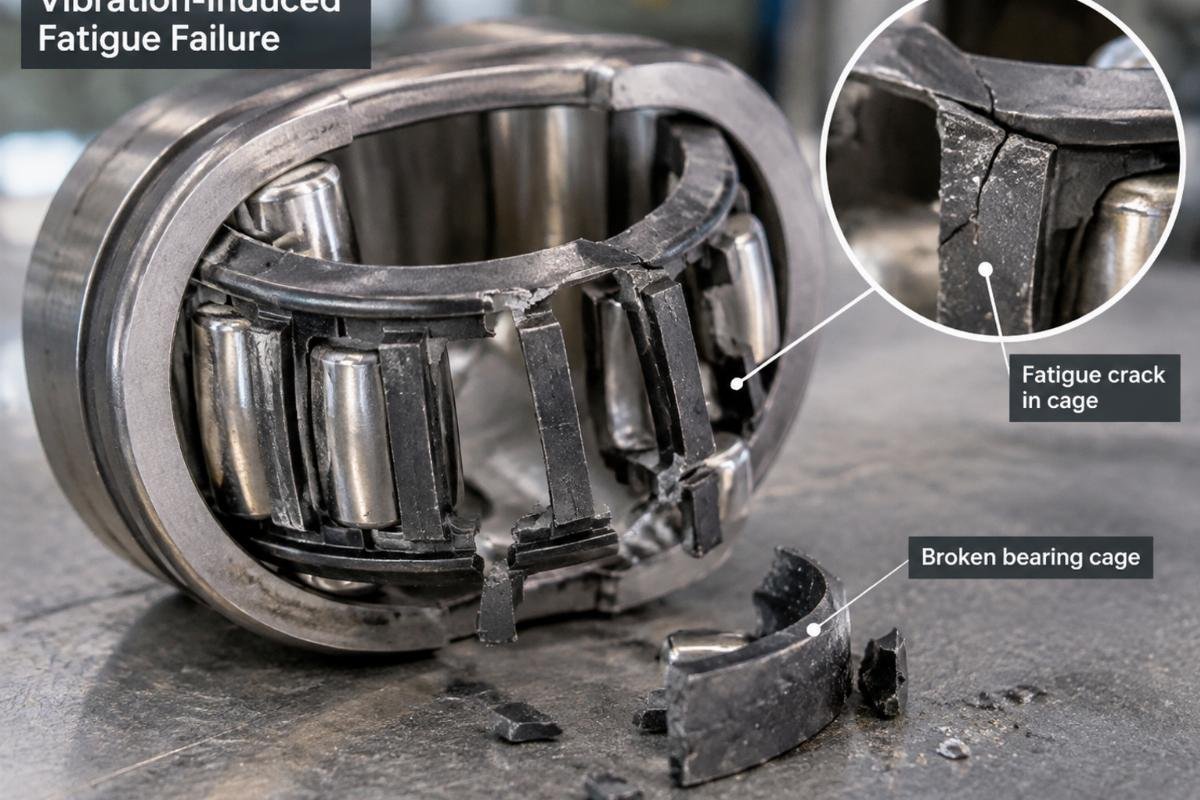
Consider a vibrating screen in a quarry. These applications subject bearings to high levels of vibration and shock loads. The cage design is critical here. If a bearing with a stamped steel cage is replaced with one that has a different cage geometry or material without verifying its suitability for high vibration, the cage can fracture. In one instance, a maintenance team replaced a failed FAG bearing with an SKF equivalent based on dimensions alone. The new bearing had a different cage guide design that was less suited to the high-frequency vibrations of the screen. Within months, the cage showed signs of wear and eventually failed, causing unplanned downtime.
| Failure Mode | Common Cause | Prevention Strategy |
|---|---|---|
| Cage Fragmentation | Incompatible cage design for vibration/shock | Verify cage type and material suitability for application |
| Smearing/Scuffing | Poor lubrication or incorrect surface finish | Ensure proper lubrication regime and surface compatibility |
| Premature Fatigue | Incorrect clearance or misalignment | Check installation practices and clearance selection |
| Overheating | Excessive preload due to thermal expansion | Select appropriate clearance group for operating temperature |
This case underscores the importance of understanding the SKF Explorer FAG X-life difference beyond the label. It is not enough to know that both are premium brands; one must understand how their specific design elements perform under the unique stresses of the application. For distributors, this means providing technical support and asking the right questions about the application rather than just fulfilling a part number request.
By focusing on the underlying engineering principles, buyers can avoid costly trial-and-error approaches. This is where a knowledgeable supplier can add value by offering technical selection support and helping to identify the most suitable bearing series for the specific operational variables.
How to Select the Right Premium Spherical Roller for Your Application?
Match the specific bearing series to exact operational variables like temperature, vibration, and load type.
Selecting the right bearing involves a systematic approach that considers all aspects of the operating environment. When comparing SKF Explorer vs FAG X-life spherical roller bearings, it is essential to create a specification matrix that includes not just load ratings but also clearance groups, cage materials, and lubrication requirements.
- Define Operating Conditions: Determine the maximum and minimum operating temperatures, load types (radial, axial, shock), and speed ranges. This information is crucial for selecting the appropriate internal clearance and lubricant.
- Evaluate Environmental Factors: Assess the level of contamination, moisture, and vibration. Applications with high contamination may benefit from bearings with enhanced sealing options or specific surface treatments that resist corrosion.
- Check Cage Compatibility: Identify the cage material and design suitable for the application. For high-speed applications, lightweight polymer cages might be preferred, while high-temperature or high-shock applications may require machined brass or steel cages.
- Verify Lubrication Requirements: Ensure that the selected bearing is compatible with the available lubrication system. Some premium bearings have special surface finishes that require specific lubricant viscosities to form an adequate film.
- Consult Technical Resources: Use manufacturer catalogs and technical guides to compare specific series. Look for details on internal geometry, steel quality, and recommended mounting practices. [NEED_CITE: Manufacturer technical catalogs for detailed specification data].
A South American mining company implemented this approach when upgrading their conveyor system. Instead of simply replacing old bearings with the same part number, they analyzed the failure modes and operating conditions. They found that the original bearings were failing due to inadequate lubrication in dusty conditions. By switching to a premium series with enhanced sealing and a cage design that promoted better lubricant distribution, they significantly reduced maintenance costs. This demonstrates the value of a thorough heavy-duty spherical roller bearing selection process.

For those managing complex supply chains, consolidating orders for genuine SKF Explorer vs FAG X-life spherical roller bearings can simplify logistics and ensure authenticity. Working with a supplier who offers technical selection support and mixed-brand consolidation can prevent the pitfalls of blind substitution and ensure that the right bearing is chosen for each application.
Conclusion
Premium bearing selection is a technical decision, not just a procurement task.
Avoiding costly failures in heavy-duty applications requires a deep understanding of the specific design differences between series like SKF Explorer and FAG X-life. By focusing on internal clearances, cage designs, and operational conditions, buyers can make informed decisions that enhance reliability and reduce downtime.
Tags

About the author
author
Editor covering global sourcing, supplier verification, and industrial product knowledge. Content is compiled from manufacturer specifications, industry standards, and hands-on experience with international B2B buyers. Every article is fact-checked before publishing to help procurement professionals make informed decisions.
More articles by author

