Polymer vs Bronze Bushings for Forestry Machines Wholesale Supplier
Choosing between polymer and bronze bushings for forestry machines requires matching material properties to specific operating environments rather than relying on tradition. Polymer options eliminate metal-to-metal contact in wet conditions, while bronze handles extreme shock loads better. Select the right type to reduce maintenance frequency and avoid costly downtime.
 Written by
author
- Published on
- 6 min read
- Updated
Polymer vs Bronze Bushings for Forestry Machines Wholesale Supplier
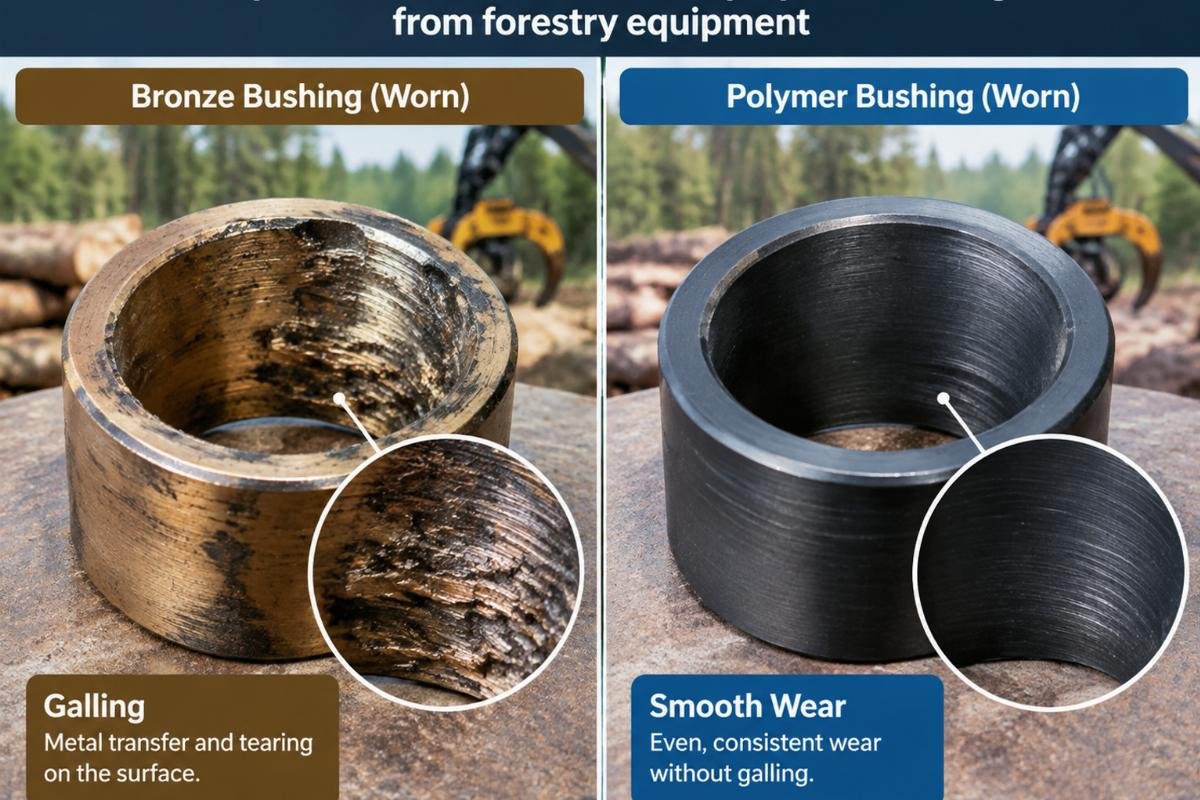
Bronze is not always the superior choice for heavy-load logging applications.
For forestry machines operating in high-moisture or dirty environments, polymer bushings often outperform bronze by eliminating metal-to-metal contact and reducing maintenance frequency, whereas bronze remains preferable for extreme peak shock loads in dry conditions. The optimal selection depends entirely on the specific operating environment rather than material cost alone.
I still remember the frantic calls from a Nordic forestry operator years ago. Their harvesters were suffering repeated joint seizures despite using what they considered premium bronze components. The issue was not the quality of the metal but the mismatch between the material properties and the damp, debris-laden logging trails. In those wet conditions, the bronze bushings galled against the pins, leading to significant downtime. This experience highlighted a critical oversight in procurement: assuming traditional materials are universally superior. Today, when evaluating polymer vs bronze bushings for forestry machines wholesale supplier options, I prioritize the operational context over historical preferences. [NEED_CITE: impact of moisture on plain bearing friction coefficients]
Understanding the distinct advantages of each material helps avoid costly mismatches. While bronze has long been the standard for heavy machinery, modern polymer composites offer unique benefits that align with the harsh realities of logging operations.
How Do Operating Environments Dictate Bushing Survival?
Moisture and dirt levels determine whether bronze seizes or polymer degrades, making environmental assessment the first step in material selection.
Forestry operations vary drastically from the wet forests of Northern Europe to the dusty timberlands of arid regions. In high-moisture scenarios, bronze bushings are vulnerable to corrosion and fretting if lubrication films are washed away or contaminated. Water acts as an abrasive carrier, accelerating wear in metal-on-metal contacts. Conversely, polymer bushings are inherently resistant to corrosion and can operate effectively with minimal or no lubrication, as many formulations are self-lubricating. [NEED_CITE: corrosion resistance mechanisms in engineering plastics]
In dusty, dry-logging scenarios, the dynamic changes. Abrasive particles like sand and soil can embed themselves into softer polymer surfaces, potentially increasing wear rates if the polymer is not specifically formulated for abrasion resistance. Bronze, being harder, may resist embedding better but is prone to galling if dust disrupts the lubricant layer. The key is matching the material to the predominant contaminant. A polymer vs bronze bushings for forestry machines wholesale supplier must provide materials that withstand these specific environmental stressors.
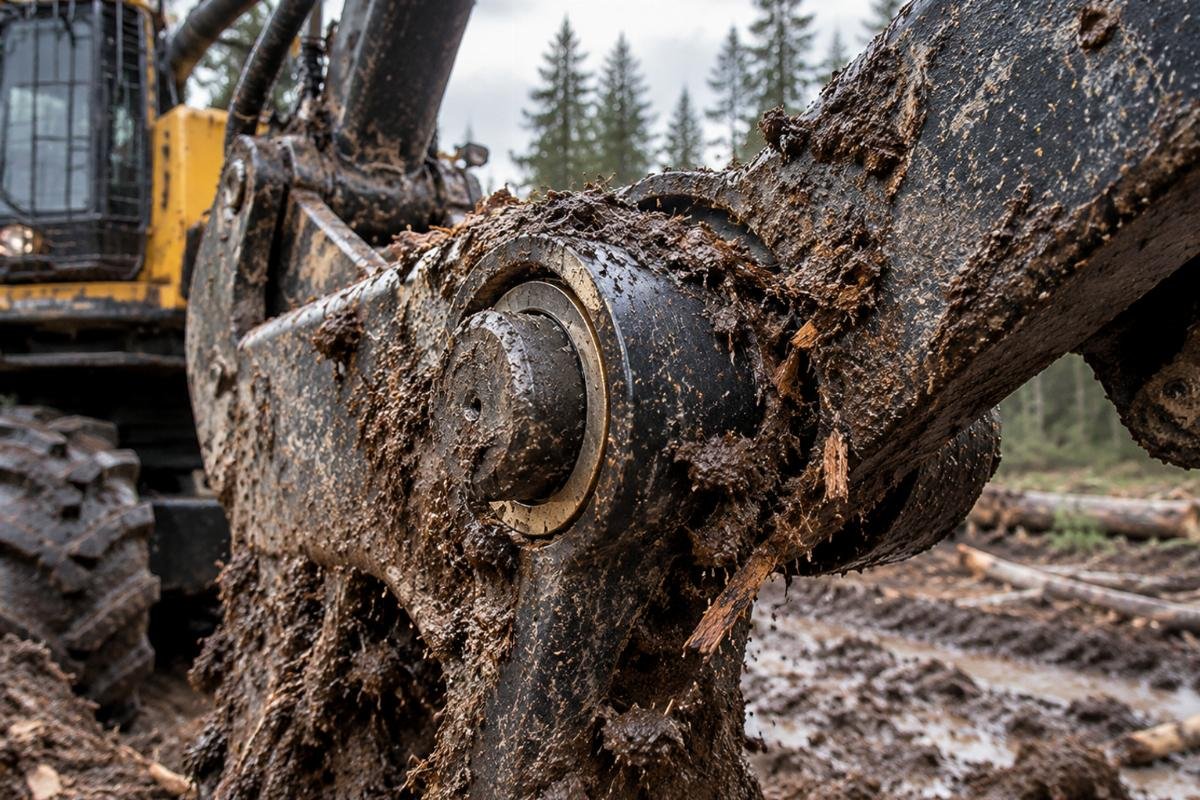
A case from a Central European sawmill illustrates this point. They switched from bronze to high-performance polymer bushings on their log loaders due to constant exposure to rain and wood sap. The result was a noticeable extension in maintenance cycles, as the polymer did not react with the organic acids in the sap, unlike the bronze which suffered from chemical degradation. This shift reduced the frequency of replacements and minimized unplanned downtime.
What Are the Load and Friction Limits for Each Material?
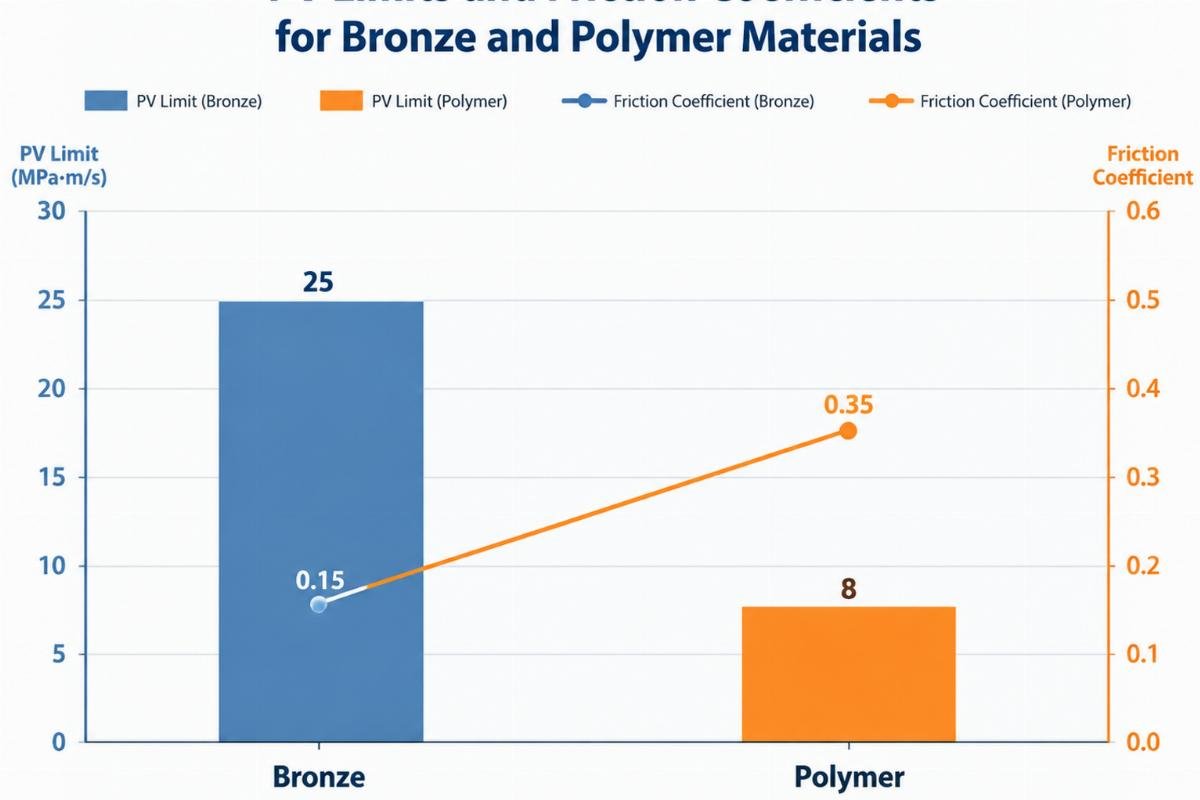
Bronze handles peak shock loads better due to its higher mechanical strength, but polymer excels in continuous PV limits without the need for frequent lubrication.
Load capacity is a primary concern for heavy-equipment OEMs and MRO operators. Bronze bushings generally offer higher static load ratings and better resistance to deformation under extreme shock loads, such as those encountered when dropping heavy logs. However, under continuous operation, the Pressure-Velocity (PV) limit becomes the critical factor. Polymers have specific PV limits beyond which they generate excessive heat and deform. [NEED_CITE: PV limit definitions for plain bearings per ISO standards]
Friction behavior also differs significantly. Bronze requires a consistent lubricant film to prevent metal-to-metal contact, which generates high friction if the film breaks down. Polymer bushings, particularly those filled with PTFE or graphite, maintain low friction coefficients even in boundary lubrication or dry-running conditions. This characteristic is vital for joints that are difficult to access for regular greasing. When sourcing from a polymer vs bronze bushings for forestry machines wholesale supplier, understanding these tribological differences ensures the selected component can handle the specific load profile of the machinery.
| Feature | Bronze Bushings | Polymer Bushings |
|---|---|---|
| Shock Load Resistance | Robust | Vulnerable |
| Continuous PV Limit | Moderate | High (with proper formulation) |
| Lubrication Requirement | Critical | Minimal or None |
| Friction Coefficient | High without lubrication | Low even in dry conditions |
| Thermal Expansion | Low | Higher (requires design allowance) |
Consider a scenario involving a fleet of forwarders in a dry, sandy region. The operator found that bronze bushings required daily greasing to prevent galling from sand ingress. By switching to a reinforced polymer composite, they eliminated the daily greasing routine. The polymer’s ability to tolerate minor abrasive contamination without immediate failure extended the service life meaningfully, demonstrating that higher initial material cost can lead to lower total cost of ownership.
How to Avoid Procurement and Customs Disputes?
Exact material traceability and compliance documentation prevent costly claim rejections and ensure the correct bushing type is installed.
One of the most common issues in international trade is the mismatch between documented specifications and delivered goods. A vague description like “heavy-duty bushing” is insufficient for customs clearance and technical validation. Specific material grades, such as ASTM B505 for bronze or specific ISO classifications for polymers, must be clearly stated on commercial invoices and packing lists. [NEED_CITE: importance of material certification in international trade]
Disputes often arise when the received material does not match the ordered specification, leading to delays in customs and potential rejection of claims. For instance, if a buyer orders polymer bushings but receives bronze ones, or vice versa, the performance implications can be severe. Ensuring that the polymer vs bronze bushings for forestry machines wholesale supplier provides full traceability documents, including material test certificates and origin declarations, is essential. This documentation serves as proof of compliance and facilitates smoother customs processing.

A previous incident involved a shipment delayed at customs because the material description on the invoice did not match the HS code classification for plastic versus metal bearings. The lack of detailed material specification led to a lengthy inspection process. By providing precise material data sheets and clear labeling, such delays can be avoided. This level of documentation also supports warranty claims and technical audits by end-users who require proof of material authenticity.
Which Material Fits Your Specific Forestry Application?
A quick selection matrix matching logging conditions to the optimal bushing type simplifies the decision-making process for buyers.
Choosing between polymer and bronze is not a one-size-fits-all decision. It requires a careful assessment of the operating conditions, load requirements, and maintenance capabilities. The following matrix provides a guideline for selecting the appropriate material based on common forestry scenarios. This approach helps buyers communicate their needs effectively to a polymer vs bronze bushings for forestry machines wholesale supplier.
| Operating Condition | Recommended Material | Reason |
|---|---|---|
| High Moisture / Wet | Polymer | Corrosion resistance and no lubrication needed |
| Dry / Dusty | Polymer (Abrasion Resistant) | Tolerates contamination better than unlubricated bronze |
| Extreme Shock Loads | Bronze | Higher mechanical strength and deformation resistance |
| Hard to Access Joints | Polymer | Self-lubricating properties reduce maintenance frequency |
| High Temperature | Bronze | Better thermal stability than most polymers |
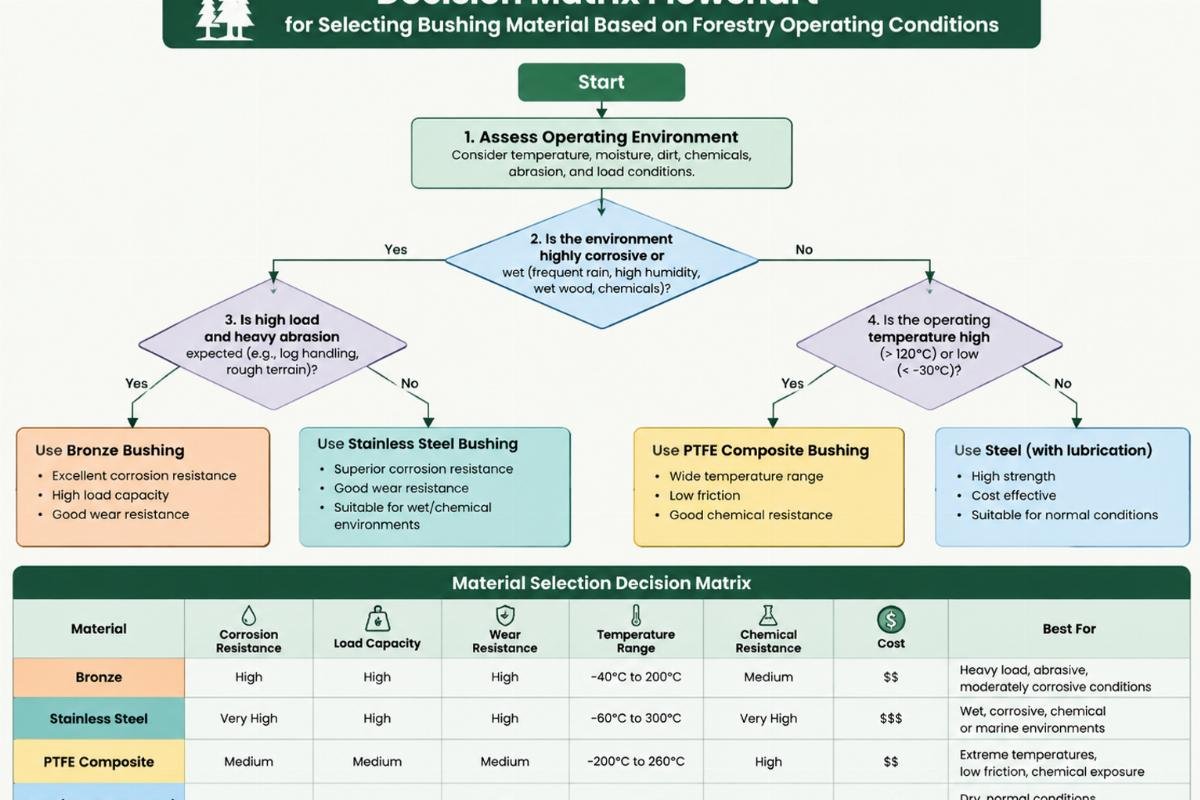
For example, a manufacturer building new harvesting heads for wet climates might prefer polymer bushings to reduce the weight and eliminate lubrication points. In contrast, a repair shop dealing with older equipment subjected to heavy impact loading might stick with bronze for its proven durability under shock. The key is to align the material properties with the specific demands of the application. Engaging with a knowledgeable polymer vs bronze bushings for forestry machines wholesale supplier can provide further technical guidance on cross-brand equivalents and specific grade selections.
Conclusion
Material selection for forestry bushings must prioritize operating environment over tradition.
Polymer and bronze each offer distinct advantages depending on moisture, load, and maintenance constraints. Accurate specification and traceability are crucial for avoiding disputes and ensuring optimal performance. Choosing the right material reduces downtime and extends equipment life.
Tags

About the author
author
Editor covering global sourcing, supplier verification, and industrial product knowledge. Content is compiled from manufacturer specifications, industry standards, and hands-on experience with international B2B buyers. Every article is fact-checked before publishing to help procurement professionals make informed decisions.
More articles by author

