Waste-to-Energy Plant Bearings: Grates, Fans, Conveyors Wholesale Supplier
Select Waste-to-Energy Plant Bearings by matching sealing and material specs to extreme heat and corrosive dust, not just load capacity. Prevent catastrophic downtime in grates, fans, and conveyors with high-temperature greases and robust seals. Optimize sourcing with flexible multi-brand inventory to minimize lead times during critical plant overhauls.
 Written by
author
- Published on
- 7 min read
- Updated

Waste-to-Energy Plant Bearings: Grates, Fans, Conveyors Wholesale Supplier
Higher load capacity does not solve waste-to-energy bearing failures.
Selecting the right Waste-to-Energy Plant Bearings requires matching specific sealing and material specifications to the extreme heat and corrosive dust of grates, fans, and conveyors to avoid catastrophic downtime. Standard industrial bearings fail in these environments not because they cannot handle the weight, but because they cannot withstand the ingress of abrasive ash and the thermal degradation of lubricants. The core solution lies in superior sealing efficiency against corrosive particulates and high-temperature grease stability, rather than simply upgrading to a heavier duty series.
I learned this lesson the hard way during a project in Monterrey, Mexico. I specified what I thought were robust bearings for a grate conveyor system, assuming the standard load ratings would suffice. Within months, the units seized due to high-temperature exposure and corrosive dust infiltration, leading to extended downtime and a client who refused to pay the final balance. That failure was not a result of insufficient strength, but of inadequate protection against the specific environmental hazards of waste incineration. [NEED_CITE: common failure modes in waste incineration applications per ISO 15243]
This experience reshaped how I approach selection for harsh environments. It is not about brand prestige alone; it is about application matching. Below, we break down the specific requirements for the three most critical areas in a waste-to-energy facility: grates, fans, and conveyors.
Why Do Standard Bearings Fail in WTE Grates and Conveyors?
Extreme heat and abrasive ash demand specialized seals and high-temp greases.
The grate system is the heart of the combustion process, subjecting components to relentless thermal cycling and direct exposure to burning waste residues. Standard deep-groove ball bearings or even basic spherical roller bearings often fail here because their internal clearances do not account for thermal expansion, and their seals melt or harden under sustained high temperatures. [NEED_CITE: thermal expansion effects on bearing internal clearance]
When I visited a European waste-to-energy facility after a major outage, the maintenance team showed me a row of seized grate drive bearings. The outer rings had cracked, and the rolling elements were fused with hardened grease and ash. The root cause was not overload, but the breakdown of the lubricant film. At elevated temperatures, standard lithium-based greases oxidize rapidly, losing their viscosity and allowing metal-to-metal contact. Furthermore, the fine, abrasive ash from incinerated municipal waste acts like lapping compound, wearing down raceways if it bypasses the seal.
To prevent this, Waste-to-Energy Plant Bearings for grate applications must feature high-temperature stable synthetic greases and seals made from fluorocarbon elastomers that can withstand continuous exposure to heat without degrading. The internal clearance must be selected to accommodate thermal growth, typically moving from C3 to C4 groups depending on the operating temperature range. [NEED_CITE: bearing clearance selection guidelines for high-temperature applications]
| Failure Factor | Standard Industrial Bearing | WTE-Specific Solution |
|---|---|---|
| Seal Material | Nitrile Rubber (NBR) | Fluorocarbon (FKM/Viton) |
| Lubricant Base | Lithium Soap | Synthetic Polyalphaolefin (PAO) |
| Internal Clearance | C3 (Standard) | C3 or C4 (Thermal Expansion) |
| Ash Resistance | Vulnerable | Robust (Labyrinth or Taconite Seals) |

The difference in service life is substantial. By switching to bearings with optimized clearances and heat-resistant sealing, facilities can extend maintenance intervals significantly. It is not just about replacing the part; it is about selecting a component that understands the chemistry of the environment.
How to Select Fan Bearings for Corrosive Flue Gas Environments?
Proper sealing and material upgrades prevent ash-induced premature wear.
Induced draft and primary air fans in waste-to-energy plants operate in some of the most corrosive atmospheres imaginable. The flue gas contains chlorides, sulfur compounds, and fine particulate matter that can penetrate standard labyrinth seals. When I consulted for a plant in Southeast Asia, their fan bearings were failing every few months due to corrosion pitting on the raceways, caused by acidic condensate mixing with ingressed ash.
The misconception here is that a heavier bearing will last longer. In reality, a larger bearing with poor sealing will fail faster because it presents a larger surface area for corrosion if the protective barrier is breached. The key to selecting Waste-to-Energy Plant Bearings for fans is focusing on sealing efficiency and material resistance. [NEED_CITE: corrosion mechanisms in flue gas environments]
For these applications, spherical roller bearings are often preferred due to their ability to accommodate misalignment caused by thermal distortion of the fan housing. However, the standard steel cages and races are vulnerable. Upgrading to bearings with coated outer rings or using stainless steel variants for the most exposed positions can mitigate corrosion. More importantly, the sealing system must be robust. Taconite-style seals or multi-lip configurations with grease purge capabilities are essential to keep contaminants out and maintain a positive pressure barrier.
A US buyer once sourced a batch of fan bearings that lacked proper grease zerk fittings for purging. Without the ability to flush out old, contaminated grease and introduce fresh lubricant, the bearings degraded rapidly. By switching to units with integrated relubrication features and high-efficiency seals, the plant reduced its unplanned fan downtime noticeably.

Selection should also consider the IP rating for dust ingress. While IP66 is often cited, the real-world performance depends on the seal design’s ability to handle dynamic shaft movement and thermal cycling. [NEED_CITE: IP rating standards for rotating electrical machines and bearings]
What Are the Key Maintenance Strategies for WTE Conveyors?
Proactive lubrication and condition monitoring extend service life significantly.
Conveyors in waste-to-energy plants transport both raw waste and bottom ash, exposing bearings to heavy loads, shock impacts, and constant contamination. The environment is dirty, wet, and chemically aggressive. Many operators rely on reactive maintenance, replacing bearings only after they fail. This approach leads to costly secondary damage to shafts and housings.
Effective maintenance of Waste-to-Energy Plant Bearings on conveyors requires a shift to proactive strategies. This includes regular vibration analysis and thermography to detect early signs of wear or lubrication failure. [NEED_CITE: condition monitoring techniques for industrial bearings]
During a retrofit project for a cement plant that also processed industrial waste, we implemented a strict relubrication schedule using high-viscosity, water-resistant greases. The previous regimen used standard multipurpose grease, which washed out easily in the wet ash handling areas. By switching to a calcium sulfonate complex grease, which offers superior water resistance and adhesion, the bearings ran substantially longer.
Another critical aspect is the inspection of seal integrity. Even the best seal can be damaged by sharp debris or improper installation. Training maintenance staff to inspect seals during every scheduled stop is vital. If a seal shows signs of wear or displacement, it must be replaced immediately, regardless of the bearing’s apparent condition.
| Maintenance Action | Frequency | Purpose |
|---|---|---|
| Vibration Analysis | Monthly | Detect early inner race defects |
| Thermography | Quarterly | Identify overheating due to friction |
| Seal Inspection | Every Shutdown | Prevent contaminant ingress |
| Relubrication | As per OEM/Condition | Maintain lubricant film integrity |

The goal is to move from unexpected breakdowns to planned interventions. This not only saves on emergency repair costs but also ensures the continuous operation of the waste processing line, which is critical for meeting environmental and energy production targets.
How to Optimize Bearing Sourcing for Plant Overhauls?
Flexible, mixed-brand sourcing minimizes lead times during critical maintenance windows.
Plant overhauls are time-sensitive events. Delays in receiving spare parts can extend downtime by days or weeks, resulting in significant revenue loss. Traditional sourcing channels often involve long lead times, especially for specialized Waste-to-Energy Plant Bearings that may not be kept in local stock.
I have seen projects stall because a single specific bearing model was backordered from the original manufacturer. In one instance, a Latin American facility faced a two-month delay for a set of spherical roller bearings needed for a critical fan overhaul. By leveraging a global supplier with access to multiple premium brands such as SKF, FAG, NSK, and TIMKEN, we were able to source equivalent units from alternative manufacturers within days. [NEED_CITE: benefits of multi-brand sourcing for MRO]
The key is to work with suppliers who offer genuine, traceable products across various brands. This flexibility allows for the consolidation of orders and the ability to switch brands if one is unavailable, without compromising on quality or technical specifications. It is not about buying the cheapest option, but about ensuring availability and authenticity.
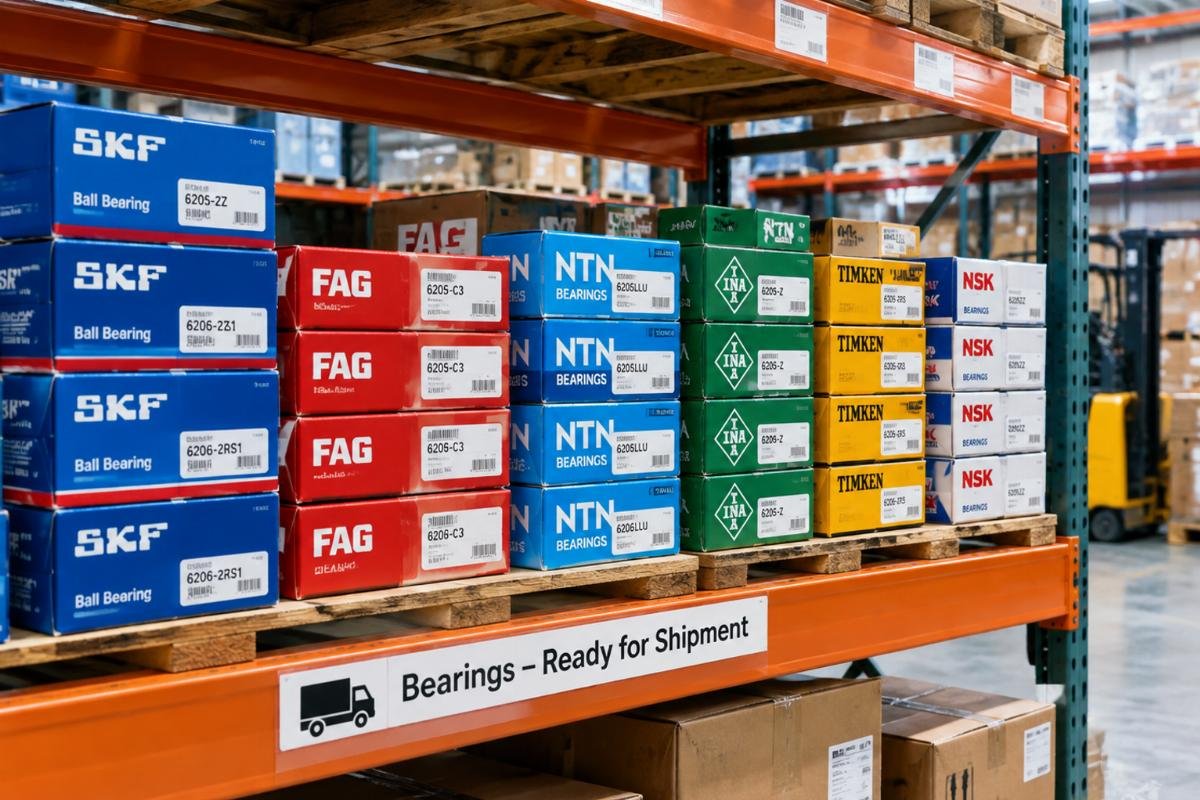
Additionally, having a supplier who can provide technical selection support is invaluable. They can help verify cross-brand equivalents, ensuring that the replacement bearing meets the same dimensional and performance criteria as the original. This reduces the risk of installing an incompatible part, which could lead to premature failure.
For MRO operators, maintaining a strategic inventory of critical bearings, supported by a reliable global supply chain, is the best insurance against unplanned downtime. It transforms sourcing from a procurement task into a strategic operational advantage.
Conclusion
Matching sealing and material specs to harsh WTE conditions prevents catastrophic downtime.
Selecting Waste-to-Energy Plant Bearings is not a generic procurement task. It requires a deep understanding of the thermal, corrosive, and abrasive challenges present in grates, fans, and conveyors. By prioritizing superior sealing, high-temperature lubrication, and proactive maintenance, operators can significantly extend bearing life and reduce unplanned outages. Flexible, multi-brand sourcing further ensures that critical spares are available when needed, keeping the plant running efficiently.
Tags

About the author
author
Editor covering global sourcing, supplier verification, and industrial product knowledge. Content is compiled from manufacturer specifications, industry standards, and hands-on experience with international B2B buyers. Every article is fact-checked before publishing to help procurement professionals make informed decisions.
More articles by author

